
Moroccan Tea Culture: The Meaning Behind Every Glass
In Morocco, tea often arrives before the conversation has fully begun. A silver teapot is placed on a decorated tray, small glasses catch the light, and the fresh scent of mint spreads through the room. The host raises the pot and pours a thin stream of amber-colored tea from above, creating a layer of bubbles at the top of each glass.
To a visitor, this may look like an elegant way to serve a drink. For Moroccans, however, tea represents much more. It can express welcome, generosity, friendship, respect, and the simple pleasure of spending time together. Tea appears in family homes, artisan workshops, desert camps, cafés, business meetings, celebrations, and ordinary afternoons.
Understanding Moroccan tea culture helps travelers appreciate the meaning behind these everyday moments. Every household has its own method, and every region adds something different to the tradition. Yet the central idea remains the same: tea creates a reason to slow down, sit together, and connect.
Why Tea Matters So Much in Morocco
Moroccan mint tea is one of the country’s most recognizable cultural symbols.
It is enjoyed throughout the day and can be served on almost any occasion. A planned family gathering may include an elaborate tea table covered with pastries. An unexpected visitor may receive a simple glass within minutes. In both situations, the gesture communicates attention.
Moroccan tea culture is connected to:
- Welcoming guests
- Strengthening family relationships
- Taking a break from work
- Discussing important matters
- Celebrating special occasions
- Showing respect
- Sharing local news
- Creating a peaceful moment
Tea gives people time to be present with one another. The ritual is rarely only about satisfying thirst. It creates a social space where conversation can unfold naturally.
A Brief History of Tea in Morocco
Tea feels ancient in Morocco, but its widespread popularity is relatively recent compared with many of the country’s older culinary traditions.
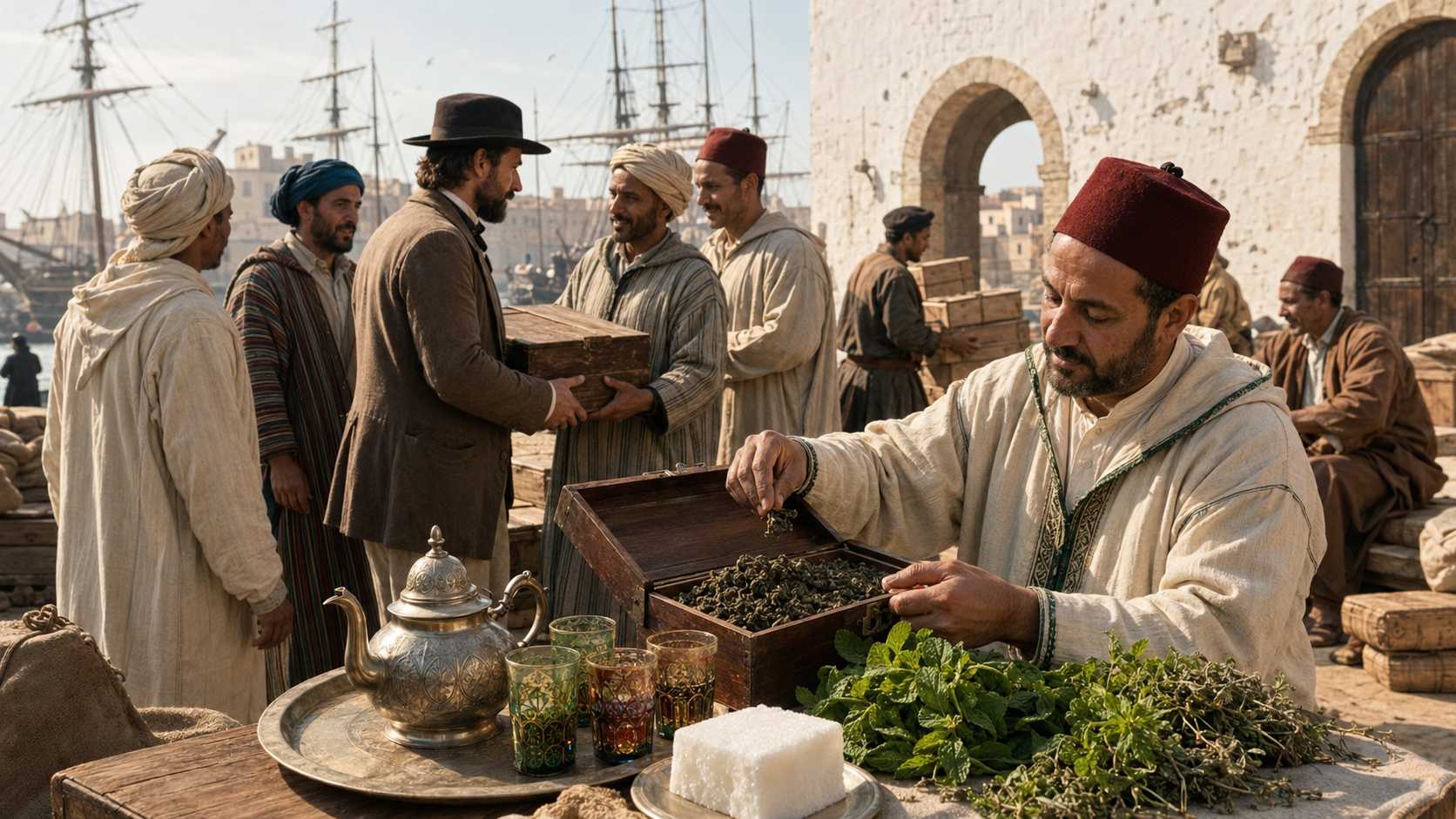
Historical accounts connect its growth to expanding trade and diplomatic exchanges with Europe during the eighteenth and nineteenth centuries. Green tea imported from China reached Moroccan ports through foreign merchants. It was initially expensive and associated mainly with wealthy households, officials, and the royal court.
During the nineteenth century, trade increased and tea became more widely available. Moroccan families adapted the imported green tea to local tastes by combining it with fresh mint, sugar, and regional herbs.
Over time, the drink became deeply Moroccan in its preparation and social meaning.
This history reflects Morocco’s ability to transform outside influences into traditions with a distinct local identity. The tea leaves may have traveled from far away, but the ceremony developed inside Moroccan homes, communities, markets, and gathering places.
What Is Moroccan Mint Tea Made From?
The classic preparation is often called atay b’nana, meaning tea with mint.
Its main ingredients are simple:
- Chinese gunpowder green tea
- Fresh spearmint
- Boiling water
- Sugar
Gunpowder tea receives its name from the tightly rolled shape of its leaves. When hot water is added, the leaves slowly open and release a strong flavor that balances well with fresh mint.
The mint commonly used in Morocco is known as na’na. It gives the drink its refreshing aroma and familiar taste.
Sugar is traditionally added during preparation rather than separately at the table. Moroccan tea is often sweet, although the amount varies considerably between households and individuals. Today, some people request less sugar or prepare an unsweetened version.
There is no single recipe followed everywhere.
The strength of the green tea, quantity of mint, sweetness, and brewing time all reflect the preferences of the person preparing it.
The Traditional Moroccan Tea Set
The objects used to serve tea contribute to the experience.
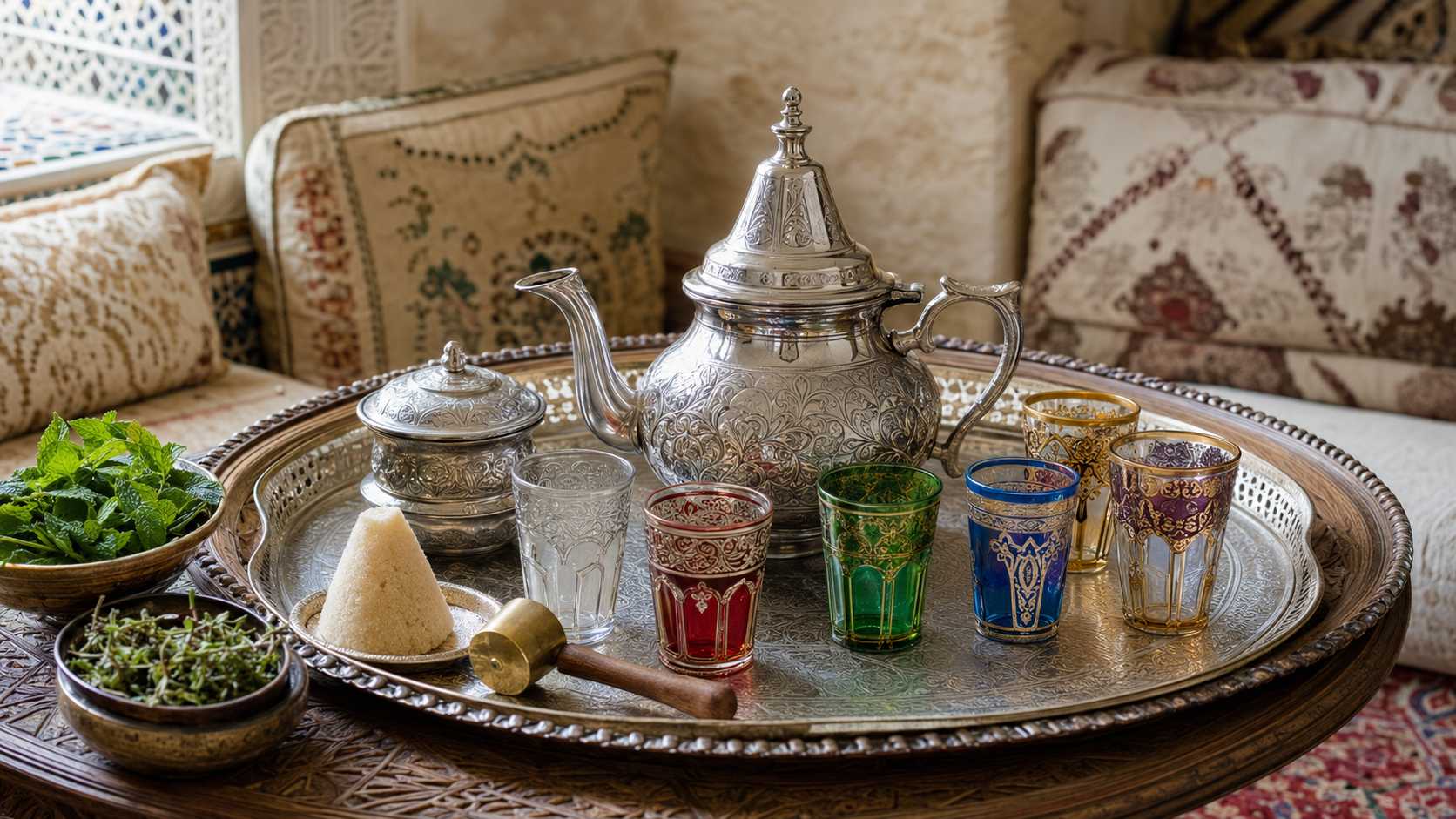
A traditional tea service may include:
- A metal teapot
- A decorative serving tray
- Small tea glasses
- A sugar container
- A small hammer for breaking sugar loaves
- Bowls of mint or aromatic herbs
Teapots are often made from metal and decorated with engraved patterns. Some are simple and practical, while others are highly detailed pieces of craftsmanship.
Moroccan tea glasses are usually small and may be clear, colorful, painted, or decorated with gold patterns. Their size encourages people to enjoy several servings while the conversation continues.
The tray brings everything together.
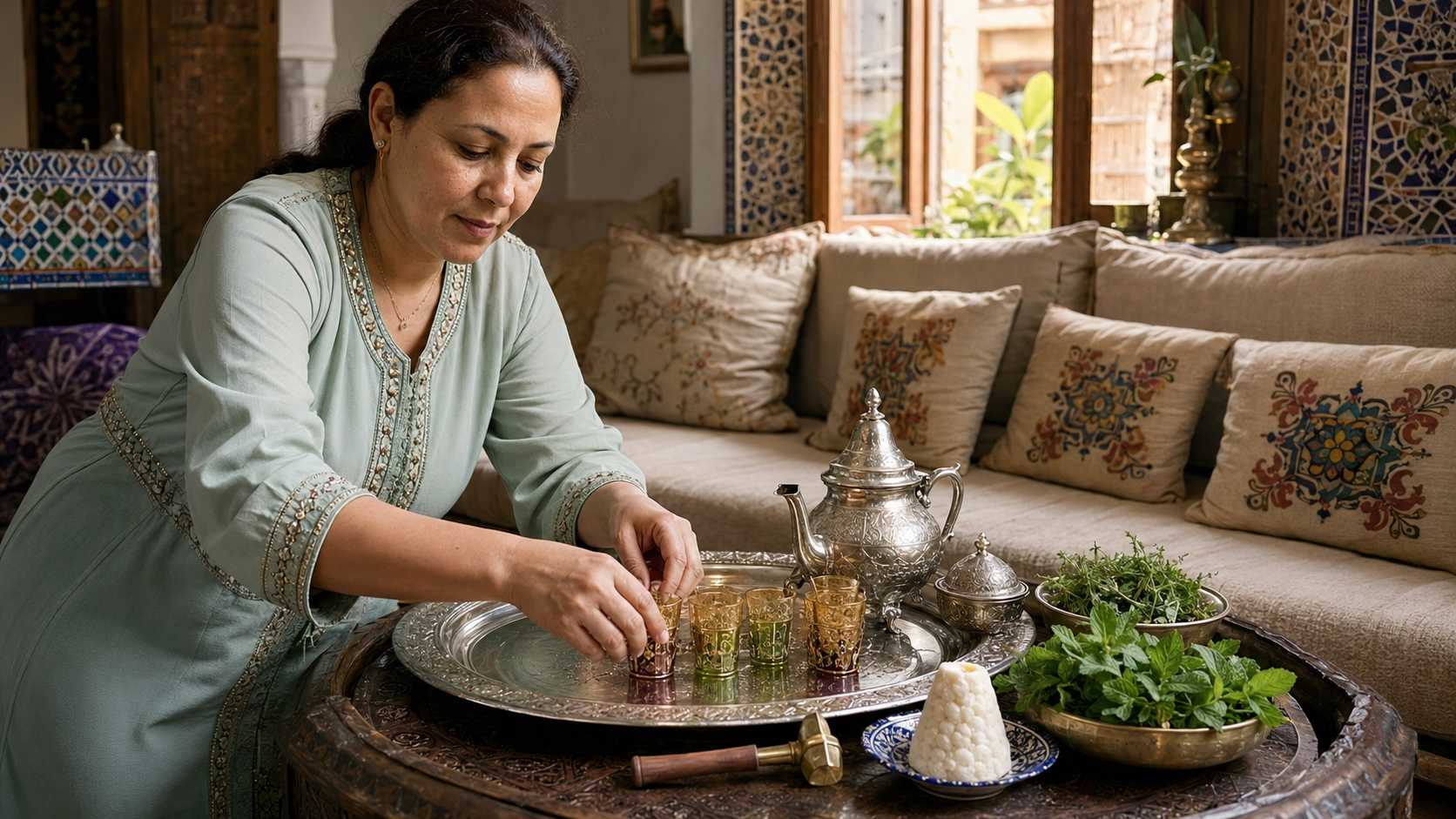
In many homes, the presentation is carefully arranged before guests arrive. The tea set may be one of the most attractive objects in the salon, reflecting the importance placed on welcoming visitors.
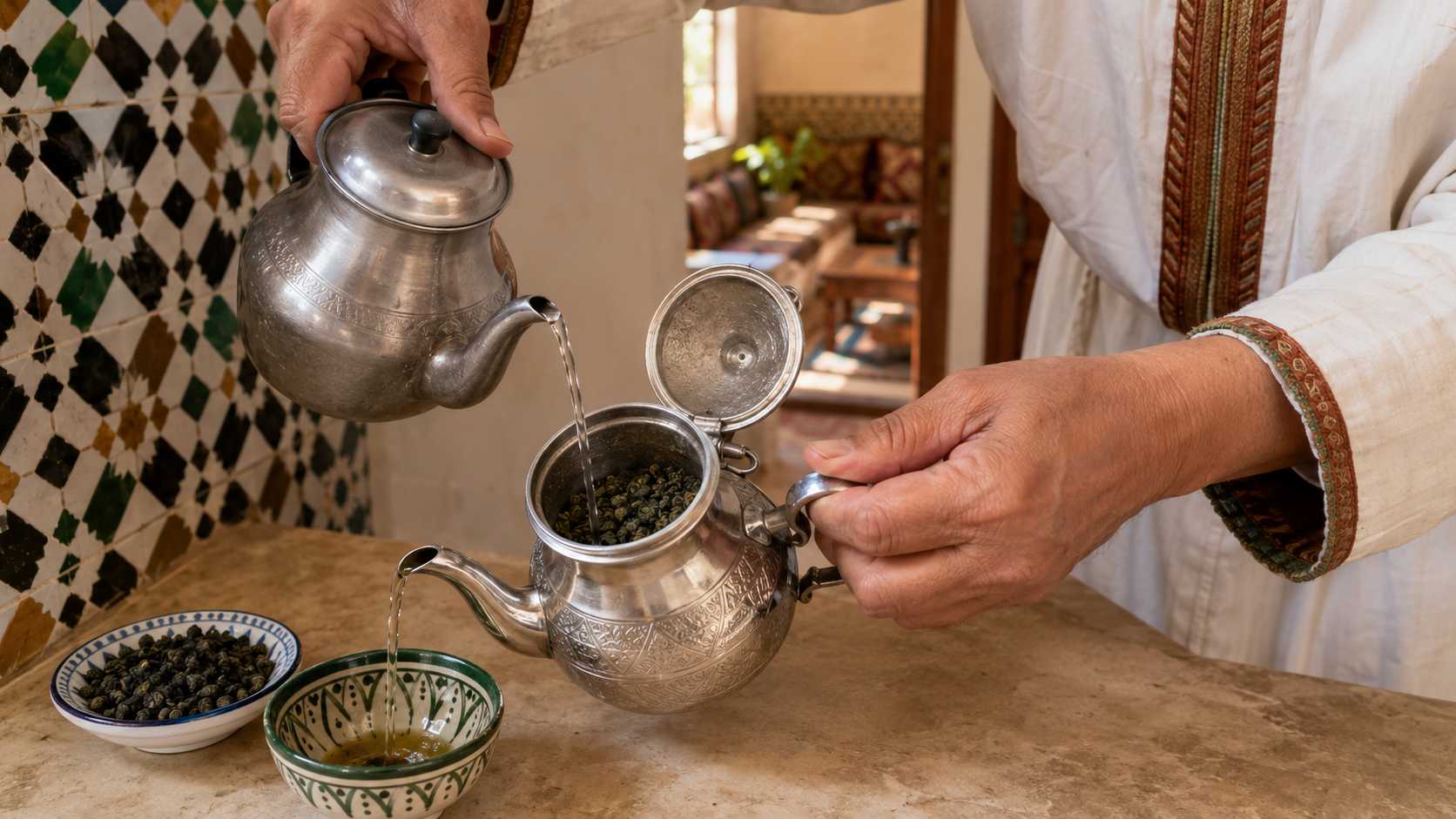
How Moroccan Mint Tea Is Traditionally Prepared
The exact method differs from one family to another, but the process often follows several familiar steps.
Rinse the Tea Leaves
A small quantity of gunpowder green tea is placed inside the teapot.
Hot water is added briefly and then poured away. This helps rinse the leaves and begin opening them.
Some tea makers preserve the first concentrated liquid and return it to the pot later, while others use a different method. These details are often learned within the family and passed from one generation to the next.
Add Water, Mint, and Sugar
The teapot is filled with hot water.
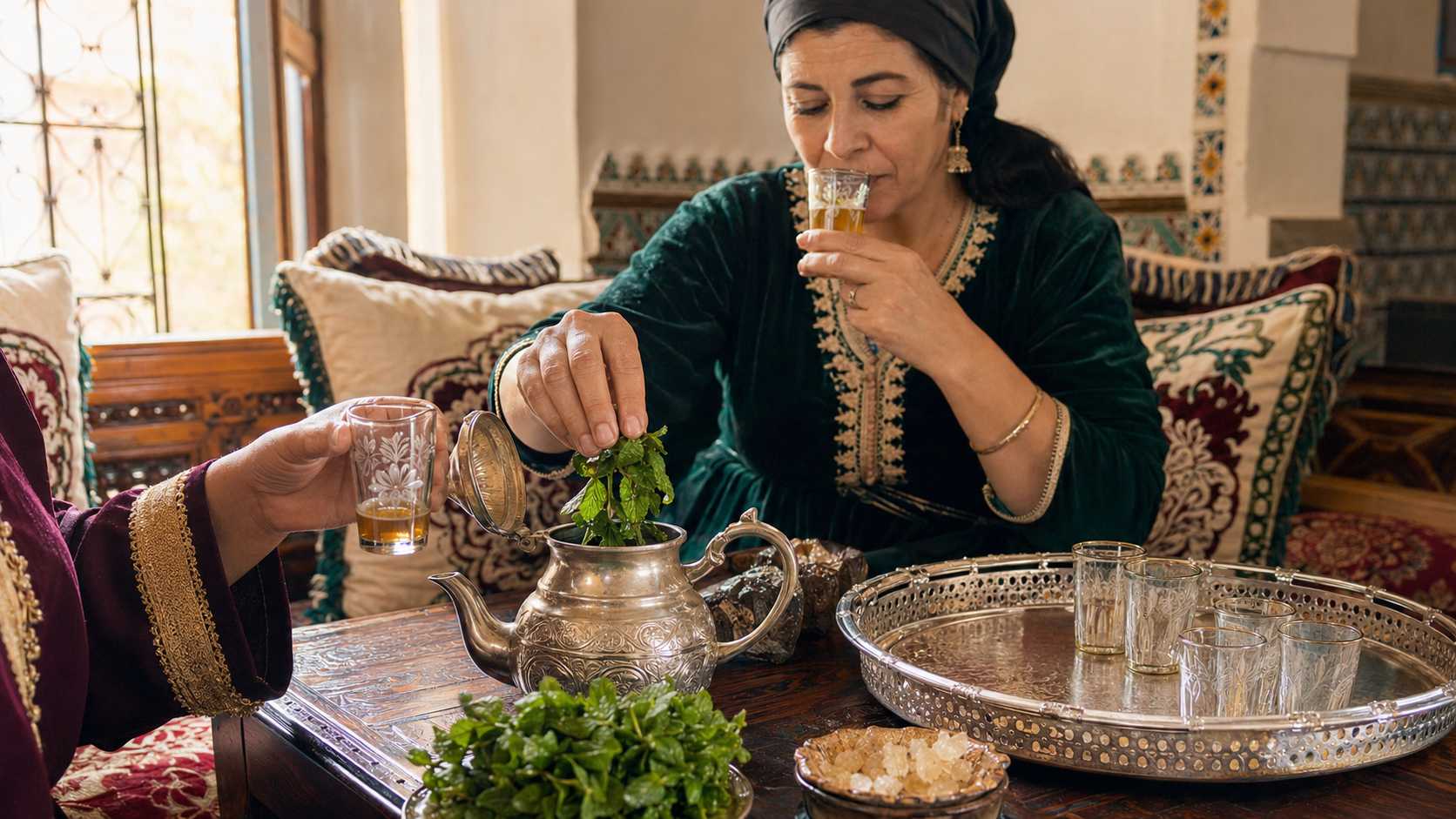
Fresh mint and sugar are then added. Some people place the mint deep inside the pot to protect the leaves from direct heat, while others add it closer to the end of the process.
Allow the Flavors to Combine
The tea may be heated gently or left to infuse, depending on the teapot and household method.
Rather than stirring with a spoon, the person preparing the tea often pours one glass and returns it to the pot. This may be repeated several times to mix the flavors evenly.
Taste Before Serving
The tea maker usually tastes a small amount before serving the guests.
They check whether the tea is strong enough, whether the mint is noticeable, and whether the sweetness feels balanced.
Only then is the tray brought forward and the glasses filled.
Why Is Moroccan Tea Poured from High Above?
The high pour is one of the most recognizable parts of Moroccan tea culture.
An experienced server lifts the teapot and pours a narrow stream into the glass without spilling. The distance introduces air into the tea and helps create a light foam on the surface.
The pour also mixes the ingredients and allows the server to control the strength of each glass.
Beyond its practical role, the movement adds beauty and ceremony. It transforms serving tea into a small performance that captures the attention of everyone around the table.
The height of the pour is not a competition.
Skill comes from control, care, and knowing when to stop. Visitors do not need to imitate an extremely high pour, particularly when the teapot and liquid are hot.
Who Prepares and Serves the Tea?
There is no universal rule determining who must prepare Moroccan tea.
In one household, a parent or grandparent may lead the ritual. In another, the responsibility may belong to the host, an older family member, or the person known for making the best tea.
Men frequently prepare and serve tea in many social settings, especially when welcoming guests. Women also prepare tea at home, during family gatherings, and for celebrations.
What matters most is the role of the tea maker.
That person controls the strength, sweetness, and rhythm of the service. Preparing tea well is a valued social skill, and families sometimes exchange playful opinions about who makes the best pot.
Children may watch the process and gradually learn by helping arrange glasses, wash mint, or carry the tray. In this way, Moroccan tea culture continues through observation and participation.
The Meaning Behind Every Glass
Each glass of tea can communicate something without requiring words.
A Sign of Welcome
Tea tells a guest that there is a place for them.
When someone enters a home, office, shop, or guesthouse, offering tea creates an immediate atmosphere of warmth. The gesture allows everyone to settle before discussing the reason for the visit.
An Invitation to Slow Down
Tea cannot be prepared instantly.
Water must heat, leaves must open, mint must release its aroma, and the flavors must be adjusted. This process encourages people to pause.
In a fast-moving journey, sitting for tea provides an opportunity to notice a different rhythm of life.
An Expression of Generosity
The value of the tea does not come from expensive ingredients.
It comes from the host’s willingness to share what is available and give time to another person. Tea may be accompanied by a large table of pastries or by nothing more than conversation. Both can feel generous.
A Space for Conversation
Important and ordinary discussions often happen over tea.
Families exchange news. Friends tell stories. Business partners discuss ideas. Travelers learn about the places they are visiting.
Because the glasses are small and frequently refilled, the ritual naturally extends the gathering.
A Symbol of Continuity
Tea connects generations.
Young people may use modern teapots, sit in contemporary cafés, or adjust the sweetness. Yet the essential act of gathering around a shared tray remains familiar.
Moroccan tea culture changes with daily life while continuing to carry the values of welcome and togetherness.
When Do Moroccans Drink Tea?
There is no single official tea time in Morocco.
Tea can appear throughout the day:
- With breakfast
- During a mid-morning break
- After lunch
- In the afternoon
- When guests arrive
- During business discussions
- After a long journey
- At family celebrations
- In the evening
Afternoon tea is especially popular and may be served with bread, olive oil, honey, jam, msemen, baghrir, or Moroccan pastries.
In cafés, friends may sit over tea while watching a football match or discussing daily life. In shops, a merchant may prepare a pot during a quiet moment. In rural areas, tea may provide a welcome rest during farm work or travel.
Tea adjusts to the occasion rather than requiring the occasion to adjust to it.
Tea During Celebrations and Family Gatherings
Moroccan celebrations often include carefully presented tea.
At engagements, weddings, religious holidays, and family events, tea may be served with trays of traditional sweets. Decorative teapots, embroidered tablecloths, polished trays, and elegant glasses make the service feel festive.
The preparation may take place away from the main gathering before servers carry the trays to guests.
During large events, tea helps organize the flow of hospitality. It welcomes arrivals, fills pauses between activities, and gives people something to share while they talk.
Even when the ceremony is elaborate, the central meaning remains familiar: guests should feel recognized and cared for.
Regional Variations in Moroccan Tea Culture
Traveling across Morocco reveals different approaches to tea.
Tea in Northern Morocco
Fresh mint is widely used in the north, particularly when it is abundant.
Families may prefer a fragrant, refreshing tea served with pastries or bread. In cities such as Tangier, Tetouan, and Chefchaouen, tea is enjoyed in homes and cafés overlooking lively streets or surrounding landscapes.
Tea in the Atlas Mountains
In the Atlas Mountains, tea often accompanies bread, olive oil, honey, almonds, or seasonal food.
It may be served to hikers, family visitors, and people arriving from another village. Sharing tea provides time to rest and exchange news.
Cold weather can also influence the herbs added to the pot.
Tea in Southern and Desert Regions
In southern Morocco and desert communities, tea may be prepared stronger and served in several rounds.
Fresh mint is not always available in the same quantity, so the tea can rely more heavily on green tea and sugar or include other local herbs.
The preparation is often unhurried. Around a desert camp or family tent, several glasses may accompany a long conversation.
Seasonal Herbal Variations
Moroccan tea changes with the seasons.
When fresh mint is abundant, handfuls may be added to the pot. During colder months, some households use chiba, an aromatic type of wormwood, to give the drink a distinctive bitter fragrance.
Other additions can include:
- Lemon verbena
- Sage
- Pennyroyal
- Orange blossom
- Wild regional herbs
These are not used in every household. Their presence depends on geography, availability, and family preference.
The Famous Tradition of Three Glasses
Travelers often hear that Moroccan tea must always be served three times.
In some families and southern communities, several rounds are indeed an important part of the experience. As the leaves continue to infuse, each serving may develop a slightly different strength and flavor.
A popular saying compares the three glasses to different stages or emotions of life. It appears frequently in travel stories and tourist presentations.
However, it should not be treated as a strict rule followed by every Moroccan.
Some people drink one glass, others accept two, and long gatherings may involve even more. Customs vary according to the occasion and region.
The deeper idea is not the exact number. It is the willingness to remain together long enough for the tea and conversation to develop.
Sugar and Changing Tastes
Traditional Moroccan tea is known for its sweetness.
Historically, sugar was an important part of the presentation and could be purchased in large cone-shaped loaves. Pieces were broken with a special hammer and added directly to the pot.
Many families still enjoy sweet tea, but preferences are changing.
Some Moroccans now use less sugar, allow each guest to choose, or drink tea without sweetening it. Cafés and hotels may serve sugar separately, especially when welcoming international visitors.
Travelers should avoid assuming that every Moroccan drinks tea in exactly the same way. Like any living tradition, it adapts to personal taste and modern habits.
Moroccan Tea Etiquette for Travelers
Visitors do not need to understand every detail of the ceremony.
A few respectful habits are enough.
Accept the Welcome When Possible
Accepting a glass shows appreciation for the gesture.
If you cannot drink tea because of personal or dietary reasons, decline gently and thank the host for offering it.
Hold the Glass Carefully
Moroccan tea glasses do not usually have handles.
The glass can become hot, so hold it near the rim or allow it to cool before drinking.
Drink Slowly
Tea is meant to accompany the gathering.
There is rarely a need to finish immediately. Take small sips and enjoy the conversation.
Thank the Host
A simple “shukran” is appreciated.
You can also say “atay bnin”, meaning the tea is delicious.
Do Not Demand a Performance
The high pour and traditional preparation are part of real household practice, not only entertainment.
Allow the host to serve the tea in their usual way. Avoid pressuring someone to repeat the pour only for a photograph or video.
Ask Before Photographing
A beautiful tea tray can be tempting to photograph.
Ask permission when you are inside a private home or when people will appear in the image. Respecting the moment matters more than collecting content.
Where Travelers Can Experience Moroccan Tea Culture
Tea is available almost everywhere in Morocco, but the setting shapes the experience.
Travelers can enjoy it:
- In a traditional riad
- At a family-run guesthouse
- Inside a medina café
- During a Moroccan cooking class
- In an artisan workshop
- At an Amazigh village home
- During an Atlas Mountains trek
- At a Sahara desert camp
- In a local market
- On a rooftop terrace
The most meaningful tea experiences often happen unexpectedly.
A planned tasting can explain the ingredients and preparation. An informal glass shared during a conversation can reveal the social meaning more naturally.
Both experiences help visitors understand the tradition from a different perspective.
Experiencing Tea Culture Responsibly
Tea should create connection without turning local people into part of a performance.
Choose cultural experiences that respect hosts and support local communities. Family visits, workshops, and guided encounters should compensate people fairly for their time and knowledge.
Travelers can participate responsibly by:
- Listening to the host’s explanation
- Avoiding stereotypes about Moroccan culture
- Asking thoughtful questions
- Respecting private homes
- Purchasing tea sets directly from local artisans when possible
- Learning about regional differences
- Sharing the experience without exaggerating or inventing traditions
Authentic cultural exchange begins with curiosity and respect.
Why Moroccan Tea Culture Remains Unforgettable
Moroccan mint tea is made from only a few ingredients, yet it carries layers of meaning.
The green tea reflects centuries of trade. The mint connects the drink to local gardens and seasonal landscapes. The tray represents presentation and care. The slow preparation creates time for people to gather.
Most importantly, tea turns an ordinary pause into a shared experience.
Travelers may first remember the sound of tea filling a glass or the fresh scent rising from the pot. Later, they remember the conversation around it: a story told by a guide, advice from a shopkeeper, laughter inside a family home, or a quiet sunset in the desert.
Moroccan tea culture is not frozen in the past. People adjust recipes, reduce sugar, use modern kettles, and enjoy tea in contemporary cafés. Still, the tradition continues because its essential purpose remains valuable.
It gives people a reason to stop.
It welcomes someone into the moment.
It turns guests into companions, and sometimes companions into friends.
The meaning behind every glass is therefore not found only in the tea itself. It is found in the time, attention, and human connection shared while drinking it.
Frequently Asked Questions About Moroccan Tea Culture
1. Why Is Mint Tea Important in Moroccan Culture?
Mint tea represents hospitality, generosity, friendship, and shared time. It is served during family visits, business conversations, celebrations, work breaks, and ordinary afternoons. The ritual gives people a reason to sit together and connect, which makes its social meaning as important as its flavor.
2. What Is Traditional Moroccan Mint Tea Made From?
Traditional Moroccan mint tea is generally prepared with Chinese gunpowder green tea, fresh spearmint, boiling water, and sugar. The proportions vary between families and regions. Seasonal herbs such as chiba or lemon verbena may also be used when mint is unavailable or when a different flavor is preferred.
3. Why Is Moroccan Tea Poured from High Above the Glass?
Pouring from above introduces air into the tea and creates a light layer of foam on the surface. It also helps mix the ingredients and cool the tea slightly as it enters the glass. The controlled movement adds elegance to the service, but the exact pouring height differs from one tea maker to another.
4. Is Moroccan Mint Tea Always Served with Sugar?
Moroccan tea is traditionally sweetened inside the teapot, but it does not always have to contain sugar. Some households now use less sugar, prepare an unsweetened pot, or allow guests to choose. Travelers who prefer less sweetness can politely request tea with little or no sugar.
5. How Many Glasses of Tea Should a Guest Drink in Morocco?
There is no fixed number that every guest must drink. Some gatherings involve several rounds, while a short visit may include only one glass. Accepting at least a little tea is generally appreciated, but guests can politely decline another serving when they have had enough.
6. What Does Offering Tea Mean in a Moroccan Home?
Offering tea tells a visitor that they are welcome and that the host is willing to give them time and attention. It allows everyone to settle, exchange greetings, and begin a conversation. Depending on the occasion, the tea may be accompanied by pastries, bread, dates, nuts, or a larger meal.
7. Who Traditionally Prepares Tea in Morocco?
The person preparing tea may be the host, a parent, a grandparent, or another family member known for making it well. Both men and women prepare and serve tea, depending on the household and social setting. The role is respected because the tea maker controls the balance, presentation, and rhythm of the service.
8. Does Moroccan Tea Taste Different Across the Country?
Yes. Tea can vary in strength, sweetness, freshness, and the herbs used. Northern households may use generous amounts of fresh mint, while southern or desert preparations can be stronger and served in several rounds. Family recipes and seasonal availability create even more variation.
9. What Should Travelers Say After Receiving Moroccan Tea?
Yes. Tea can vary in strength, sweetness, freshness, and the herbs used. Northern households may use generous amounts of fresh mint, while southern or desert preparations can be stronger and served in several rounds. Family recipes and seasonal availability create even more variation.
10. Where Can Visitors Experience an Authentic Moroccan Tea Ceremony?
Travelers may experience tea culture in family-run riads, local guesthouses, artisan workshops, cooking classes, Atlas Mountain villages, desert camps, and private homes when invited. The most meaningful experiences are respectful and unhurried. Choose local hosts and guides who present the tradition naturally and benefit fairly from the activity.
Ready to discover Morocco? Let's plan your perfect trip.
Whether it’s a desert adventure from Marrakech, an imperial cities tour, or a custom itinerary — our team responds within 24 hours with a tailored plan and quote.