
Moroccan Hospitality: Why Guests Are Treated Like Family
There are moments in Morocco when a simple encounter unexpectedly becomes a lasting travel memory. You may ask someone for directions and find yourself walking beside them through the medina. You may stop in a mountain village and soon be offered a glass of mint tea. Sometimes, a brief conversation can even lead to an invitation to share a meal with a local family.
This warmth is not simply a service offered to tourists. Moroccan hospitality is deeply connected to family life, community values, generosity, and respect for guests. Welcoming someone into a home is often treated as an opportunity to create a genuine human connection. Food is shared, tea is prepared, and time is given freely.
Understanding Moroccan hospitality helps travelers see the country from a more personal perspective. Beyond monuments, markets, and desert landscapes, it reveals how relationships are formed and how everyday traditions continue to bring people together. This guide explores why guests are treated like family, what to expect when visiting a Moroccan home, and how to respond respectfully.
What Does Moroccan Hospitality Really Mean?
Moroccan hospitality is built around making visitors feel comfortable, valued, and included.
A guest may initially be a stranger, but the welcome they receive often feels surprisingly familiar. Hosts commonly offer tea, food, conversation, and a comfortable place to sit. Even when a visit is short, there is usually an effort to make it feel meaningful.
Hospitality can take many forms:
- Offering mint tea shortly after a guest arrives
- Serving food even when the visit was unexpected
- Encouraging guests to eat more
- Asking about a visitor’s family and journey
- Helping travelers find their way
- Sharing local knowledge and recommendations
- Inviting visitors to participate in family traditions
These gestures are not identical in every household or region. Morocco is culturally diverse, and customs vary between cities, villages, mountain communities, and desert regions. However, generosity toward guests remains a widely recognized part of Moroccan social life.
The Cultural Roots of Moroccan Hospitality
The tradition of welcoming guests has developed through centuries of family, religious, and community life.
Morocco’s culture reflects Amazigh, Arab, African, Andalusian, Mediterranean, and Islamic influences. These traditions have interacted over generations, creating a society where relationships and community ties hold great importance.
Family as the Center of Social Life
Family plays a central role in Moroccan society.
Meals, celebrations, religious occasions, and important decisions often bring several generations together. Grandparents, parents, children, cousins, and close family friends may all remain actively connected.
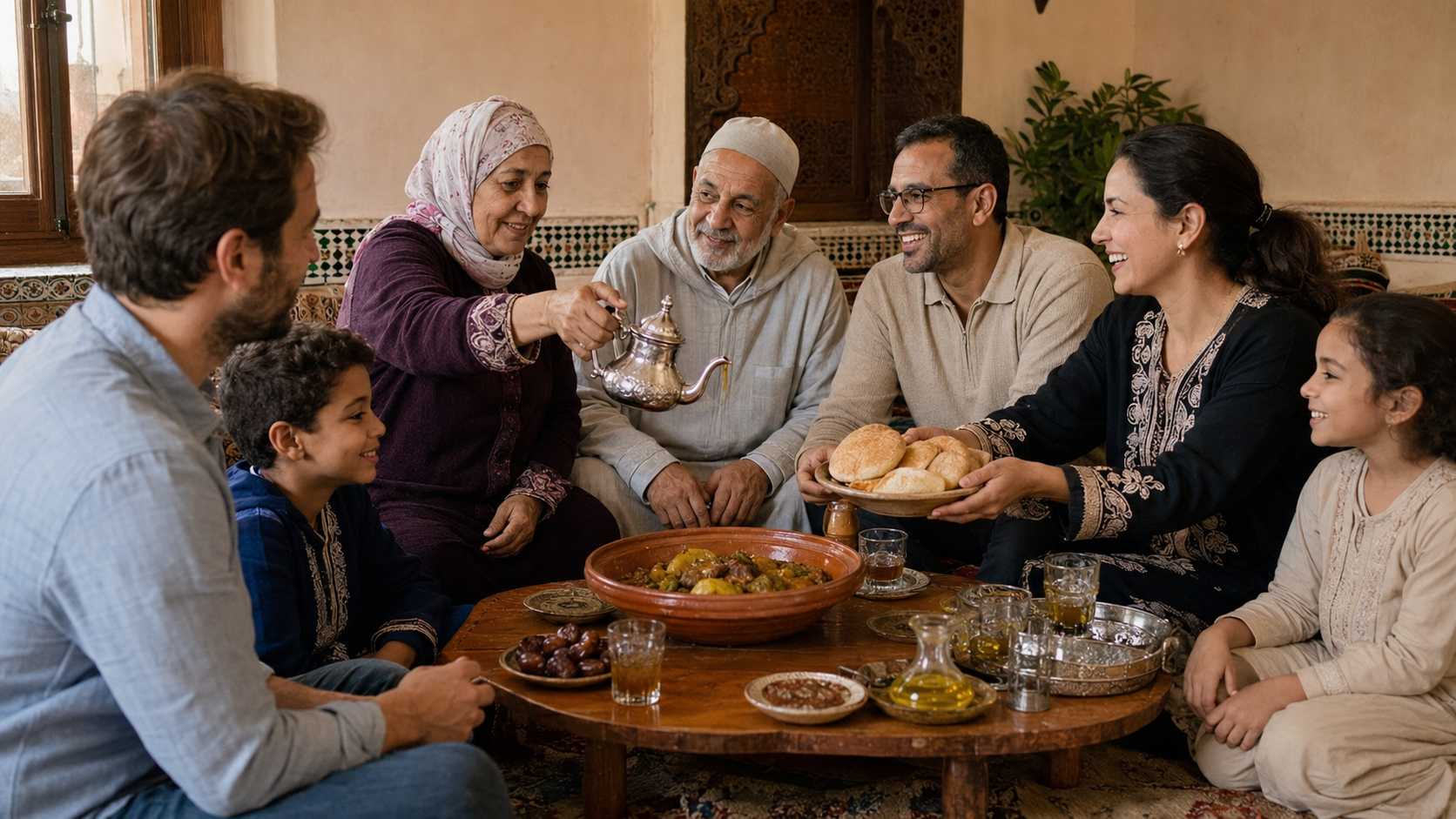
When a guest enters this environment, they are often welcomed into the same circle of care. The host may introduce them to relatives, include them in conversation, and invite them to eat from the shared table.
This helps explain why Moroccan hospitality can feel more personal than formal. The goal is not only to serve a visitor. It is to make that person feel at home.
Generosity as a Sign of Respect
Offering the best available food or drink is a way of honoring a guest.
A family does not need to be wealthy to be generous. Hospitality is measured through attention, effort, and sincerity rather than luxury. A simple glass of tea, fresh bread, olive oil, or a home-cooked tagine can carry great meaning.
Hosts may continue offering food even after a guest says they are full. This usually comes from kindness and a desire to ensure that the visitor has been properly cared for.
Religious and Community Values
Islamic teachings that encourage kindness, generosity, and care for guests have also influenced hospitality traditions in Morocco.
At the same time, community life has historically depended on cooperation. Before modern transportation and hotels became widely available, travelers often relied on local communities for food, directions, and shelter.
In rural areas, mountain regions, and desert communities, helping visitors could be both a social responsibility and a practical necessity. These traditions continue to shape the way many Moroccans welcome guests today.
How a Moroccan Welcome Usually Begins
The experience often starts with greetings.
Moroccans commonly ask about a person’s health, family, journey, and general well-being before moving into the main conversation. These questions show interest and help establish a friendly connection.
You may hear greetings such as:
- Salam alaikum — Peace be upon you
- Marhba — Welcome
- Labas? — Are you well?
- Bikhir, alhamdulillah — Fine, thank God
- Shukran — Thank you
Learning even one or two expressions can create an immediate sense of appreciation.
Handshakes are common, although greetings can vary according to age, familiarity, personal preference, and social context. The safest approach is to follow the other person’s lead.
After the greetings, guests are usually invited to sit in the salon or another comfortable area of the home.
The Moroccan Salon: A Space Designed for Guests
Many Moroccan homes contain a salon specifically arranged for receiving visitors.
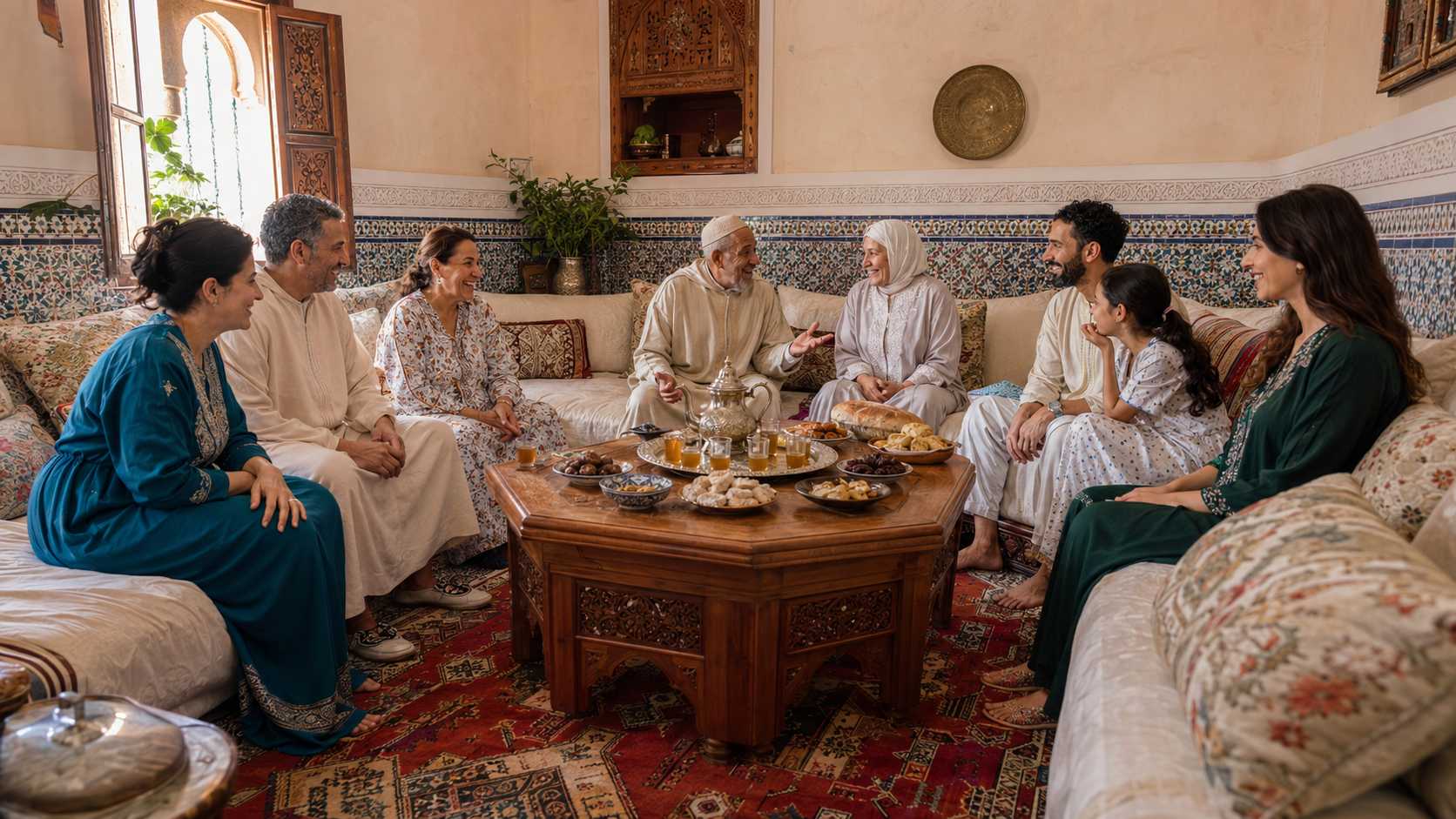
The room often has long cushioned seats positioned along the walls. A central table provides space for tea, pastries, bread, and shared meals. Decorative carpets, embroidered cushions, carved wood, plasterwork, or colorful zellige tiles may complete the setting.
The Moroccan salon reflects the social importance of gathering.
Its arrangement allows family members and guests to sit together, see one another, and participate in the same conversation. Rather than separating people into individual spaces, the room encourages connection.
During celebrations or large family visits, the salon can quickly fill with conversation, laughter, children, and trays of food.
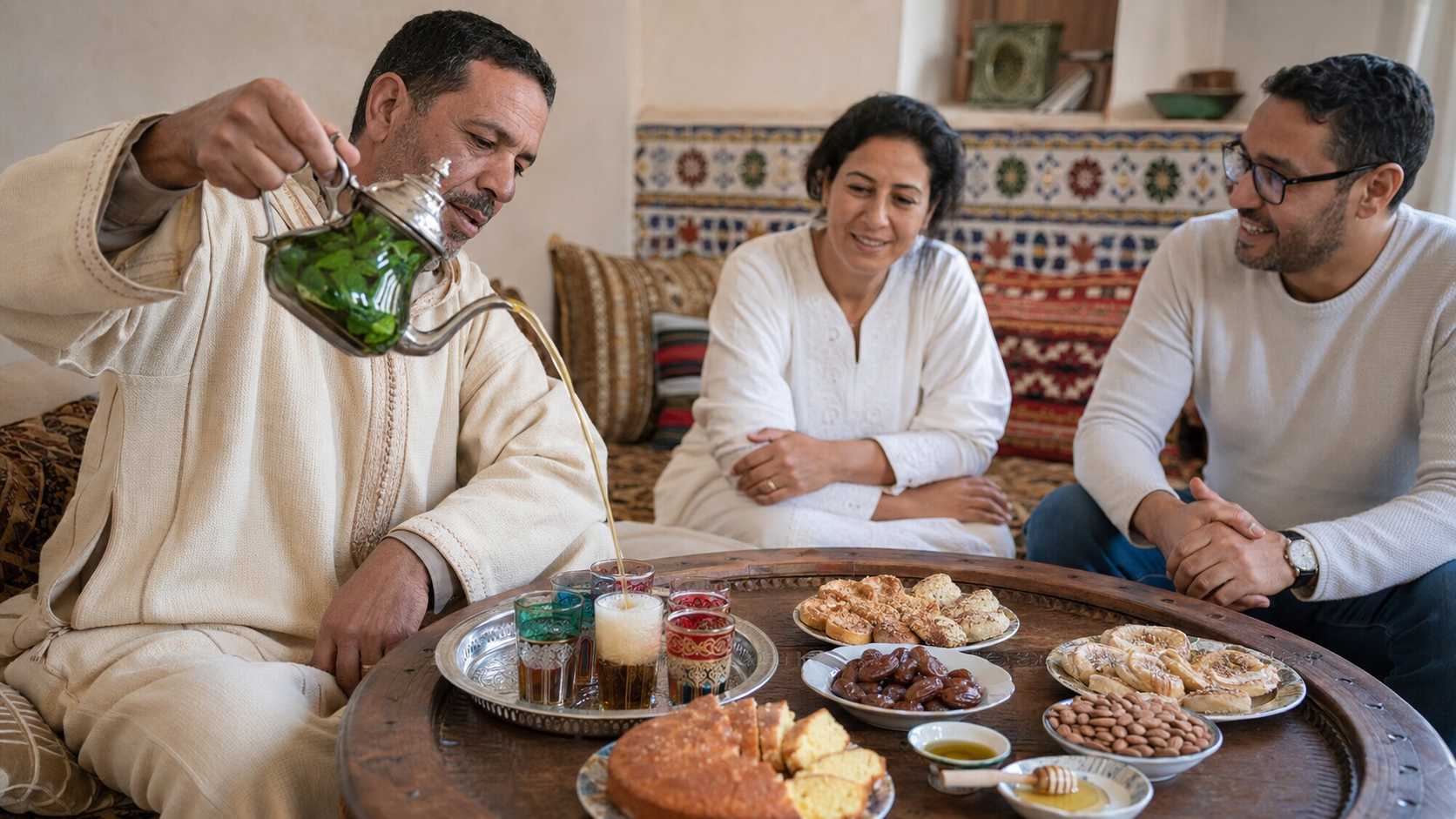
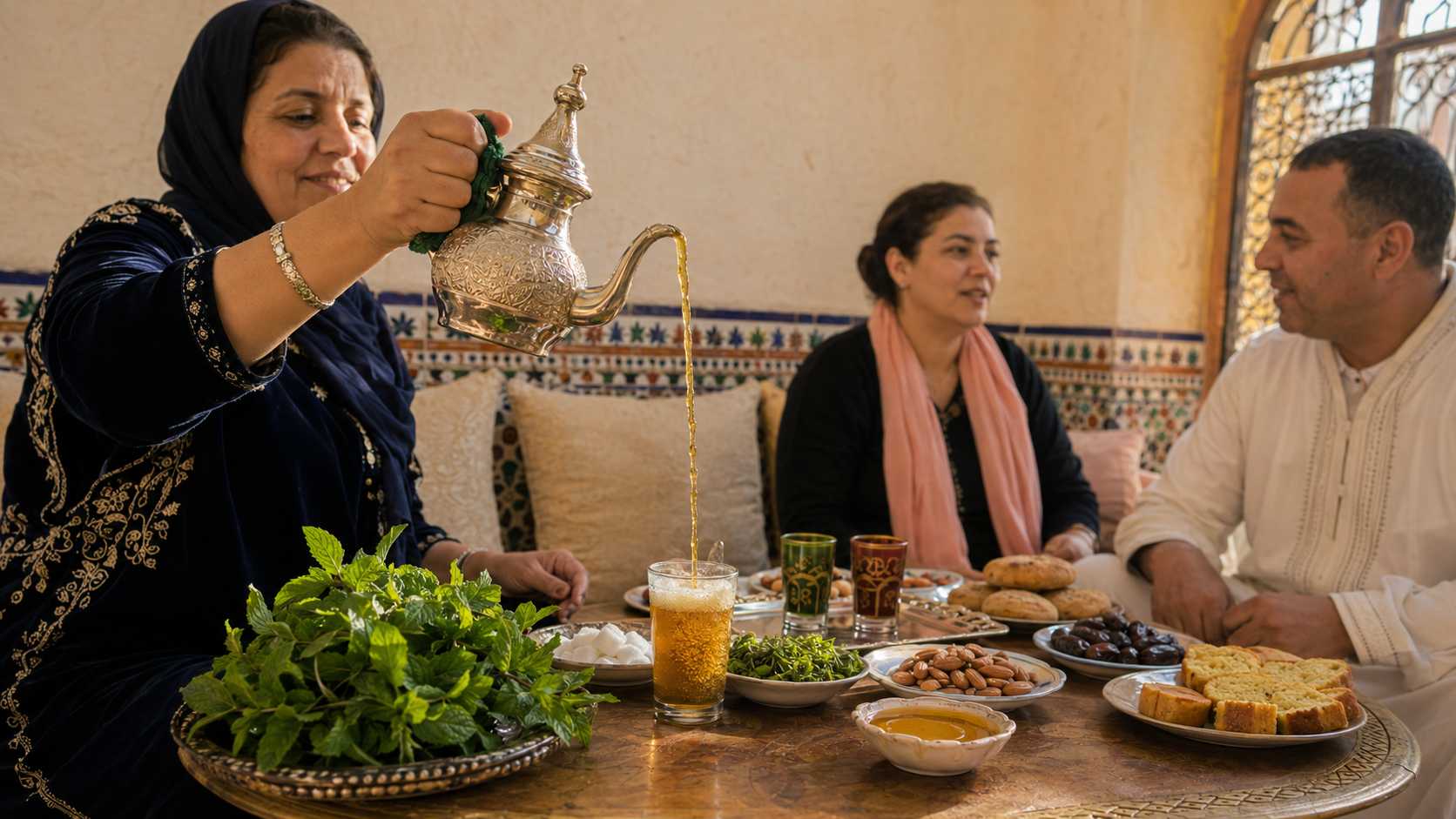
Mint Tea: The First Symbol of Welcome
One of the first things a guest may be offered is Moroccan mint tea.
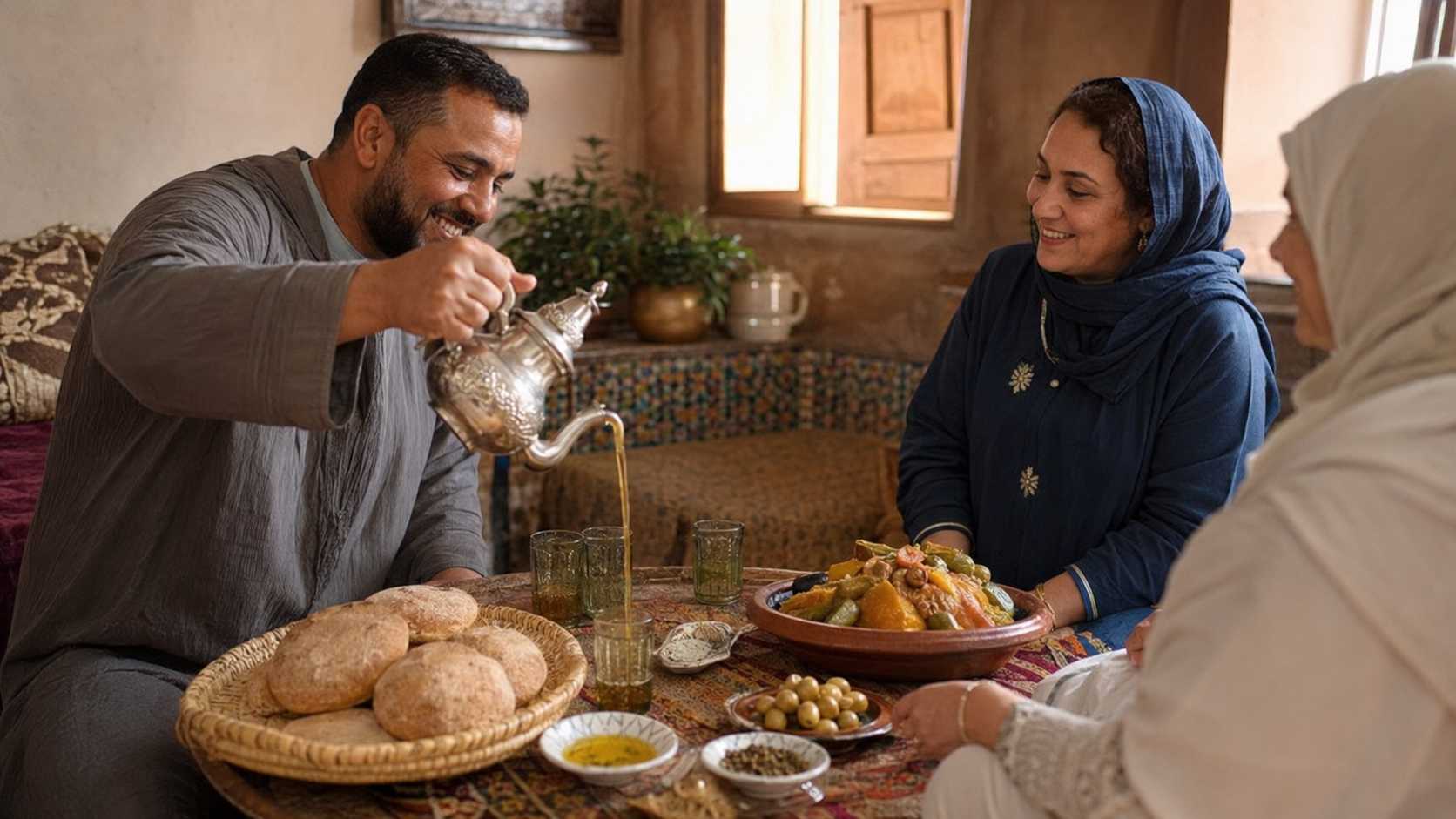
The drink is generally prepared with green tea, fresh mint, hot water, and sugar. Recipes differ according to the household, region, weather, and personal taste. Other aromatic herbs may sometimes be added.
However, tea is about much more than the ingredients.
Preparing and serving it creates time for people to sit together. Conversation begins while the water is heated and the glasses are arranged. The pace of the visit becomes slower and more relaxed.
Tea is often served with:
- Moroccan pastries
- Dates
- Almonds or other nuts
- Bread with honey
- Olive oil
- Homemade cakes
The person preparing the tea may pour it from above the glass, helping mix the ingredients and create foam on the surface. The exact method varies, but the care given to the process is part of the welcome.
Accepting at least one glass is generally appreciated. If you do not want more, a warm thank-you is usually enough.
Food as an Expression of Generosity
Food is one of the clearest expressions of Moroccan hospitality.
When guests arrive near mealtime, hosts may quickly expand what is already being prepared. Additional bread appears, salads are arranged, and everyone gathers around the table.
Common dishes served to guests may include:
- Couscous
- Tagine
- Pastilla
- Rfissa
- Harira
- Grilled meat
- Moroccan salads
- Seasonal fruit
- Traditional pastries
The meal depends on the region, occasion, and family.
A casual visit might involve tea, bread, and olive oil. A celebration may include several courses and carefully prepared dishes. In both cases, the meaning comes from sharing.
Eating from a Shared Dish
Many traditional Moroccan meals are served from one large central dish.
Family members and guests sit around the table and eat together. Bread is often used to collect vegetables, meat, and sauce from the part of the dish directly in front of each person.
In many settings, people eat with the right hand. However, utensils may also be available, especially in restaurants, riads, and urban homes.
If you are uncertain, observe your host and follow their example.
Why Hosts Keep Offering More Food
First-time visitors are sometimes surprised by how often they are encouraged to eat.
Phrases meaning “eat” or “take more” are usually signs of care. Hosts want to know that their guests are comfortable and satisfied.
You do not need to force yourself to continue eating. Thank the host, compliment the meal sincerely, and politely explain that you are full.
The Importance of Time and Conversation
Moroccan hospitality is rarely meant to feel rushed.
A visit may last longer than expected because conversation forms an essential part of the experience. People may discuss family, travel, work, food, football, local life, or the differences between cultures.
Travelers accustomed to strict schedules sometimes need time to adjust.
In many social settings, giving someone your attention is more important than ending the visit at a precise minute. This does not mean that schedules are never respected. Instead, it reflects a more flexible approach to informal gatherings.
Some of the most memorable travel experiences happen during these unplanned conversations.
You may learn how a traditional dish is prepared, hear stories about the region, or discover a place that never appeared in your guidebook.
Hospitality Across Morocco’s Different Regions
Moroccan hospitality is widely valued, but its expression changes across the country.
Hospitality in the Imperial Cities
In cities such as Marrakech, Fes, Rabat, and Meknes, travelers may experience hospitality inside riads, family homes, artisan workshops, and local restaurants.
Urban hospitality often combines traditional customs with modern lifestyles. A host may serve tea in a historic salon or invite visitors to a contemporary café.
Hospitality in the Atlas Mountains
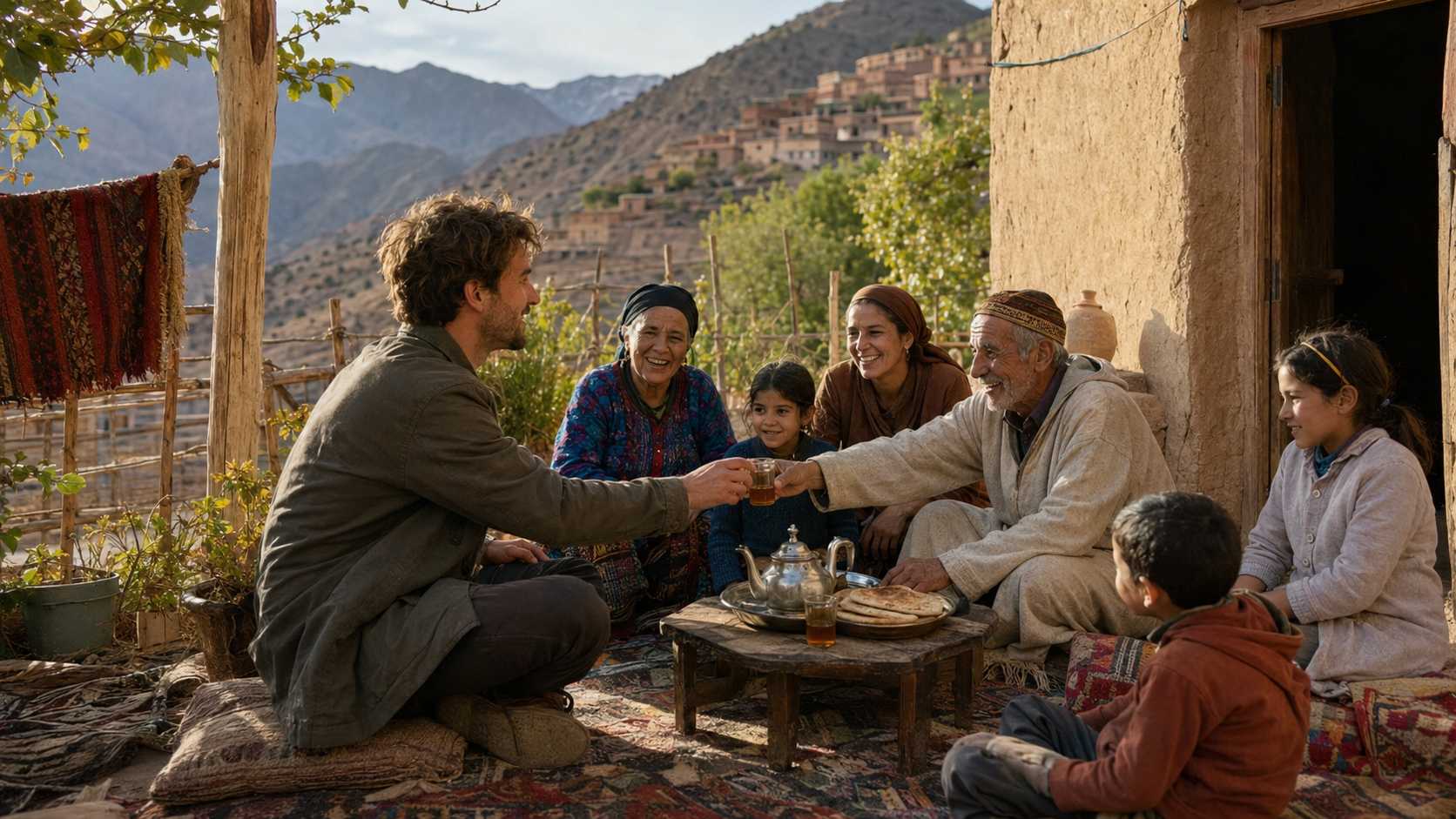
In Amazigh villages of the Atlas Mountains, guests may be welcomed with tea, bread, olive oil, honey, or a home-cooked meal.
Mountain hospitality often feels closely connected to village life. Local guides and guesthouse owners can introduce travelers to farming traditions, architecture, crafts, and the daily rhythms of the region.
Hospitality in Desert Communities
In the areas around Merzouga, M’Hamid, and the Sahara, tea and shared meals provide moments of rest and connection.
Desert traditions were shaped partly by movement across large distances and demanding landscapes. Welcoming travelers, sharing information, and offering refreshment carried practical as well as cultural importance.
Today, conversations around a campfire or inside a desert tent often become a meaningful part of a Sahara journey.
Hospitality in Coastal Morocco
Coastal cities such as Essaouira, Agadir, El Jadida, and Asilah have their own relaxed social atmosphere.
Hospitality may center around seafood meals, café conversations, neighborhood markets, and family gatherings near the ocean. Regional ingredients and local customs give each welcome a different character.
What to Expect When Invited into a Moroccan Home
Receiving an invitation into a local home can be one of the most authentic experiences of a trip.
Knowing a few customs will help you feel more comfortable.
Bring a Small Gift
A gift is not always required, but it is a thoughtful gesture.
Suitable options include:
- Pastries
- Fruit
- Flowers
- Dates
- A small item from your home country
If children are present, a simple family-friendly gift can also be appreciated.
Ask Whether to Remove Your Shoes
Some families remove their shoes before entering a salon or carpeted room, while others do not.
Observe what your hosts do or ask politely.
Accept Refreshments Politely
Trying a little of what is offered shows appreciation.
If you have allergies, dietary restrictions, or foods you cannot eat, explain them clearly and respectfully. When possible, mention them before the meal so the host has time to adjust.
Compliment the Food
A sincere compliment means a great deal to someone who has prepared a meal.
You can say “bnin” for something delicious or simply express your appreciation in English, French, Arabic, or another shared language.
Ask Before Taking Photographs
Do not assume that a home, meal, or family gathering can automatically be photographed.
Ask permission before taking pictures, especially when children or family members are present. A private invitation should remain a respectful cultural exchange rather than becoming only content for social media.
Common Misunderstandings About Moroccan Hospitality
Travelers sometimes interpret unfamiliar social habits incorrectly.
Understanding the context can prevent awkward situations.
Personal Questions Are Often Friendly
A Moroccan host may ask whether you are married, where your family lives, what work you do, or whether you have children.
In many cases, these questions are intended to build familiarity rather than invade privacy. However, you never have to answer something that makes you uncomfortable. A brief response or gentle change of subject is acceptable.
Generosity Does Not Always Require Repayment
Visitors sometimes worry that every glass of tea or invitation creates an obligation.
Genuine hospitality is often offered without expecting payment. A sincere thank-you, respectful behavior, and interest in the host’s culture may be enough.
At the same time, travelers should distinguish a personal invitation from a commercial experience. In busy tourist areas, tea may be part of a shop visit or organized activity. Neither situation is necessarily negative, but understanding the setting helps avoid confusion.
Not Every Interaction Will Be the Same
Moroccan people are individuals.
Hospitality varies according to personality, family customs, region, language, and circumstances. Travelers should avoid expecting every person to behave in one particular way.
The value of cultural travel comes from remaining open while recognizing these differences.
How Travelers Can Return Moroccan Hospitality
Hospitality becomes more meaningful when it is based on mutual respect.
Visitors can respond through simple actions:
- Greet people before beginning a request
- Learn a few words in Darija or Tamazight
- Dress respectfully according to the setting
- Listen with genuine interest
- Ask before photographing people
- Avoid wasting food
- Thank everyone involved in preparing a meal
- Support local guides, artisans, and family-run businesses
- Respect private spaces and household rules
Sharing something about your own culture can also create connection.
A photograph of your hometown, a story about a family tradition, or a few words from your language can turn a conversation into an exchange rather than a one-sided experience.
Experiencing Authentic Hospitality Responsibly
Many travelers hope to meet local families, but authentic encounters should never be forced.
The best experiences usually develop naturally or through trusted introductions. Local guides, community-run guesthouses, cooking classes, village stays, and responsible cultural tours can create respectful opportunities for interaction.
Choose experiences that:
- Pay local hosts fairly
- Respect family privacy
- Avoid treating communities as attractions
- Keep group sizes reasonable
- Explain local customs before the visit
- Allow meaningful conversation
Responsible travel protects the dignity of hosts while giving visitors a deeper understanding of Moroccan life.
Why Moroccan Hospitality Leaves Such a Strong Impression
Morocco is filled with memorable landscapes and historic places. Travelers remember the red walls of Marrakech, the alleys of Fes, the peaks of the Atlas Mountains, and the dunes of the Sahara.
Yet many people return home speaking most warmly about the people they met.
They remember the shopkeeper who walked them to the correct street, the guide who shared stories about his village, or the family that made room for one more person at the table.
These experiences feel powerful because they transform travel into a relationship. The visitor is no longer simply observing Morocco from outside. For a few hours, they are invited to participate in everyday life.
Moroccan hospitality is not defined by one ritual or one dish. It appears through time, generosity, conversation, and the desire to make another person feel welcome.
Understanding this tradition helps travelers move through Morocco with greater confidence and respect. It also encourages them to slow down, listen, and appreciate the human connections that exist beyond every famous attraction.
Long after the tea glasses have been cleared and the journey has ended, the feeling of being welcomed like family often remains one of Morocco’s most unforgettable gifts.
Frequently Asked Questions About Moroccan Hospitality
1. What Makes Moroccan Hospitality Unique?
Moroccan hospitality combines generosity, personal attention, food, tea, and unhurried conversation. Guests are often welcomed into the social space of the family rather than treated as formal visitors. The experience can feel especially warm because hosts frequently make an effort to ensure that everyone is comfortable, well-fed, and included.
2. Why Do Moroccans Serve Mint Tea to Guests?
Mint tea is a traditional symbol of welcome, friendship, and respect. Preparing the tea gives the host and guest time to sit together and begin a conversation. It may be served with pastries, dates, bread, nuts, or other small foods, depending on the household and occasion.
3. What Should I Bring When Invited to a Moroccan Home?
A small gift such as pastries, fruit, flowers, dates, or something simple from your home country is a thoughtful choice. Expensive gifts are not necessary because the gesture matters more than the price. If you are unsure, a box of good pastries that can be shared with the family is usually appropriate.
4. Is It Polite to Refuse Food in Morocco?
You may politely refuse food when you are full or unable to eat something, but trying a small amount is often appreciated. Thank the host and compliment the meal sincerely. If you have allergies, dietary restrictions, or religious requirements, explain them clearly and preferably before the food is prepared.
5. Should Guests Remove Their Shoes in a Moroccan Home?
The custom varies between households. Some families remove their shoes before entering a carpeted salon or another part of the home, while others do not. Observe your host or ask politely if you are uncertain.
6. How Should Travelers Greet a Moroccan Host?
A friendly “salam alaikum” is a respectful way to begin. Handshakes are common, but greetings can differ according to age, familiarity, personal preference, and social context. Follow the host’s lead and take a moment to ask about their well-being before moving directly to another subject.
7. What Happens During a Traditional Moroccan Family Meal?
Family members and guests often gather around a shared table, and dishes such as tagine or couscous may be served from one central plate. Bread is commonly used to collect food from the section directly in front of each person. The host may repeatedly encourage guests to eat more as a sign of care and generosity.
8. Is Moroccan Hospitality Different Across the Country?
Yes. The central values of welcome and generosity are widespread, but food, language, presentation, and customs vary by region and family. A welcome in an urban riad may differ from tea in an Atlas village, a meal in a coastal home, or a gathering in a desert community.
9. Can Travelers Experience Authentic Moroccan Hospitality?
Yes, especially through trusted local guides, family-run guesthouses, community-based tours, cooking classes, and natural encounters during a journey. Travelers should choose experiences that respect privacy and compensate local hosts fairly. Authentic hospitality should feel like a meaningful exchange rather than a staged performance.
10. How Can Visitors Show Respect and Gratitude to Moroccan Hosts?
Visitors can greet everyone warmly, accept refreshments when possible, thank the people who prepared the food, and ask permission before taking photographs. Learning a few words in Darija or Tamazight also shows genuine interest. Most importantly, listen attentively and treat the invitation as a personal act of generosity.
Ready to discover Morocco? Let's plan your perfect trip.
Whether it’s a desert adventure from Marrakech, an imperial cities tour, or a custom itinerary — our team responds within 24 hours with a tailored plan and quote.