
Morocco’s Second Cities Are Stealing the Spotlight: Why Travelers Are Skipping Marrakech in 2026
If you’ve been researching the best cities to visit in Morocco 2026, chances are Marrakech tops every list you’ve clicked on. It’s iconic. It’s photogenic. And right now, in the spring and early summer of 2026, it’s also crowded in ways that are starting to push curious travelers elsewhere.
Morocco welcomed a record-breaking 7.7 million international tourists in just the first five months of 2026 — a 7% surge over the same period last year. Revenue figures tell an equally striking story: tourism receipts hit 44.39 billion Moroccan dirhams in only four months. This boom is extraordinary for the country’s economy, but it comes with a catch. The pressure is concentrated. Marrakech, Chefchaouen’s blue alleys, and the Sahara dunes around Merzouga absorb the bulk of arrivals, and the cracks are beginning to show — longer queues, inflated riad prices, and a souvenir-market energy that can feel miles away from the authentic Morocco most people came to experience.
The good news? Morocco is far more than its most photographed corners. A new wave of slow travelers, digital nomads, culture-seekers, and off-the-beaten-path explorers is quietly discovering that the best cities to visit in Morocco in 2026 are not always the ones plastered across travel magazines. They are smaller, less commercialized, and far more rewarding for anyone willing to look a little beyond the obvious.
This guide covers six destinations that are reshaping the Morocco travel conversation this year — why they’re surging, who they’re perfect for, and what makes each one worth your time.
Why Travelers Are Looking Beyond Marrakech in 2026
The shift is real and it’s data-backed. The biggest travel macro-trend of 2026 globally is slow travel — the deliberate choice to spend a week in one place rather than race through five cities in a single trip. Travelers are prioritizing depth over breadth, local connection over landmark-ticking, and value over prestige.
Morocco is perfectly positioned for this shift. Its geography alone offers an almost unfair range of experiences: Atlantic coastline, Mediterranean ports, Saharan edges, High Atlas peaks, Roman ruins, and medieval medinas — all within a country roughly the size of California. The imperial cities, surf towns, and mountain villages that make up Morocco’s secondary tier are now benefitting from improved infrastructure, new direct flight routes, and the kind of organic social media attention that no marketing budget can manufacture.
Add to that the growing number of North American and long-haul travelers discovering Morocco for the first time in 2026 — visitors from the US, Canada, Brazil, Saudi Arabia, and the UK are all surging — and you have an audience actively searching for the best cities to visit in Morocco 2026 that offer something fresher than a crowded Djemaa el-Fna experience.
Here is where they’re going instead.
1. Fès — The Intellectual Capital Making a Major Comeback
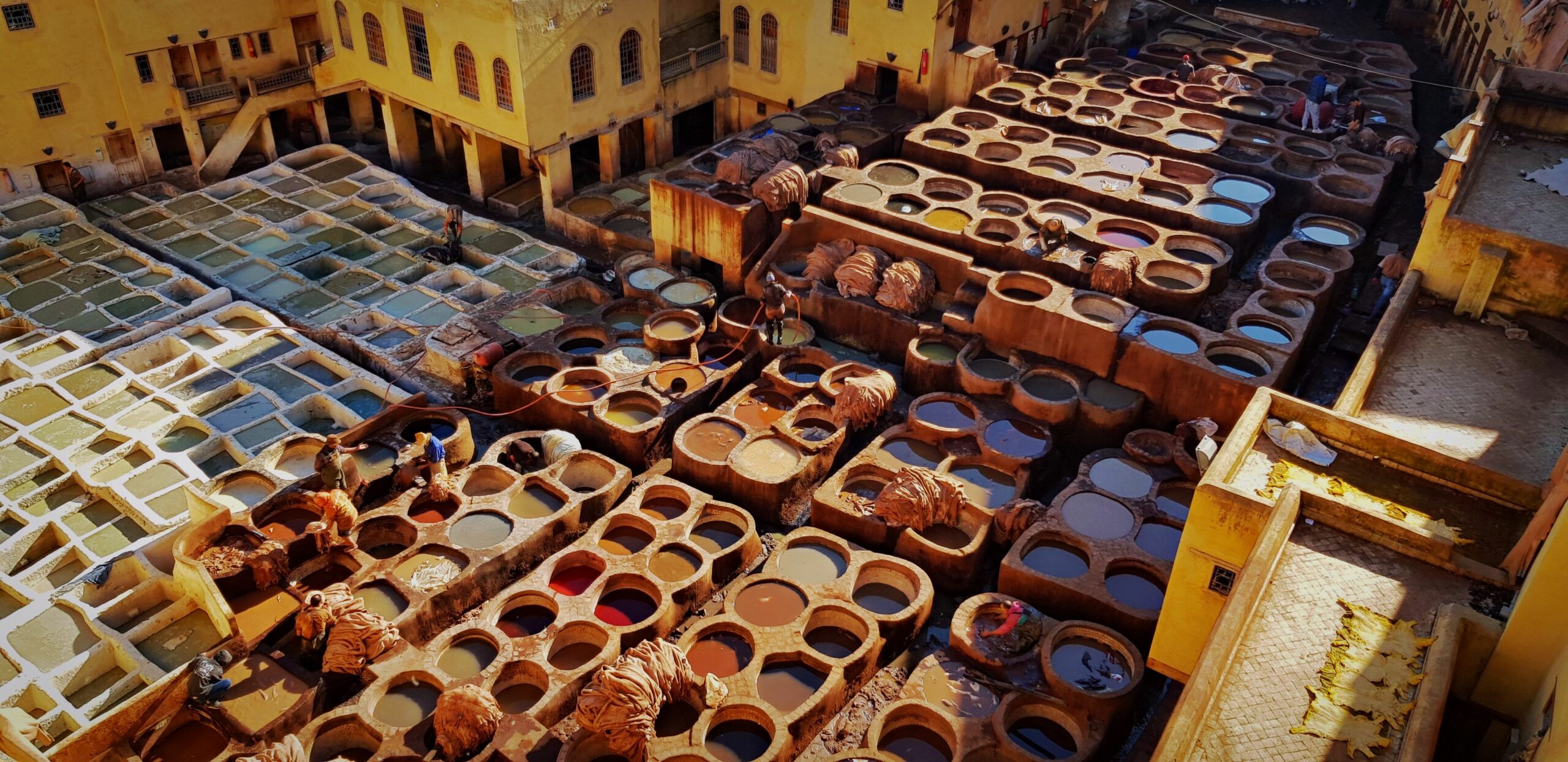
If there is one city that defines the 2026 Morocco travel conversation, it is Fès. Long overshadowed by Marrakech’s louder, more visual appeal, Fès has quietly been building a case as the most compelling city in North Africa. Experts across multiple travel publications named it one of the top destinations for 2026 globally — not just in Morocco — citing improved accommodation options and upgraded infrastructure as key drivers.
The medina of Fès el-Bali is the oldest continuously inhabited medieval city in the world and a UNESCO World Heritage Site. Walking through it feels genuinely disorienting in the best possible way: the streets narrow to the width of a donkey cart, artisans work in the same workshops their great-grandparents occupied, and the famous Chouara tannery — a living palette of saffron, indigo, and poppy red — operates today almost exactly as it did in the 12th century.
What makes Fès particularly relevant among the best cities to visit in Morocco 2026 is the arrival of direct international flights that have fundamentally changed accessibility. Previously, most visitors had to route through Casablanca or connect via Marrakech, which naturally pushed them toward the latter. Now, travelers flying into Fès can skip the southern tourist circuit entirely and use the city as a northern Morocco base.
Best for: History enthusiasts, architecture lovers, foodies (Fassi cuisine is considered the most refined in Morocco), and anyone who wants medina life without the Marrakech price surge.
Don’t miss: The Bou Inania Madrasa, Al-Qarawiyyin University (founded 859 AD, the world’s oldest continuously operating university), and a private cooking class in a traditional Fassi home.
When to go: April–May and September–October for the most comfortable temperatures in the medina.
2. Essaouira — The Atlantic Soul of Slow Travel
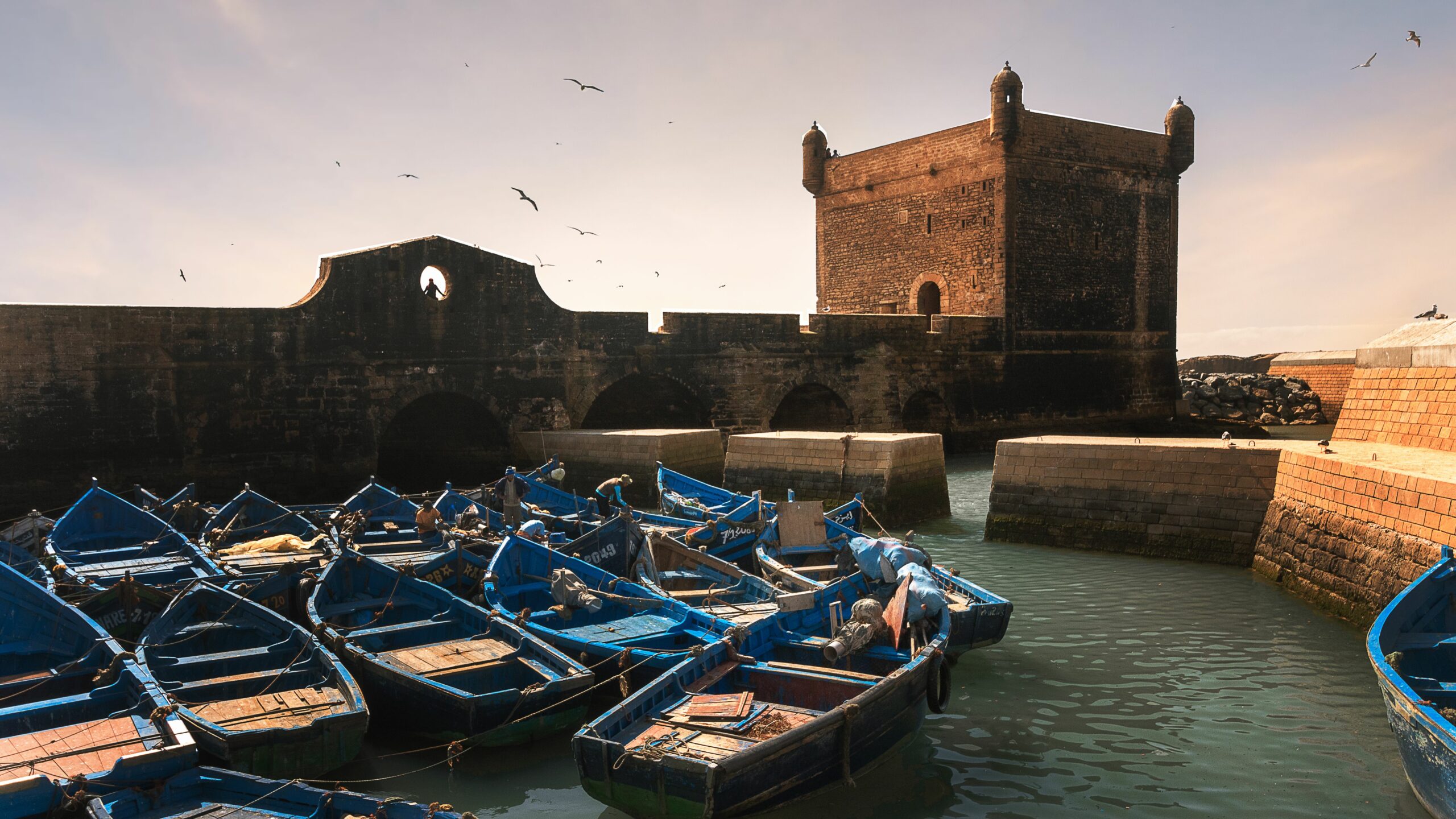
Essaouira has always had its devotees — Jimi Hendrix famously spent time here in the late 1960s, and the city’s bohemian, wind-swept character has attracted artists, writers, and musicians ever since. But in 2026, something has shifted. Essaouira is no longer just a weekend escape from Marrakech. It has become a destination in its own right, and one of the most recommended cities for visitors searching for the best cities to visit in Morocco 2026 on a slower itinerary.
The city works on a completely different frequency to the imperial capitals. The ramparts face the Atlantic, the winds keep temperatures moderate even in summer, and the medina — also UNESCO-listed — is compact enough to feel manageable but rich enough to reward days of wandering. The port is still a working one: blue fishing boats, silver piles of sardines, cats watching proceedings with professional interest.
For digital nomads and remote workers, Essaouira has become a genuine hub. The café culture is strong, Wi-Fi is reliable across most of the medina and the Ville Nouvelle, and the cost of living remains significantly lower than Marrakech or Casablanca. A studio or small riad room in the medina can be found at very accessible monthly rates, and the community of long-stay travelers creates a natural social infrastructure.
Best for: Artists, writers, digital nomads, couples looking for a romantic Atlantic base, and anyone who finds Marrakech overwhelming.
Don’t miss: The ramparts at sunset, the Gnawa music scene (especially around the annual Gnaoua Festival), fresh grilled fish at the port stalls, and the weekly organic souk on the outskirts of town.
When to go: March–June and September–November. July and August bring extreme wind — great for kitesurfers, less great for everyone else.
3. Chefchaouen — Beyond the Blue Photo and Into the Real Rif
Yes, Chefchaouen is famous. Yes, every social media feed has seen its powder-blue stairwells and whitewashed medina walls. But here is the thing: the fame has not actually ruined Chefchaouen yet. Unlike the truly over-touristed spots, the blue city retains a genuinely relaxed pace, and the surrounding Rif Mountains offer experiences that most day-trippers never reach.
What makes Chefchaouen worth including among the best cities to visit in Morocco 2026 is not the photogenic factor — it is the surrounding landscape that most visitors ignore. The Talassemtane National Park begins almost at the city’s edge. The Akchour waterfalls, a few kilometers into the park, are among the most beautiful natural sites in northern Morocco, and the trails around them remain virtually crowd-free even as the city itself grows busier.
The city is also a genuine craft hub. Woven wool blankets in deep jewel tones, hand-embroidered djellabas, and locally produced goat cheese give the market a distinctly northern Moroccan character that feels different from the brass-and-leather souks of Fès or Marrakech.
The best strategy in 2026 is to arrive on a weekday afternoon, stay two nights minimum, and use the early morning hours — before the day-trippers arrive from Tétouan and Tangier — to walk the medina in near-complete silence. The difference between 7 AM and 10 AM in Chefchaouen is the difference between two entirely different cities.
Best for: Photographers, hikers, families with children, travelers doing a northern Morocco circuit combining Tangier, Tétouan, and Chefchaouen.
Don’t miss: The Spanish Mosque viewpoint at sunrise, the Akchour waterfalls hike, and the Plaza Uta el-Hammam for an evening meal under the kasbah walls.
When to go: April–June and September–October. Winters can be cold and rainy; summers bring day-tripper crowds at peak hours.
4. Taghazout & Tamraght — Morocco's Surf Coast Grows Up
If you are looking for the best cities to visit in Morocco 2026 and your idea of a perfect day involves a morning surf session followed by work from a coworking space and a rooftop dinner at sunset, the Agadir coast is where you need to be.
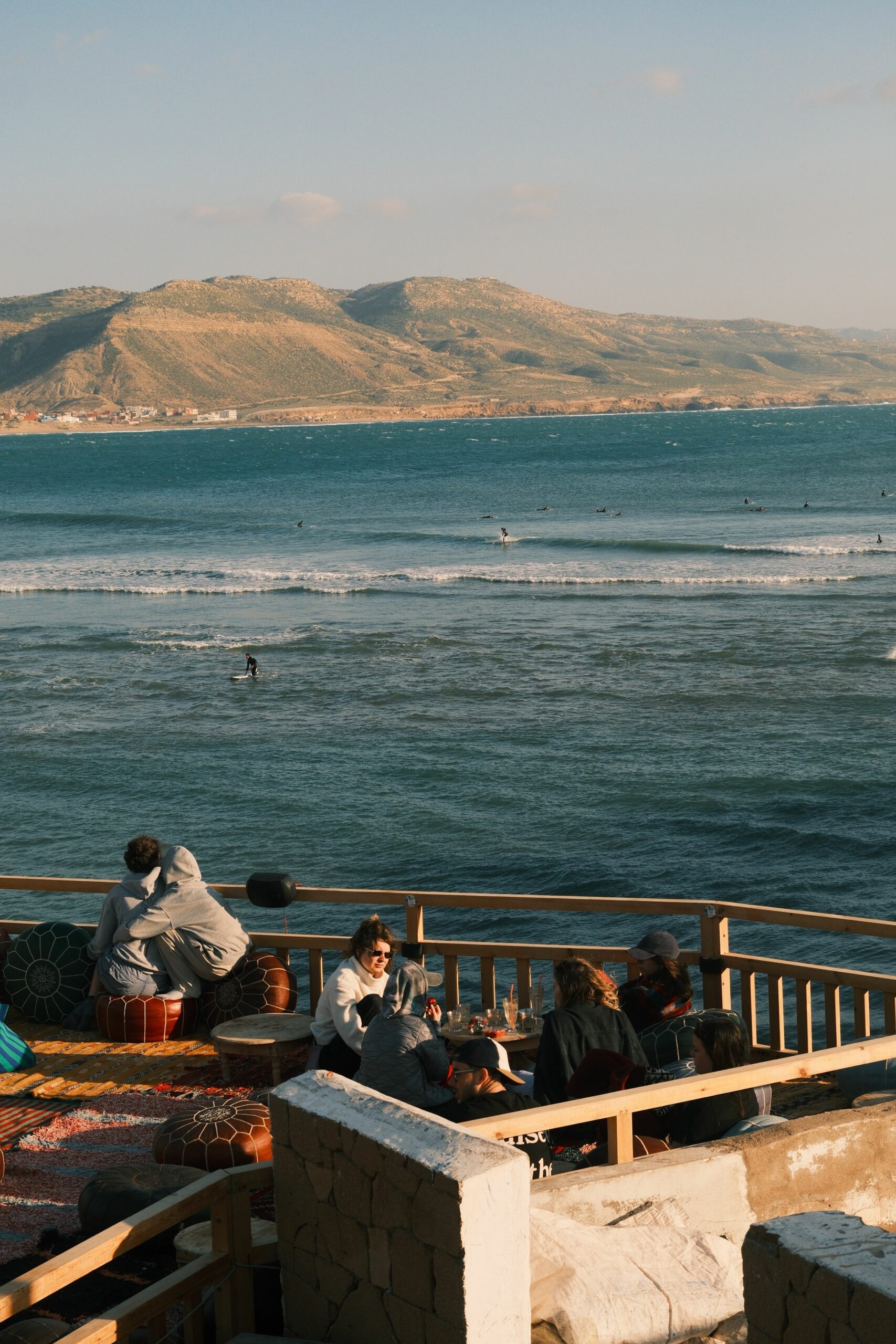
Taghazout and its quieter neighbor Tamraght — situated just 10 minutes apart on the Atlantic coast north of Agadir — have undergone a remarkable transformation over the past few years. Taghazout was long known as a world-class surf destination: consistent waves, year-round sun, and a village atmosphere that drew hardcore surfers willing to trade comfort for quality swells. That core identity is still very much intact. What has changed is everything around it.
Tamraght, in particular, tells the more interesting story. A decade ago it was an unremarkable fishing village. Today it is a surf and remote work hotspot with a thriving expat community, yoga studios offering daily classes, several credible coworking spaces, and a café scene that would not look out of place in Lisbon or Valencia. Importantly, it has pulled this off while maintaining a genuinely local feel — the fishermen still bring boats in every morning, the weekly market is a neighborhood affair, and the pace remains resolutely unhurried.
For the growing wave of North American and European travelers who make up a large part of Morocco’s 2026 long-haul visitor surge, the surf coast offers something genuinely different: an affordable, sun-soaked Atlantic lifestyle that competes with the Algarve or the Canary Islands at a fraction of the price.
Best for: Surfers of all levels, digital nomads, couples, solo travelers seeking an active lifestyle base, yoga and wellness focused travelers.
Don’t miss: Surf lessons at Hash Point or Anchor Point (for experienced surfers), sunset at the Taghazout skatepark, a day trip to Paradise Valley (a stunning palm-lined gorge 20 minutes inland), and the freshly caught fish grills along the beach road.
When to go: September–April for the best surf. May and June offer smaller waves, warmer air, and fewer people — ideal for beginners and digital nomads.
5. Tétouan — The Andalusian Secret of the North
Tétouan remains one of the most underrated destinations in Morocco, and in 2026 that underrated status is starting to work in its favor. As more travelers explore northern Morocco — driven by direct flights to Tangier and Fès — Tétouan is catching attention as a day trip that keeps expanding into a multi-day stay.
The city’s UNESCO-listed medina carries the most visible traces of Andalusian heritage in Morocco. When Spanish Muslims and Jews were expelled from southern Spain in 1492, many settled in Tétouan, and the architecture, street patterns, and decorative traditions they brought with them are still visible in ways that feel remarkably intact. The white-painted facades, arched doorways, and central courtyard houses echo Granada and Córdoba in a way that surprises most first-time visitors.
The medina is also less commercial than those of Fès or Marrakech, which is either a drawback or a major asset depending on what you’re looking for. There are fewer tourist-facing shops and more streets where daily life simply happens around you — bakeries, Quranic schools, neighborhood hammams, and small workshops producing goods for local consumption rather than souvenir shelves.
Tétouan’s proximity to the Mediterranean beaches of Martil and Cabo Negro adds another dimension that most inland Morocco itineraries lack entirely.
Best for: History buffs, architecture enthusiasts, travelers on a northern Morocco circuit, and anyone interested in the Andalusian cultural thread in Moroccan heritage.
Don’t miss: The Museum of Moroccan Arts, the Feddan square at evening, the Ensemble Artisanal for quality crafts without the hard sell, and the short drive to Martil beach for a seafood lunch.
When to go: April–June and September–November for ideal weather. July and August are hot but the coast provides relief.
6. Agadir — The Practical Base That Keeps Surprising People
Agadir rarely generates the romantic excitement of Fès or the bohemian appeal of Essaouira. It was largely rebuilt after a devastating earthquake in 1960, so it lacks the historic medina that defines most Moroccan cities. And yet Agadir consistently ranks among the most visited cities in Morocco for a reason: it works.
For families, older travelers, first-time visitors to Morocco, or anyone who wants to pair cultural exploration with genuine beach resort comfort, Agadir delivers in ways that more romantic destinations sometimes cannot. The beach is one of the finest in North Africa — a long arc of clean sand with calm, swimmable Atlantic water. The infrastructure is modern, the restaurants are diverse, and the city has invested heavily in accessibility and safety.
In 2026, Agadir is also serving as the gateway city for the surf coast, with the airport receiving an expanding range of direct international routes that feed travelers up to Taghazout and Tamraght, south to the anti-Atlas, and east toward the pre-Saharan landscapes around Taroudant and Tiznit.
Taroudant in particular — a walled city about 80 kilometers east of Agadir — is one of the most genuinely off-the-radar stops in southern Morocco: a functioning, lived-in version of a Marrakech-style medina with almost none of the tourist infrastructure. If you are using Agadir as a base, a day trip to Taroudant is close to essential.
Best for: Families, beach-focused travelers, those combining a resort holiday with cultural excursions, and travelers using it as a base for the Atlantic coast and southern Morocco.
Don’t miss: The Souk El Had (one of the largest weekly markets in Morocco), the Agadir Oufella ruins at sunset, the fish market in the port, and the day trip to Taroudant.
When to go: October–May. Summers are hot but the beach culture is full on. June is a sweet spot — warm, uncrowded, and the best prices of the year.
How to Plan Around the Best Cities to Visit in Morocco 2026
The single most common planning mistake for Morocco in 2026 is trying to cover too much. Morocco is roughly the size of California — travel days are real, and the gap between a rushed itinerary and a well-paced one is the difference between leaving exhausted and leaving already planning your return.
A few practical frameworks for 2026:
Northern circuit (7–10 days): Tangier → Chefchaouen → Tétouan → Fès. Best accessed via direct flights into Tangier or Fès. Use the Al Boraq high-speed train between Tangier and Casablanca if needed.
Atlantic coast circuit (5–8 days): Essaouira → Agadir → Taghazout/Tamraght → Taroudant. Best for slow travelers, surfers, and digital nomads. Fly into Marrakech or Agadir.
Full Morocco immersion (14+ days): Combine north and south with Fès and Marrakech as anchor cities, building in 2–3 night stays at secondary stops. This is the itinerary that generates the most memorable Morocco experiences in 2026.
Book accommodations early, particularly for May and June. The record-breaking visitor numbers of Q1 and Q2 2026 have tightened inventory across all categories, especially riads and boutique guesthouses in medinas.
The best cities to visit in Morocco in 2026 are not a secret — but they are still a choice. A conscious decision to trade the predictable for the authentic, the crowded for the considered, and the Instagram-famous for the genuinely memorable. Morocco’s secondary cities are not lesser versions of Marrakech. In many cases, they are more Morocco than Marrakech has been able to remain under the weight of its own popularity.
The travelers discovering Fès at dawn, surfing Tamraght’s breaks before a morning call, watching the Atlantic light change over Essaouira’s ramparts, or walking Tétouan’s Andalusian lanes in near-complete solitude — they are not missing out on Morocco. They are getting the best of it.
And they are doing it in 2026, before everyone else catches on.
1. Is Morocco safe to visit in 2026?
Yes. Morocco is consistently ranked as one of the safest travel destinations in Africa and the broader Arab world. The country has a stable government, a strong tourist police presence in major cities and medinas, and a deeply ingrained culture of hospitality toward visitors. Standard travel precautions apply — watch your belongings in crowded souks, use licensed guides or book through reputable operators, and avoid unlit areas of medinas late at night. Solo female travelers visit Morocco regularly and safely, particularly in well-touristed cities and coastal towns, though a degree of street awareness is always sensible. The record visitor numbers of 2026 are a strong indicator of confidence in Morocco’s safety reputation across global markets.
2. What is the best time of year to visit Morocco?
The answer depends on which part of Morocco you are targeting. As a general rule, April to early June and September to November are the sweet spots for most destinations — temperatures are comfortable across the country, crowds are manageable outside of school holiday peaks, and the light is exceptional for photography. Avoid mid-July to late August for interior cities like Fès and Marrakech, where temperatures regularly exceed 40°C. The Atlantic coast (Essaouira, Taghazout, Agadir) is more forgiving in summer thanks to sea breezes, but July and August still bring wind-dominated conditions along the Essaouira stretch. For the northern circuit — Chefchaouen, Tétouan, Tangier — spring and early autumn are ideal. The Sahara south is best October through March.
3. Do I need a visa to visit Morocco?
Citizens of over 60 countries can enter Morocco visa-free for up to 90 days, including the entire EU, UK, USA, Canada, Australia, and most of Latin America. You arrive on a standard tourist entry — no advance application required. After 90 days, options include a short border run to the Spanish enclaves of Ceuta or Melilla (reachable by bus from Tétouan) followed by re-entry, or applying for a longer-stay residency permit. Morocco does not currently have a dedicated digital nomad visa as of 2026, though the government’s Digital Morocco 2030 strategy signals that simplification of work permits for international remote workers is a stated policy direction. Always verify the current entry rules for your specific passport before traveling, as these can change.
4. How many days do I need to explore Morocco's secondary cities properly?
A minimum of 10 to 14 days is recommended if you want to explore two or more of Morocco’s secondary cities without feeling rushed. The slow travel movement that is defining Morocco tourism in 2026 encourages spending at least 3 nights in each destination — enough time to settle into the rhythm of a place, explore beyond the obvious sights, and have spontaneous experiences rather than ticking landmarks off a list. For a focused northern Morocco circuit (Fès, Chefchaouen, Tétouan, Tangier), 7 to 10 days works well. For a full north-to-south journey combining the best cities to visit in Morocco in 2026, allow 14 days or more. Trying to cover everything in under a week almost always produces a rushed, surface-level experience that does the country a disservice.
5. Is Morocco a good destination for digital nomads in 2026?
Absolutely — and it is becoming more so every year. Morocco entered the 5G era in late 2025, with coverage currently active in Casablanca, Rabat, and Marrakech and expanding progressively. In the coastal nomad hubs of Taghazout and Tamraght, dedicated coworking spaces with reliable fiber connections have become standard. Essaouira, Fès, and Agadir all have workable café culture and coworking options. The cost of living is one of Morocco’s strongest appeals: a comfortable remote work lifestyle with accommodation, food, and leisure typically lands between $1,200 and $1,500 per month, significantly lower than comparable European or Southeast Asian nomad bases. The time zone (UTC+1 year-round) also makes Morocco ideal for European clients and manageable for East Coast US collaboration. The combination of affordability, culture, climate, and connectivity makes Morocco one of the most compelling nomad destinations in the world right now.
What does the UNESCO inscription mean for the Gnawa tradition?
The 2019 UNESCO inscription of Gnawa culture on the Intangible Cultural Heritage list means that Morocco, as the signatory state, is committed to safeguarding and promoting the tradition. It brings international visibility, potential funding for preservation programs, and formal recognition of the tradition’s universal value. Importantly, the inscription also emphasized the need to preserve Gnawa culture in its living, community-based form — not merely as a museum piece.
Ready to Explore Morocco Without the Stress?
Ideal Tour Morocco specialises in safe, curated tours for solo female travelers. Local guides, vetted riads, and stress-free itineraries — built for women who travel alone.