
Hidden Villages in Morocco: 12 Secretive Gems Most Tourists Never Find ( 2026 Guide )
Most travelers who visit Morocco follow the same well-worn path — a few days in Marrakech’s bustling medina, a night or two in the blue alleys of Chefchaouen, and maybe a quick camel ride at the edge of the Sahara. It’s a wonderful itinerary, but it barely scratches the surface of what this country has to offer.
Beyond the famous imperial cities and the Instagram-famous highlights lies a Morocco that few outsiders ever witness. If you want to experience the true soul of the country, exploring the hidden villages in Morocco is where your journey should really begin. Here, you’ll find ancient Berber villages clinging to cliffsides, quiet oasis settlements surrounded by endless dunes, and sleepy fishing hamlets where time seems to have stood still for centuries. These are the places where authentic Morocco breathes, where locals live as their ancestors did, and where a traveler can form real, lasting connections with a culture that is far deeper than any souvenir market.
This guide is your passport to discovery. Whether you’re an adventurous hiker, a slow traveler craving cultural immersion, or simply someone who wants more than the tourist trail, these hidden villages in Morocco will completely change how you see this extraordinary country.
Why Morocco's Hidden Villages Are the Country's Best-Kept Secret
Morocco receives millions of tourists every year, and the vast majority of them cycle through the same handful of destinations. Marrakech, Fes, Casablanca, and Essaouira absorb almost all the attention — and with good reason. These cities are extraordinary. But the relentless flow of visitors has also transformed them. Riad prices have soared, touts crowd the medina gates, and the “authentic” experience often feels carefully staged for foreign consumption.
Morocco’s hidden villages have none of that. In a remote hamlet in the High Atlas or a forgotten coastal settlement south of Agadir, you are simply a guest — curious, welcome, and treated with genuine Moroccan hospitality that hasn’t been sanded smooth for mass tourism.
There’s also an increasingly strong case for visiting these places from a sustainability standpoint. Community-based tourism in rural Morocco directly supports families and small cooperatives. When you stay in a village guesthouse, eat a home-cooked tagine, or hire a local guide for a mountain trek, your money stays in the community rather than flowing to international hotel chains.
And from a purely experiential perspective? Nothing compares to waking up in a mud-brick home, stepping outside to a panorama of terracotta mountains, and sipping mint tea with a Berber family as the sun rises over a valley untouched by modern development.
The Most Stunning Hidden Villages in the Atlas Mountains
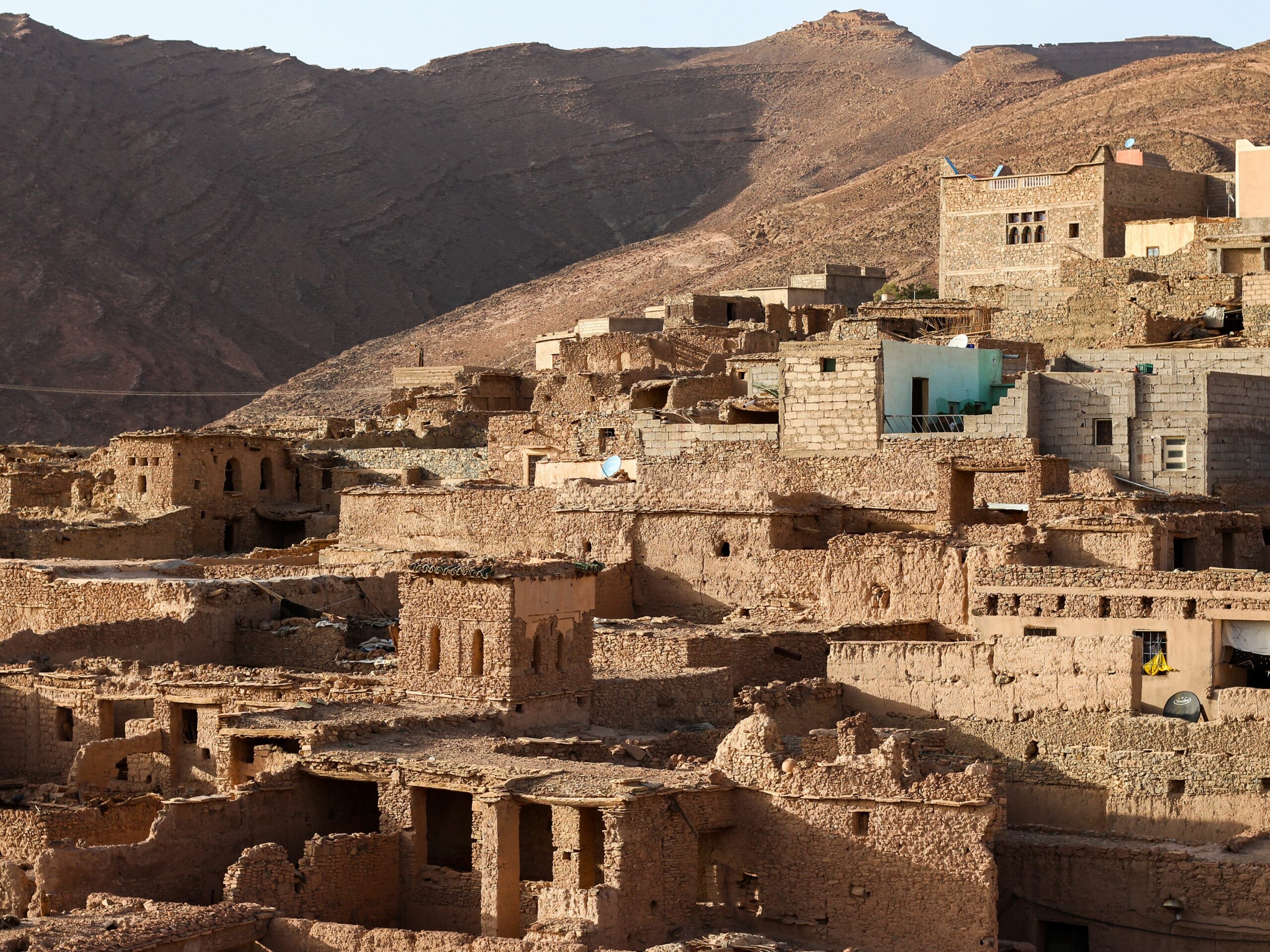
The Atlas Mountains are Morocco’s backbone — a vast, dramatic chain that stretches for over 2,400 kilometers and shelters hundreds of Berber villages that have existed for thousands of years. While most visitors know Imlil (the trekking gateway to Mount Toubkal), the surrounding region is scattered with villages that receive a fraction of the foot traffic.
Zaouiat Ahansal, tucked deep in the Central High Atlas, is one of the most spectacular. Accessible only by piste road or a multi-day trek, this village sits at the convergence of canyons that rival anything in the American Southwest. The local population is almost entirely Berber, and the village acts as the starting point for some of Morocco’s most exhilarating hiking routes, including the legendary Ahansal gorges.
Anammer, perched in the Mgoun Valley, is another extraordinary find. This small settlement serves as a base for trekking the Mgoun Massif, the second-highest peak in Morocco. The landscape here shifts dramatically — from lush rose-growing valleys (this region supplies much of Morocco’s famous rose water) to stark, wind-sculpted ridgelines. Visit in early May and the valley erupts in pink blossoms during the annual Rose Festival.
Aït Benhaddou’s outskirts are also worth exploring. The UNESCO-listed ksar itself is famous, but the dirt tracks leading away from it into the surrounding valleys reveal smaller, less-visited villages where families still live in traditional earthen architecture, cultivating barley and raising livestock much as they have for generations.
The best time to visit Atlas villages is spring (March to May) or early autumn (September to October), when temperatures are mild and the scenery is at its most vivid. Summer can be brutally hot in the lower valleys, while winter brings heavy snowfall to high-altitude passes.
Secret Coastal Villages Most Tourists Never Find
Morocco’s coastline stretches for nearly 3,500 kilometers, from the Mediterranean in the north to the wild Atlantic coast bordering Western Sahara in the south. While Essaouira and Agadir draw the beach crowds, there are quieter, more soulful coastal villages waiting just around the headland.
Mirleft, roughly two hours south of Agadir, is perhaps the finest example. This small town sits on a cliff above a series of wild, unspoiled beaches that rival anything in southern Europe. There are no beach clubs, no jet ski rentals, no all-inclusive resorts — just rugged Atlantic swells, dramatic rock formations, and a handful of low-key guesthouses run by locals. Mirleft has attracted a small community of artists, writers, and long-term travelers who come for a week and stay for a year.
Moulay Bousselham, on the northern Atlantic coast near Larache, is another hidden gem. It sits beside a large lagoon that forms one of Morocco’s most important wetland ecosystems, and a major stopover point on the European-African migratory bird route. Between October and March, the lagoon fills with flamingos, spoonbills, and hundreds of other species. The village itself is a quiet, whitewashed fishing settlement with excellent fresh seafood and barely a tourist in sight.
Further north, Oued Laou, near Tetouan, offers a completely different coastal experience. Set at the mouth of a river that flows down from the Rif Mountains, this village is popular with Moroccan families on summer holiday but remains largely unknown to international visitors. The beach is long and uncrowded, the surrounding hills are lush and forested, and the seafood restaurants along the waterfront serve some of the freshest grilled fish in the country.
Sahara Desert Villages That Feel Like Another World
The Sahara is Morocco’s most iconic landscape, and rightly so. But beyond the well-trodden route from Ouarzazate to Merzouga, there are desert villages that offer a far more intimate and less commercialized encounter with the world’s greatest sand sea.
Mhamid El Ghizlane is the last town before the Saharan dunes become truly unbroken and the last paved road ends. From here, the great erg of Erg Chigaga — twice as large as Erg Chebbi near Merzouga, and far more remote — stretches to the horizon. Unlike Merzouga, Mhamid hasn’t yet been overrun by luxury desert camps and camel ride operators. There are still just a handful of small, locally-run operations, and the sense of space and silence out in the dunes is absolute.
Tafraout sits in the Anti-Atlas Mountains, in a landscape so strange it feels like another planet. Surrounded by enormous pink granite boulders that glow amber and crimson at sunset, this small town is the heart of the Ameln Valley — dotted with even smaller villages, ancient almond orchards, and prehistoric rock engravings. The local Amazigh population is known for producing some of Morocco’s finest argan oil and traditional silver jewelry.
Ait Khamou, near the Drâa Valley south of Ouarzazate, sits beside one of Morocco’s most beautiful rivers — a long, palm-fringed corridor of green that cuts through the desert. Villages along the Drâa have an otherworldly beauty: mud-brick kasbahs rising from date palm groves, with the yellow desert stretching to the horizon on either side. This is a landscape that has changed little since the great Saharan caravan routes ran through it centuries ago.
How to Get to Morocco's Hidden Villages (Practical Travel Tips)
Getting to Morocco’s remote villages requires a bit more planning than booking a riad in Marrakech, but the effort is absolutely worth it. Here’s what you need to know:
Grand taxis are the most authentic and affordable way to travel between Moroccan towns. These shared long-distance taxis run fixed routes and depart when full — usually six passengers to a standard Mercedes. For village-to-village travel off the main routes, you can hire a grand taxi privately, which gives you full flexibility.
Local buses (CTM and Supratours for main routes, smaller companies for regional connections) serve most large towns but rarely venture into truly remote villages. They’re cheap and reliable for reaching a base town, after which you’ll need a taxi or a 4×4.
4×4 rental is highly recommended for serious off-road exploration, particularly in the Atlas Mountains, Anti-Atlas, and Saharan regions. Many of the best villages are accessible only via piste roads — unpaved tracks that become impassable in wet weather or after heavy snowfall. A high-clearance vehicle opens up a completely different Morocco.
Guided tours from a reputable local operator are often the best option for first-time visitors. A knowledgeable local guide not only navigates the logistics but provides cultural context, handles language barriers, and ensures you experience village life in a respectful and meaningful way.
For the best overall experience, the ideal times to visit are March to May and September to November. The spring brings wildflowers and milder temperatures across the mountains; autumn offers crisp, clear skies and the dramatic colors of harvest season. July and August are extremely hot in desert and valley regions, though the cooler mountain villages remain pleasant.
Download offline maps (Maps.me or Google Maps offline) before heading into remote areas, as mobile coverage is unreliable in many rural parts of Morocco.
What to Expect: Culture, Etiquette & Local Experiences
Visiting rural Morocco means entering a world that is deeply conservative, deeply hospitable, and deeply different from Western norms. A few simple guidelines will help ensure your visit is respectful and enriching for both you and the communities you encounter.
Dress modestly. In remote villages, shorts, sleeveless tops, and revealing clothing are considered disrespectful. Both men and women should cover their shoulders and knees. Carrying a light scarf is always a good idea — it can be used as a head covering when entering a mosque’s vicinity, or simply as a shield against the sun and wind.
Learn a few words. Moroccan Arabic (Darija) and Tamazight (the Berber language family) are what you’ll hear in rural areas; French is widely understood as a second language. Even a handful of words — “Salam alaikum” (peace be upon you), “Shukran” (thank you), “Labas?” (how are you?) — will open doors and warm hearts instantly.
Accept tea. Moroccan mint tea is far more than a beverage — it’s a ritual of welcome and friendship. If a family or guesthouse owner offers you tea, accepting it is a gesture of respect. Refusing without good reason can cause genuine offense.
Support local. Buy handicrafts directly from artisan cooperatives rather than middlemen. Eat at family-run restaurants. Stay in locally-owned guesthouses and riads. Every dirham spent in the village economy makes a direct difference to families living modest, hard-working lives.
Ask before photographing. Rural Moroccans, particularly women and older community members, may not wish to be photographed. Always ask permission first and accept refusal gracefully.
Best Hidden Villages in Morocco for Each Type of Traveler
Morocco’s rural landscape is extraordinarily diverse, and the best village destination for you depends on what you’re seeking. Here’s a quick guide:
For hikers and trekkers: The Mgoun Valley and Toubkal region offer world-class multi-day trekking through Berber villages with dramatic mountain scenery. The Ahansal Gorges are among the most spectacular and challenging routes in North Africa.
For photographers: The pink granite landscape around Tafraout, the ksar villages along the Drâa Valley, and the rose-tinted light of the Anti-Atlas at golden hour are endlessly photogenic. Early morning in any High Atlas village — before the haze builds — offers extraordinary light.
For families: The Drâa Valley is manageable, scenic, and full of child-friendly experiences — camel rides, palmeries to explore, and kasbahs to wander. The Skoura palm grove near Ouarzazate is another excellent family base.
For solo travelers: Mirleft on the Atlantic coast has a warm, sociable community of traveler-friendly guesthouses. Ifrane, in the Middle Atlas, is a charming and very safe base for exploring cedar forests and Barbary macaque colonies.
For budget travelers: Village homestays are among the most affordable accommodation options in Morocco, and often the most memorable. A bed, dinner, and breakfast with a Berber family can cost as little as 200–300 MAD (around $20–30 USD) per person — a fraction of what you’d pay for a Marrakech riad.
|
Village |
Best For |
Highlight |
Best Season |
|
Zaouiat Ahansal |
Hikers |
Canyon trekking |
Apr–Jun |
|
Mirleft |
Solo & beach lovers |
Wild Atlantic coast |
Year-round |
|
Mhamid El Ghizlane |
Desert seekers |
Erg Chigaga dunes |
Oct–Mar |
|
Tafraout |
Photographers |
Pink granite landscapes |
Feb–Apr |
|
Moulay Bousselham |
Nature lovers |
Flamingo lagoon |
Oct–Mar |
|
Anammer (Mgoun) |
Trekkers |
Rose Valley |
May |
|
Oued Laou |
Families |
River-meets-sea beach |
Jun–Sep |
Morocco is a country of extraordinary depth. Its famous cities are magnificent, but the soul of the country lives in its villages — in the terraced fields of the Atlas, the silent dunes of the deep Sahara, the salt-sprayed fishing hamlets of the Atlantic coast. These are places that reward the curious traveler with experiences no guidebook can fully capture: a shepherd’s wave from a hillside, the smell of woodsmoke and cumin at dusk, a sky full of stars with no light pollution for a hundred miles.
Visiting Morocco’s hidden villages isn’t just a travel choice — it’s a commitment to a richer, slower, more meaningful kind of exploration. And once you’ve experienced it, the standard tourist trail will never feel like quite enough again.
1. Are Morocco's hidden villages safe to visit?
Yes, Morocco’s rural villages are generally very safe for travelers. The country has a strong culture of hospitality, and foreigners are almost universally treated with warmth and respect. As with any travel, take standard precautions — keep copies of your documents, avoid hiking alone in very remote areas, and inform someone of your plans. Hiring a local guide in unfamiliar terrain is always a sensible choice.
2. Do I need to speak Arabic or French to visit remote villages?
Not fluently, but a few words go a long way. In most small villages, some English may be spoken by younger residents, and French is widely understood across Morocco. Learning basic Darija greetings (“Salam alaikum”, “Shukran”, “Labas?”) will be genuinely appreciated and will open many more doors than any phrasebook.
3. What is the best time of year to visit Morocco's hidden villages?
Spring (March to May) and autumn (September to November) are ideal for most regions. The weather is mild, the landscapes are at their most beautiful, and the trails are at their most accessible. Summer is extremely hot in the desert and low valleys, while winter brings snow to high-altitude mountain passes, which can close some roads entirely.
4. How do I get to remote Moroccan villages without a car?
Grand taxis (shared long-distance taxis) are the most common way to travel between towns and villages. For very remote areas, you may need to hire a private taxi or 4×4. Many travelers combine public transport to reach a base town (Ouarzazate, Agadir, Errachidia) with a locally arranged 4×4 or guided tour for the final stretch into the backcountry.
5. What should I pack for a village stay in rural Morocco?
Pack modest clothing that covers shoulders and knees, comfortable walking shoes or hiking boots, a lightweight scarf (useful for sun, wind, and modesty), a refillable water bottle, and a small first-aid kit. Cash in Moroccan dirhams is essential — remote villages rarely have ATMs or card payment facilities. A power bank is also handy, as electricity can be intermittent in very remote areas.
6. Can I visit Morocco's hidden villages independently, or do I need a guided tour?
Both options are viable depending on your experience and comfort level. Independent travel is possible and rewarding, particularly if you speak some French, are comfortable with uncertainty, and enjoy self-navigation. However, a guided tour with a knowledgeable local operator adds enormous value: cultural insight, logistical ease, language support, and access to experiences (home visits, community meals, off-trail routes) that are difficult to arrange alone.
Ready to Discover Hidden Morocco?
Your Journey Into Authentic Morocco Starts Here