Moroccan Wedding Traditions: Clothing, Music and Ceremonies
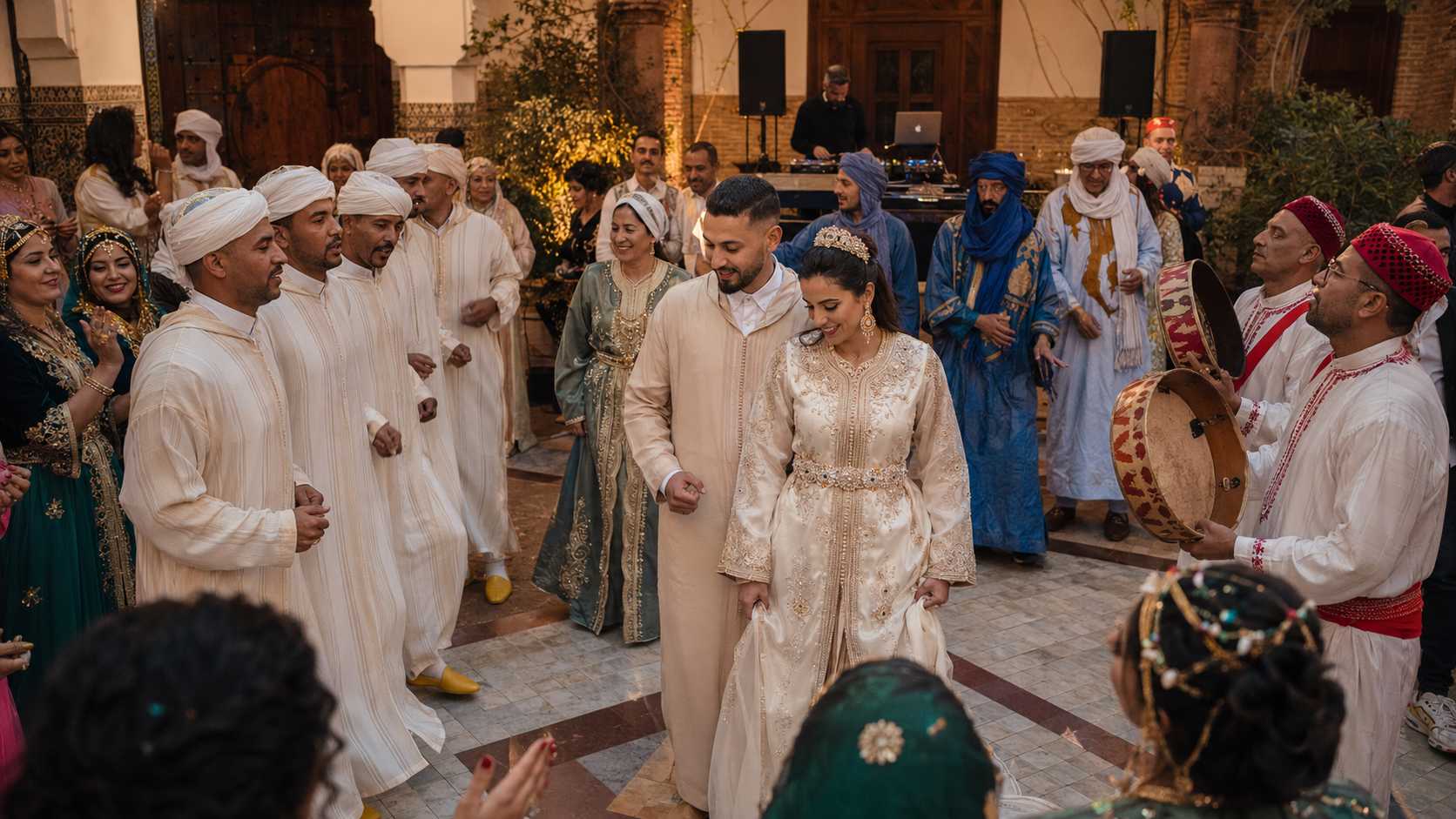
A Moroccan wedding can transform an ordinary evening into a celebration of color, music, craftsmanship, and family. Guests arrive wearing embroidered caftans and elegant traditional clothing. An orchestra fills the room with changing rhythms, trays of pastries move between tables, and the couple enters to the sound of singing and joyful ululation.
Yet the beauty of Moroccan wedding traditions goes far beyond decoration. Every outfit, song, dish, and ceremony can carry a connection to family history or regional identity. A wedding may include a henna evening, a formal marriage contract, several bridal outfits, an amariya procession, traditional music, and a celebration lasting until early morning.
No two Moroccan weddings are exactly alike. Customs vary between Fes, Marrakech, Tetouan, the Atlas Mountains, the Sahara, and other regions. Modern couples also adapt traditions to their personalities, budgets, and family circumstances. This guide explores the clothing, music, ceremonies, food, and social customs that make Moroccan weddings so memorable.
Why Moroccan Weddings Are So Important
Marriage in Morocco is more than a private event between two people.
It often brings together two families and a wider community of relatives, neighbors, friends, and colleagues. The celebration provides an opportunity to honor the couple, welcome new relationships, and preserve traditions passed through generations.
Moroccan wedding traditions can include:
- Family introductions and engagement gatherings
- Exchange of gifts
- Legal marriage formalities
- Hammam preparations
- A henna ceremony
- Traditional bridal clothing
- Regional music and dance
- The amariya procession
- Large shared meals
- Tea and pastries
- Family blessings
Not every wedding includes all of these elements.
Some families organize a multi-day celebration, while others choose one elegant evening. A city wedding in a modern venue may look different from a village celebration, but family participation usually remains central.
There Is No Single Traditional Moroccan Wedding
Morocco contains many cultural and regional identities.
Amazigh, Arab, Andalusian, African, Saharan, Mediterranean, and Jewish heritage have all contributed to the country’s social traditions. Language, clothing, music, jewelry, and food change from one region to another.
For this reason, descriptions of “the Moroccan wedding” should be treated as an introduction rather than a fixed formula.
A family from Tetouan may preserve northern clothing and Andalusian influences. A Middle Atlas celebration may feature Ahidous poetry and dance. Marrakech is strongly associated with Dakka Marrakchia percussion, while Saharan weddings have their own garments, rhythms, and community customs.
The couple’s generation also matters.
Some newlyweds want an elaborate traditional celebration. Others prefer a shorter event with a Moroccan caftan, contemporary décor, a DJ, and an international-style wedding dress.
Moroccan wedding culture continues because it is flexible enough to honor heritage while adapting to modern life.
Before the Wedding: Families and Preparations
Preparations can begin months before the celebration.
Families discuss the date, venue, guest list, food, music, clothing, and practical arrangements. Wedding planning often becomes a shared family project rather than the responsibility of the couple alone.
Family Introductions
Traditionally, formal family meetings help both sides become acquainted.
Tea, pastries, and a meal may be served while relatives discuss the future. In modern relationships, the couple may already know one another well, but the meeting still has cultural importance because it recognizes the connection between the families.
The atmosphere depends on the household.
Some introductions are formal, while others feel like relaxed family gatherings.
The Engagement
Engagement celebrations vary widely.
A small event may take place at home with close relatives. A larger celebration may include music, traditional clothing, decorated trays, professional photography, and a complete dinner.
Gifts may include:
- Jewelry
- Clothing
- Perfume
- Shoes
- Fabric
- Sweets
- Dates
- Milk
- Sugar
- Flowers
The choice and presentation of gifts depend on the region and family.
Decorated trays can become part of the visual ceremony, but they are not identical at every engagement.
Preparing the Bridal Trousseau
Some brides prepare a collection of clothing, accessories, textiles, and household items traditionally known as a trousseau.
It may include caftans, shoes, jewelry, embroidered linens, perfumes, and other personal belongings. Today, the contents reflect individual needs and preferences rather than a single traditional list.
The trousseau highlights the role of craftsmanship in Moroccan wedding traditions.
Tailors, embroiderers, jewelers, shoemakers, and textile artisans may spend months preparing items for the celebration.
The Marriage Contract
The legal marriage and the wedding celebration are connected but separate events.
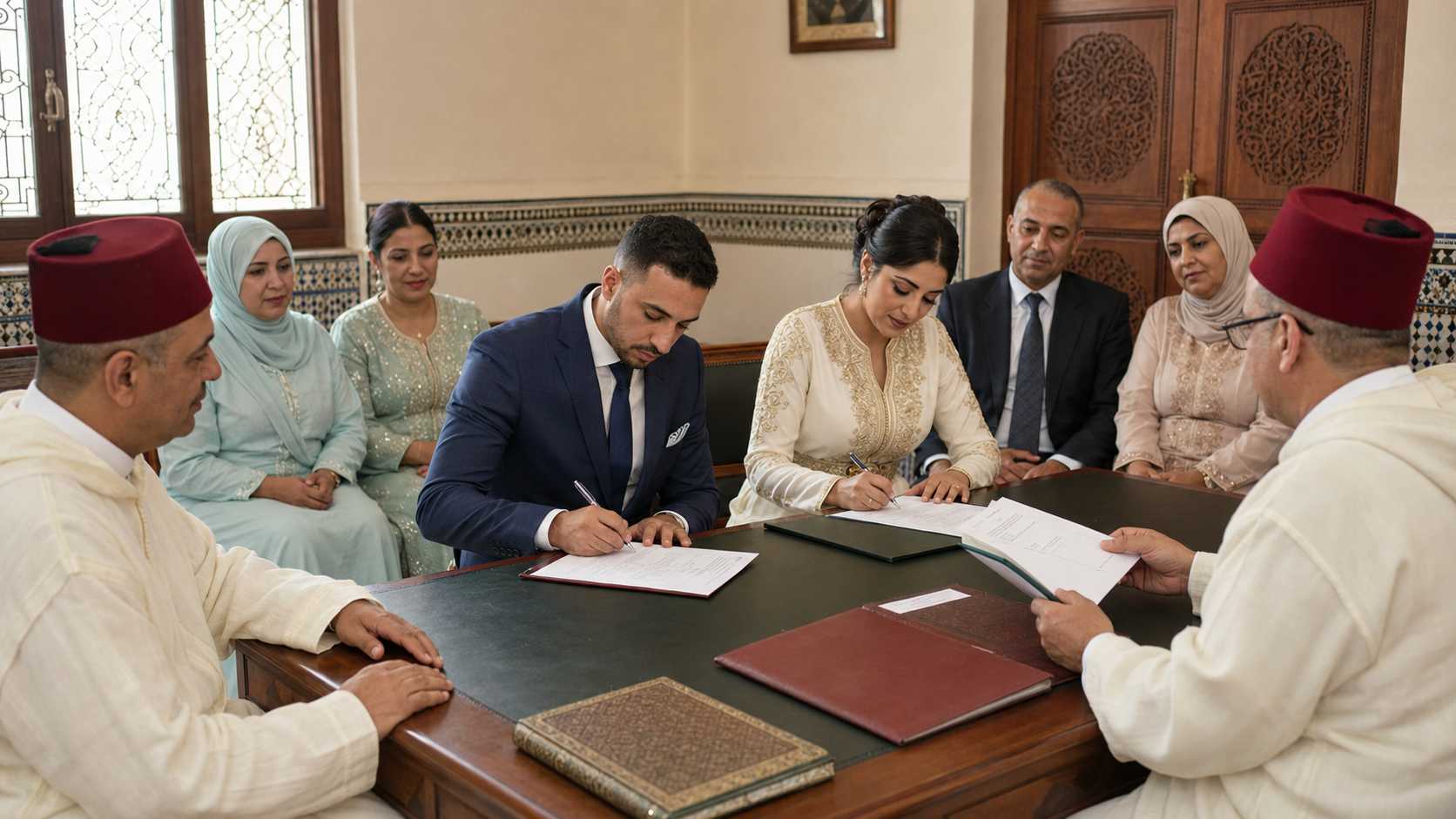
In Morocco, the formal process involves legal documentation and authorized officials. Requirements differ according to nationality, religion, previous marital status, and other circumstances.
The signing may take place before the main celebration and can be attended by close family members.
For Moroccans, completing the legal process establishes the marriage. The large wedding event then allows the couple to celebrate publicly with relatives and friends.
Foreign couples or mixed-nationality couples should obtain current information directly from Moroccan consular and justice authorities. Wedding customs should never be confused with legal requirements.
The Traditional Hammam Before the Wedding
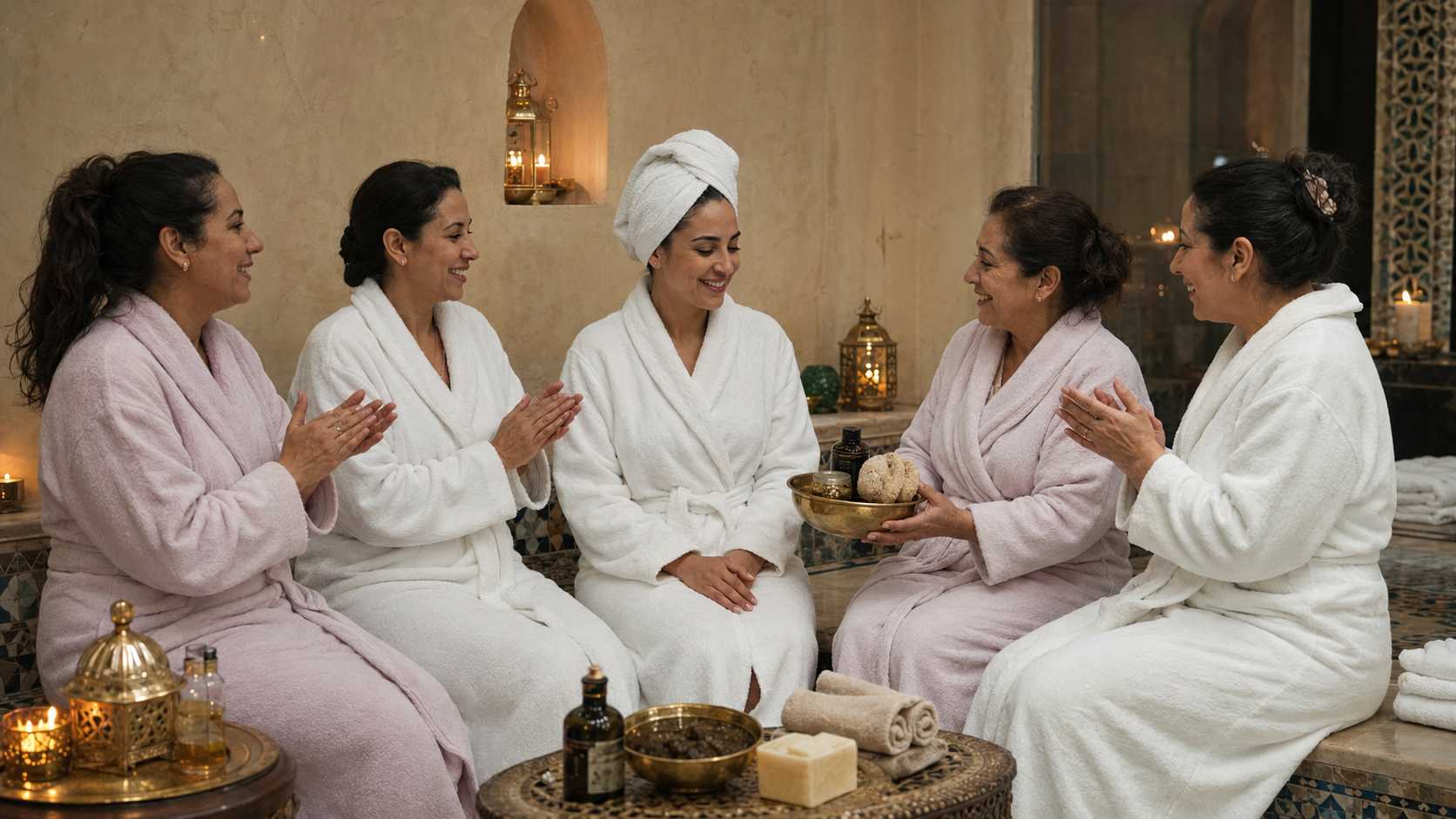
In some families, the bride visits a hammam with female relatives and close friends before the wedding.
The gathering can symbolize preparation, renewal, and transition into a new stage of life. Participants may bring traditional bath items, candles, towels, black soap, and beauty products.
Songs and ululation can create a festive atmosphere.
Today, the experience may take place in:
- A neighborhood hammam
- A private spa
- A hotel hammam
- A family-arranged wellness space
Not every bride follows this custom, and the form changes according to comfort, region, and personal preference.
The social meaning is often as important as the preparation itself. The bride spends time with women from her family before the larger celebration begins.
The Moroccan Henna Ceremony
Henna is one of the best-known Moroccan wedding traditions.
The ceremony commonly takes place before the main wedding reception, either as a separate evening or as part of a longer celebration.
A specialist known as a nekacha applies decorative henna designs to the bride’s hands and sometimes her feet. Patterns may include flowers, leaves, geometric forms, and regional motifs.
Henna is traditionally associated with:
- Blessing
- Joy
- Good fortune
- Protection
- Beauty
- Family continuity
The meanings and patterns vary between communities.
During the ceremony, female relatives and friends may sing, dance, offer blessings, and receive smaller henna designs themselves.
The bride often wears a green caftan or another traditional outfit, although the color is not a universal rule.
Henna as Shared Cultural Heritage
Henna traditions extend across Morocco and many other countries in North Africa and the Middle East.
The practice includes knowledge about preparing the paste, creating designs, selecting symbols, and using henna during celebrations.
For a wedding, the ceremony connects artistic skill with family participation.
Travelers should avoid treating henna only as a decorative souvenir. The designs may have personal and ceremonial meaning, and photographs should be taken only with permission.
The Neggafa: Guardian of Bridal Tradition
A key figure in many Moroccan weddings is the neggafa.
The neggafa is a professional bridal dresser and ceremony coordinator who understands traditional clothing, jewelry, presentation, and the sequence of important moments.
Her responsibilities may include:
- Helping select bridal outfits
- Dressing the bride
- Arranging jewelry and belts
- Coordinating outfit changes
- Preparing the amariya entrance
- Advising on regional customs
- Managing the timing of ceremonial moments
The neggafa often works with a team of assistants.
Their role requires organization and detailed knowledge. Heavy fabrics, complex belts, layered garments, and traditional jewelry must be arranged correctly and comfortably.
Modern wedding planners may manage the venue and vendors, while the neggafa focuses on the bride’s traditional presentation.
In smaller weddings, a family member may help with clothing instead. The professional role is important but not required at every celebration.
Moroccan Bridal Clothing
Clothing is one of the most admired parts of Moroccan wedding culture.
The bride may wear several outfits during the evening, with each one presenting a different color, textile, embroidery style, or regional identity.
Some weddings include only one or two changes. Others feature several.
The number is a personal and practical choice, not a rule.
The Moroccan Caftan
The caftan is a long garment with a central opening, decorative buttons, and rich hand-finished details.
It may be made from velvet, silk, brocade, satin, or another fine fabric. Embroidery, beadwork, sequins, and metallic thread can require many hours of skilled work.
A decorative belt, known as a mdamma, often shapes and completes the outfit.
In 2025, UNESCO recognized “Moroccan Caftan: art, traditions and skills” as part of the Intangible Cultural Heritage of Humanity. The recognition reflects not only the garment itself but also the knowledge and craftsmanship involved in creating it.
At weddings, the caftan represents elegance, identity, and artisanal heritage.
The Takchita
The takchita is commonly made with two coordinated layers.
The inner garment is generally simpler, while the outer layer is more decorative and may remain open at the front. A detailed belt brings the complete look together.
People sometimes use the words caftan and takchita interchangeably in everyday conversation, but the construction can differ.
Both appear frequently at Moroccan weddings.
Regional Bridal Outfits
Some brides include clothing connected to their family’s place of origin.
Examples may draw inspiration from:
- Northern Moroccan traditions
- Fassi styles
- Amazigh clothing
- Saharan garments
- Rif traditions
- Oujda and eastern Morocco
The jewelry, headdress, embroidery, colors, and fabric can communicate regional identity.
These outfits should not be reduced to costumes. They represent living traditions worn by families during important celebrations.
The White Wedding Dress
Many Moroccan brides also wear a white international-style wedding dress.
It may appear at the beginning or end of the reception, depending on the planned sequence.
Combining a white dress with traditional caftans demonstrates how modern Moroccan weddings bring several influences together.
The presence of contemporary clothing does not necessarily replace tradition. Often, it becomes one more chapter in the evening.
What Does the Groom Wear?
The groom’s clothing can also change during the celebration.
Traditional options include:
- A white or colored djellaba
- A jabador
- Embroidered traditional sets
- A traditional cape or regional garment
- Babouches
Many grooms also wear a formal suit or tuxedo.
Some begin in Moroccan clothing and change into a suit later. Others choose one style for the entire celebration.
The groom’s clothing may coordinate with one of the bride’s outfits, but perfect matching is not necessary.
Regional heritage, comfort, and personal taste guide the choice.
The Amariya Procession
One of the most dramatic moments in many Moroccan weddings is the amariya.
The amariya is a decorated ceremonial platform or seat carried by a trained team. The bride, the couple, or each partner at a different moment may be lifted above the guests while music and ululation fill the room.
The procession allows everyone to see and celebrate the newlyweds.
Carriers move carefully through the venue, sometimes performing coordinated turns while the couple greets guests.
The exact design and sequence vary.
Some weddings use more than one ceremonial platform. Others choose a brief entrance, replace it with a modern couple’s arrival, or omit it entirely.
Safety and professional handling are essential because the platform is raised and moved through a crowded space.
For guests, the amariya is a moment to celebrate from a respectful distance rather than block the carriers for photographs.
Music at a Moroccan Wedding
Music shapes the pace of the entire event.
It announces entrances, encourages dancing, accompanies outfit changes, and keeps guests energized over a long evening.
A wedding may include:
- A live orchestra
- Traditional percussion groups
- Chaabi music
- Andalusian music
- Aita
- Dakka Marrakchia
- Amazigh music
- Gnawa influences
- A DJ
- Contemporary Moroccan and international songs
The selection reflects the couple’s regional background and personal taste.
Chaabi
Chaabi is popular social music heard at celebrations throughout Morocco.
Its lively rhythms encourage group dancing and participation. Guests may sing along, clap, and form circles around family members.
The style contains regional variations and can be performed by orchestras or played by a DJ.
Dakka Marrakchia
Dakka Marrakchia is strongly associated with Marrakech.
A group of performers builds rhythmic energy through hand percussion, clapping, chanting, and coordinated movement. It is often used for entrances or key celebratory moments.
The gradual increase in intensity creates excitement throughout the room.
Andalusian Music
Andalusian musical traditions hold an important place in cities such as Fes, Tetouan, Rabat, and Chefchaouen.
At weddings, orchestras may perform refined pieces that reflect the historical cultural connections between Morocco and Al-Andalus.
The music creates a more formal atmosphere during certain parts of the evening.
Amazigh Music and Collective Dance
In Amazigh communities, weddings may include regional poetry, drumming, singing, and collective dance.
Ahidous and Ahwach are among the best-known group performance traditions, although they belong to different regions and forms.
Participants may stand in lines or circles while coordinating movement, rhythm, and sung poetry.
These performances strengthen community participation because guests are not only watching. They become part of the celebration.
Ululation: The Sound of Celebration
Guests often hear a high, trilling vocal sound during important wedding moments.
Known in different Arabic-speaking communities as ululation, it is used to express joy and celebration.
Women may ululate when:
- The bride enters
- The couple appears
- The henna is applied
- A new outfit is presented
- The amariya is lifted
- Music reaches an exciting moment
The sound immediately signals that something important is happening.
It is not exclusive to weddings. It may also be heard at other joyful family and community occasions.
Sugar and Changing Tastes
Traditional Moroccan tea is known for its sweetness.
Historically, sugar was an important part of the presentation and could be purchased in large cone-shaped loaves. Pieces were broken with a special hammer and added directly to the pot.
Many families still enjoy sweet tea, but preferences are changing.
Some Moroccans now use less sugar, allow each guest to choose, or drink tea without sweetening it. Cafés and hotels may serve sugar separately, especially when welcoming international visitors.
Travelers should avoid assuming that every Moroccan drinks tea in exactly the same way. Like any living tradition, it adapts to personal taste and modern habits.
Food at a Moroccan Wedding
Food is a major expression of generosity.
Hosts want guests to feel welcomed and well cared for, so the meal is often served in several stages.
A wedding menu may include:
- Moroccan salads
- Pastilla
- Roast chicken
- Lamb or beef dishes
- Tagine
- Couscous
- Seasonal fruit
- Ice cream
- Cakes and pastries
- Mint tea
- Coffee
- Fresh juices
The exact dishes depend on region, budget, season, and family preference.
Pastilla
Pastilla is a layered pastry that combines crisp texture with a richly seasoned filling.
Chicken and seafood versions are common at celebrations. Large pastillas may be placed at the center of each table for guests to share.
Main Courses
Meat dishes are often presented on large shared plates.
Roast chicken with preserved lemon and olives, slow-cooked lamb, or beef with prunes and almonds may appear.
Service teams bring dishes to each table, and guests eat together in the Moroccan tradition of shared dining.
Tea and Pastries
Mint tea and pastries can welcome guests at the beginning, appear during the night, or conclude the celebration.
Common sweets may include:
- Kaab el ghzal
- Ghriba
- Fekkas
- Briouats
- Almond pastries
Presentation matters.
Silver trays, decorated teapots, and carefully arranged sweets extend the visual elegance of the wedding to the table.
A Typical Moroccan Wedding Evening
There is no universal schedule, but a large reception may follow a sequence like this:
Guests Arrive
Guests are welcomed with tea, pastries, music, or refreshments.
Family members greet one another, take photographs, and find their tables.
The Couple Makes an Entrance
The entrance may involve music, the amariya, a procession, or a modern coordinated arrival.
Ululation and percussion announce the moment.
The First Outfit Is Presented
The bride appears in a caftan, takchita, regional outfit, or white dress.
The neggafa and her team help manage the presentation.
Music and Dancing Begin
Guests join the dance floor while the couple greets relatives and friends.
Live musicians or a DJ move between regional, popular, and contemporary styles.
Dinner Is Served
Meals can begin late by international standards.
Several shared courses may be served, followed by fruit, sweets, or dessert.
Outfit Changes Continue
The bride may change clothing during the evening.
Each return creates another entrance and offers a chance to present different craftsmanship or regional heritage.
The Cake and Final Celebration
Many contemporary weddings include a wedding cake.
The couple may cut it near the end of the event before final dancing and photographs.
Large weddings can continue until early morning.
Regional Differences in Moroccan Wedding Traditions
Regional diversity is one of the most fascinating parts of Moroccan weddings.
Fes
Fes is known for refined craftsmanship, Andalusian musical heritage, embroidery, and elegant ceremonial presentation.
Fassi wedding styles may feature rich textiles, detailed jewelry, and carefully structured traditions.
Families differ, so not every wedding in Fes follows the same sequence.
Northern Morocco
Tetouan, Tangier, and other northern areas reflect Mediterranean and Andalusian influences.
Northern bridal clothing may feature distinctive embroidery, fine fabrics, regional headdresses, and jewelry.
Music and food also reflect local history.
Marrakech and the Haouz
Marrakech is strongly associated with Dakka Marrakchia and energetic percussion.
Wedding décor may draw inspiration from the city’s colors, lanterns, architecture, and craft traditions.
The Atlas Mountains
Amazigh weddings in the Atlas regions can include collective dance, poetry, bendir drums, silver jewelry, woven textiles, and community participation.
Customs differ significantly between valleys and language communities.
The term “Amazigh wedding” therefore describes many traditions rather than one fixed ceremony.
Southern and Saharan Morocco
Southern weddings may include regionally specific garments, draped fabrics, jewelry, music, tea traditions, and extended community gatherings.
The environment and local history influence the materials and styles used.
Modern Urban Weddings
Casablanca, Rabat, Marrakech, and other cities contain wedding venues offering highly contemporary experiences.
Couples may combine:
- Traditional caftans
- Modern lighting
- Floral installations
- Digital invitations
- Live orchestras
- DJs
- International dishes
- Regional ceremonies
Modernity and tradition are not opposites.
Many couples use current technology and design while keeping the rituals that matter most to their families.
What Should Guests Wear to a Moroccan Wedding?
Moroccan weddings are usually elegant occasions.
Women often wear caftans or takchitas, while men may choose a suit, djellaba, jabador, or another formal outfit.
International guests are not required to buy Moroccan clothing.
A respectful formal dress or suit is generally suitable unless the hosts provide specific guidance.
Consider:
- The formality of the venue
- The season
- The expected length of the event
- Comfortable shoes
- Modest and polished clothing
- A light layer for late-night temperatures
If you wish to wear a caftan, choose one from a reputable local boutique, tailor, or rental service and ask for help with proper styling.
Avoid wearing clothing presented as belonging to a specific regional tradition if you do not understand its meaning. Appreciation is strongest when accompanied by curiosity and respect.
How Moroccan Weddings Are Changing
Moroccan wedding traditions continue to evolve.
Some couples shorten celebrations to reduce cost and stress. Others choose smaller guest lists, daytime events, outdoor venues, or simplified clothing changes.
Social media has influenced:
- Décor trends
- Photography
- Invitations
- Bridal styling
- Venue design
- Entertainment
At the same time, interest in traditional craftsmanship remains strong.
Couples may work with artisans to create custom embroidery, restore a family caftan, or include clothing from their region of origin.
Moroccan communities abroad also adapt weddings to local venues and schedules while maintaining henna, caftans, music, food, and family rituals.
The result is not a single modern style.
It is a wide range of celebrations shaped by heritage, creativity, and individual choice.
Experiencing Moroccan Wedding Culture Responsibly
Travelers may encounter wedding traditions through museums, cultural centers, caftan exhibitions, artisan workshops, festivals, and personal invitations.
These experiences should be approached carefully.
A real wedding is a private family event, not a tourist attraction.
Do not enter a venue without an invitation, photograph from outside without permission, or present private moments as public entertainment.
Responsible cultural appreciation can include:
- Visiting textile and craft museums
- Learning from caftan makers
- Supporting embroidery cooperatives
- Attending public cultural performances
- Asking local guides about regional music
- Purchasing directly from artisans
- Respecting the privacy of family celebrations
The craftsmanship connected to weddings supports many professionals, including tailors, embroiderers, jewelers, musicians, cooks, henna artists, and neggafas.
Choosing ethical local businesses helps preserve both skills and livelihoods.
Why Moroccan Wedding Traditions Remain Unforgettable
Moroccan weddings bring many forms of heritage into one space.
The caftan carries the work of designers, tailors, embroiderers, and button makers. Music connects the celebration to cities, villages, languages, and regional histories. Henna brings artistic knowledge into a family ceremony. Shared food expresses generosity.
Yet the deepest meaning comes from participation.
Relatives help plan, friends dance, elders offer blessings, and guests witness two families forming a new relationship.
This is why Moroccan wedding traditions remain powerful even as their form changes.
A wedding does not need to reproduce every older custom to feel Moroccan. It may take place in a modern venue, use digital invitations, and include contemporary music. Heritage continues through the details the couple and family choose to preserve.
For travelers, learning about these traditions offers a richer understanding of Moroccan society.
The celebration reveals how clothing, craftsmanship, music, hospitality, and family identity come together during one of life’s most important occasions.
Long after the final song ends, the memory remains: embroidered fabrics catching the light, drums filling the room, tea poured between conversations, and an entire community celebrating together.
Frequently Asked Questions About Moroccan Wedding Traditions
1. How Long Does a Traditional Moroccan Wedding Last?
A Moroccan wedding may last one evening, several days, or longer when separate engagement, henna, and family events are included. Many modern couples organize a single large reception. The length depends on the family, region, budget, and traditions they choose to preserve.
2. What Does a Moroccan Bride Traditionally Wear?
A bride may wear a caftan, takchita, regional ceremonial clothing, and a white international-style wedding dress. Some brides change outfits several times, while others choose one or two looks. Clothing often reflects personal taste and family heritage rather than a mandatory number of changes.
3. What Is the Role of the Neggafa?
The neggafa is a professional who helps dress the bride and coordinate traditional presentation. She may arrange outfits, belts, jewelry, entrances, and the amariya procession. Her knowledge helps ensure that complex garments and ceremonial moments are managed carefully.
4. What Is the Henna Ceremony in a Moroccan Wedding?
The henna ceremony usually takes place before the main reception. A henna artist decorates the bride’s hands and sometimes her feet while relatives and friends sing, celebrate, and offer blessings. Henna is commonly associated with joy, good fortune, protection, and transition.
5. What Is the Amariya?
The amariya is a decorated ceremonial platform used for a wedding procession. Trained carriers lift the bride or couple while music plays and guests celebrate. Not every wedding includes an amariya, and modern couples may adapt or replace the tradition.
6. What Music Is Played at Moroccan Weddings?
Music can include chaabi, Andalusian traditions, Aita, Dakka Marrakchia, Amazigh music, live orchestras, DJs, and contemporary songs. The selection depends on the couple’s region and preferences. Many weddings combine several styles during the same evening.
7. What Food Is Served at a Moroccan Wedding?
Menus may include salads, pastilla, roast chicken, meat with prunes and almonds, tagine, couscous, fruit, pastries, tea, and cake. Meals are often served in shared dishes. The selection varies according to season, location, family preference, and budget.
8. What Should an International Guest Wear?
Formal, respectful clothing is usually appropriate. Women may wear a formal dress or a Moroccan caftan, while men can choose a suit or traditional Moroccan clothing. Ask the hosts about the dress code and prioritize comfort because the celebration may continue for many hours.
9. What Gift Should I Bring to a Moroccan Wedding?
Gift practices differ between families. Money, household items, jewelry, or a thoughtful personal gift may be suitable. The best approach is to ask someone close to the couple, particularly if you are unfamiliar with the family’s expectations.
10. Can Tourists Attend a Moroccan Wedding?
Travelers can attend when they receive a genuine invitation from the couple or family. A wedding is a private event, so visitors should never enter only to observe. Invited guests should respect photography preferences, follow the family’s lead, and participate with genuine appreciation.
Ready to discover Morocco? Let's plan your perfect trip.
Whether it’s a desert adventure from Marrakech, an imperial cities tour, or a custom itinerary — our team responds within 24 hours with a tailored plan and quote.