Morocco Luxury Desert Camp: The Ultimate Guide to an Unforgettable Sahara Experience
Imagine waking up inside a lavishly appointed Berber tent, unzipping the entrance flap, and stepping out onto the warm golden sand of the Sahara as a blood-orange sunrise bleeds across the horizon. No traffic noise. No notifications. Just wind-sculpted dunes stretching endlessly in every direction, a sky shifting from deep violet to molten amber, and the distant sound of a camel softly exhaling nearby.
This is what a Morocco luxury desert camp delivers — and it is, without question, one of the most extraordinary travel experiences on earth.
Whether you are planning a romantic escape, a soul-resetting solo journey, or a once-in-a-lifetime family adventure, this guide will walk you through everything you need to know: the best locations, what to expect, the top activities, how to choose the right camp, when to go, and how to get there. By the end, you will be ready to book with confidence.
What Is a Morocco Luxury Desert Camp — And Why It's Worth Every Penny
A Morocco luxury desert camp is not a tent and a sleeping bag. It is a fully curated wilderness hospitality experience set deep inside the Sahara, where the comforts of a boutique hotel meet the raw, ancient drama of one of the world’s most legendary landscapes.
At a standard desert camp, you might sleep on a thin mattress under a basic canvas tent, share bathroom facilities with a dozen other travellers, and eat from a limited menu. A luxury camp is a fundamentally different proposition. We are talking about private Berber-inspired suites with handwoven textiles, brass lanterns, and actual beds dressed in crisp linen. We are talking about en-suite bathrooms — sometimes with hot showers and flushing toilets — tucked discreetly into the landscape. We are talking about private terraces, rooftop stargazing platforms, and candlelit dinners where a chef prepares slow-cooked tagines, freshly baked bread, and Moroccan pastries just for your group.
What makes this experience worth the investment is not just the physical comfort — it is the transformation. The Sahara has a way of stripping everything unnecessary away. Out here, time slows down. Conversations deepen. The stars are so dense and so close that you begin to understand why ancient Berber navigators used them as maps. For many travellers, a single night in a Morocco luxury desert camp becomes the defining memory of an entire trip — or an entire year.
It is worth every dirham.
Top Locations for Luxury Desert Camps in Morocco
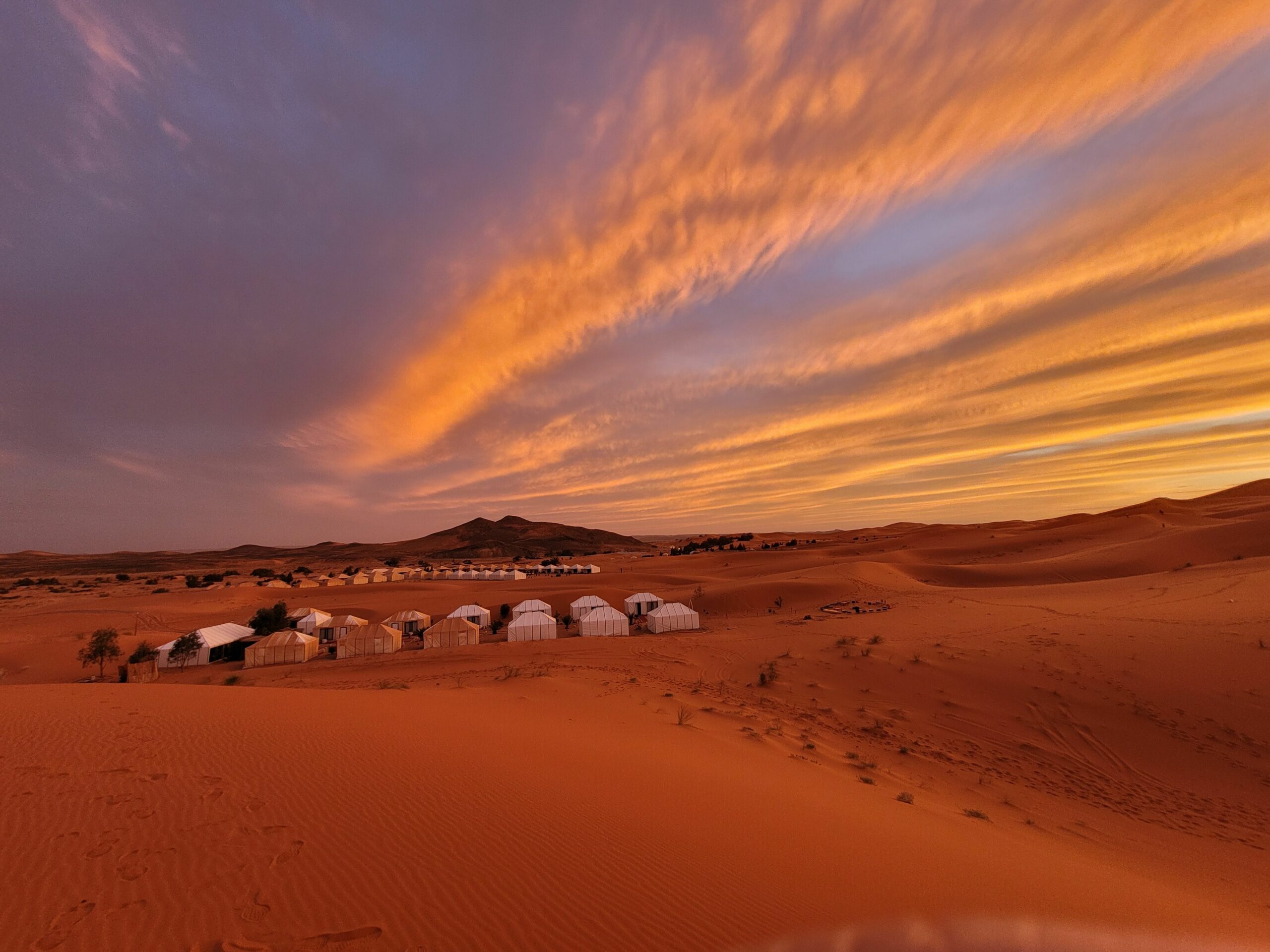
Morocco’s Saharan region stretches across the southeast of the country, and not all desert destinations are created equal. Choosing the right location depends on your priorities: dramatic scenery, accessibility, exclusivity, or a combination of all three.
Merzouga and Erg Chebbi is the most iconic desert destination in Morocco and the benchmark against which all other locations are measured. The star of the show is Erg Chebbi, a vast sea of orange-red sand dunes that rise up to 150 metres high. Merzouga is the gateway village, easily reached from Fes (roughly five to six hours) or from Marrakech via the spectacular Draa Valley road. This is where the most established luxury camps are concentrated, making it the best option for first-time visitors who want guaranteed wow-factor scenery with a range of premium accommodation choices.
Zagora and Erg Chigaga offers something more remote and exclusive. Erg Chigaga is Morocco’s most isolated major erg — accessible only by 4×4 or a two-day camel trek — and the luxury camps that operate here tend to be ultra-high-end, catering to guests who want total seclusion. There is no light pollution, no passing tourist groups, and a profound sense of being genuinely off the grid. This is the destination for travellers who have already done Merzouga and want to go deeper.
Zagora itself is often overlooked but deserves mention for travellers based in Marrakech. Located just five to six hours from the city, Zagora sits at the edge of the Draa Valley and offers access to smaller, less-crowded dune fields. The luxury camps here are intimate and personal, making it an excellent choice for couples on a shorter itinerary.
| Location | Distance from Marrakech | Dune Height | Best For |
| Merzouga / Erg Chebbi | ~9 hours | Up to 150m | First-timers, iconic scenery |
| Erg Chigaga | ~10 hours + 4×4 | Up to 100m | Ultra-luxury, total seclusion |
| Zagora | ~5–6 hours | Up to 30m | Short trips, couples |
What to Expect Inside a Morocco Luxury Desert Camp
Arriving at a Morocco luxury desert camp is a sensory experience from the first moment. Most premium camps arrange private transfers so that guests are driven directly to the camp edge by 4×4, or offered a short camel or dromedary ride across the dunes for a more theatrical arrival. As you crest the final dune and the camp comes into view — a cluster of earth-toned tents glowing softly with lantern light — the anticipation becomes almost cinematic.
Accommodation at luxury camps typically consists of large, private canvas or solid-walled tents that are individually designed in the Berber tradition. Interiors feature ornate rugs, carved wooden furniture, decorative metalwork, and low cushioned seating areas. Beds are genuine — king or twin configurations with quality mattresses and layered bedding for cold desert nights. En-suite bathrooms are standard at premium camps, including hot and cold running water, rainfall showers, and proper flushing toilets. Some ultra-luxury camps go further still, installing solar-heated plunge pools, private outdoor bathing areas, and even air conditioning for summer guests.
Dining is a serious affair. Most luxury camps serve multi-course Moroccan dinners either in a communal dining tent or, for couples and private groups, at private tables set directly on the dunes beneath the stars. Expect dishes like slow-cooked lamb tagine with prunes and almonds, harira soup, bastilla (a savory-sweet pigeon pastry), couscous with seven vegetables, and a revolving selection of Moroccan salads. Breakfast typically includes fresh-baked msemen flatbreads, amlou (almond and argan oil dip), honey, olives, and mint tea.
Entertainment after dinner is rooted in Berber tradition. Most camps feature live gnawa music — a hypnotic blend of sub-Saharan rhythms, call-and-response vocals, and ceremonial percussion — alongside fire shows and storytelling sessions led by local guides. After the entertainment winds down, guests are free to climb the dunes alone for private stargazing, which is often the most memorable part of the entire experience.
Modern comforts vary by camp tier. Most luxury camps now offer solar-powered electricity, USB charging points, and in some cases limited Wi-Fi. Signal connectivity is virtually nonexistent in deep desert locations, which most guests consider a feature rather than a flaw.
Best Experiences and Activities at a Sahara Luxury Camp
A Morocco luxury desert camp is not merely a place to sleep — it is a launchpad for experiences that are impossible to replicate anywhere else in the world. Here is what to prioritise during your stay.
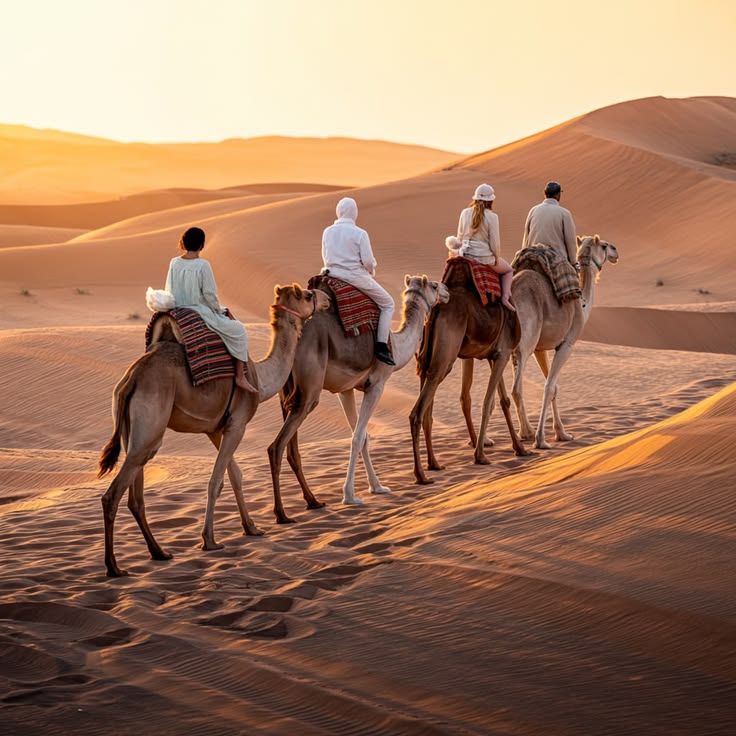
Sunrise and sunset camel treks are the quintessential desert activity and for good reason. Riding a dromedary camel across the soft sand as the light shifts from gold to amber to rose is one of those experiences that photographs cannot fully capture. Most camps offer guided treks of one to two hours, timed precisely to arrive at a high dune crest at the perfect moment. Sunsets tend to draw the crowds; if you value solitude, opt for the sunrise trek — you will almost certainly have the dunes to yourself.
Sandboarding has grown rapidly in popularity and most camps now offer boards for hire. Climbing a 100-metre dune under the midday sun is genuinely hard work, but the descent — carving across the pristine face of the dune at speed — is a pure, uncomplicated joy. No experience necessary.
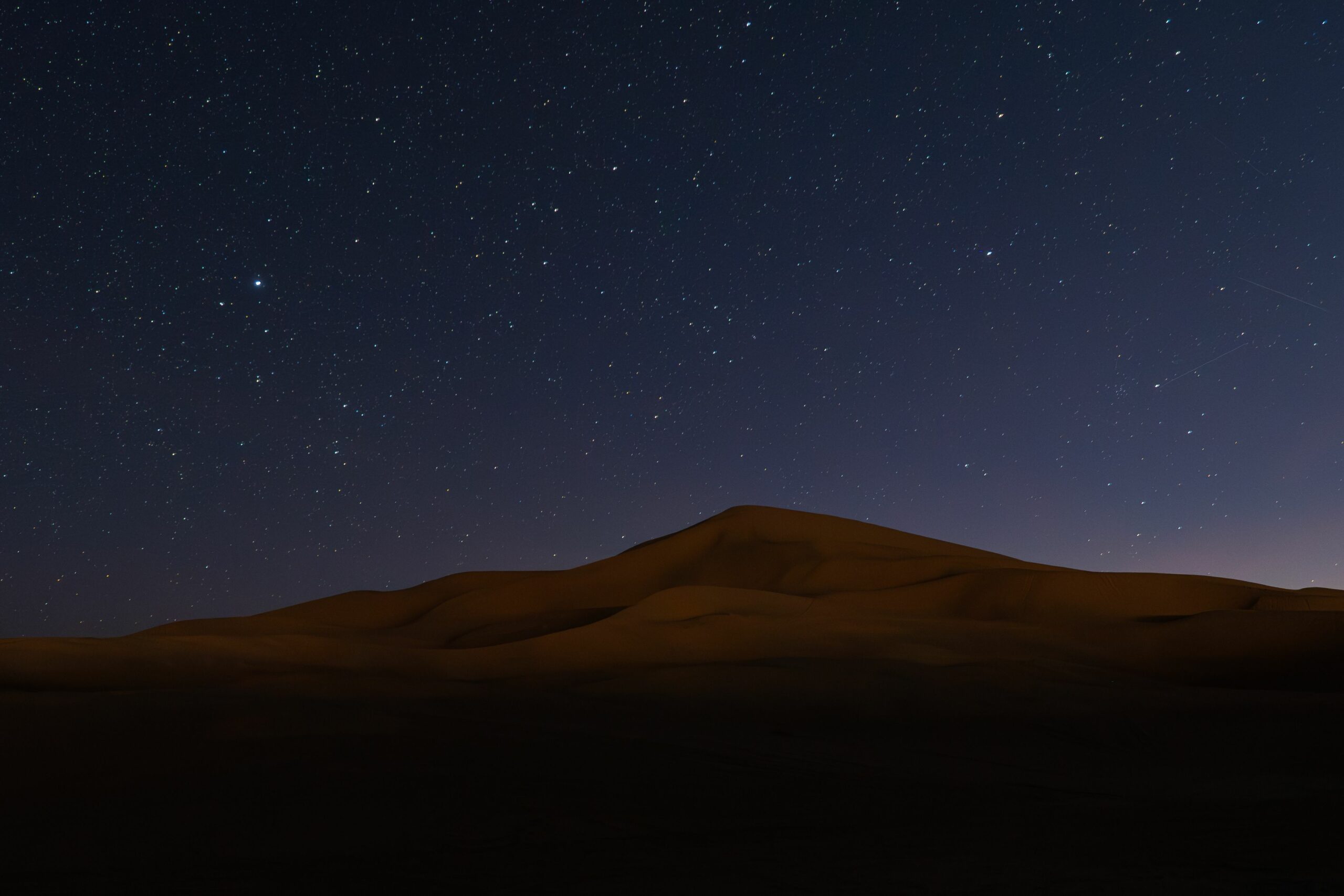
Stargazing in the Sahara is a life-changing activity for travellers who have only ever seen stars through the orange haze of city light pollution. Here, on a moonless night, the Milky Way is fully visible as a dense, textured band stretching from horizon to horizon. Many luxury camps partner with local astronomers or provide telescopes and guides who can navigate the night sky with expertise. Plan your visit around a new moon for maximum visibility.
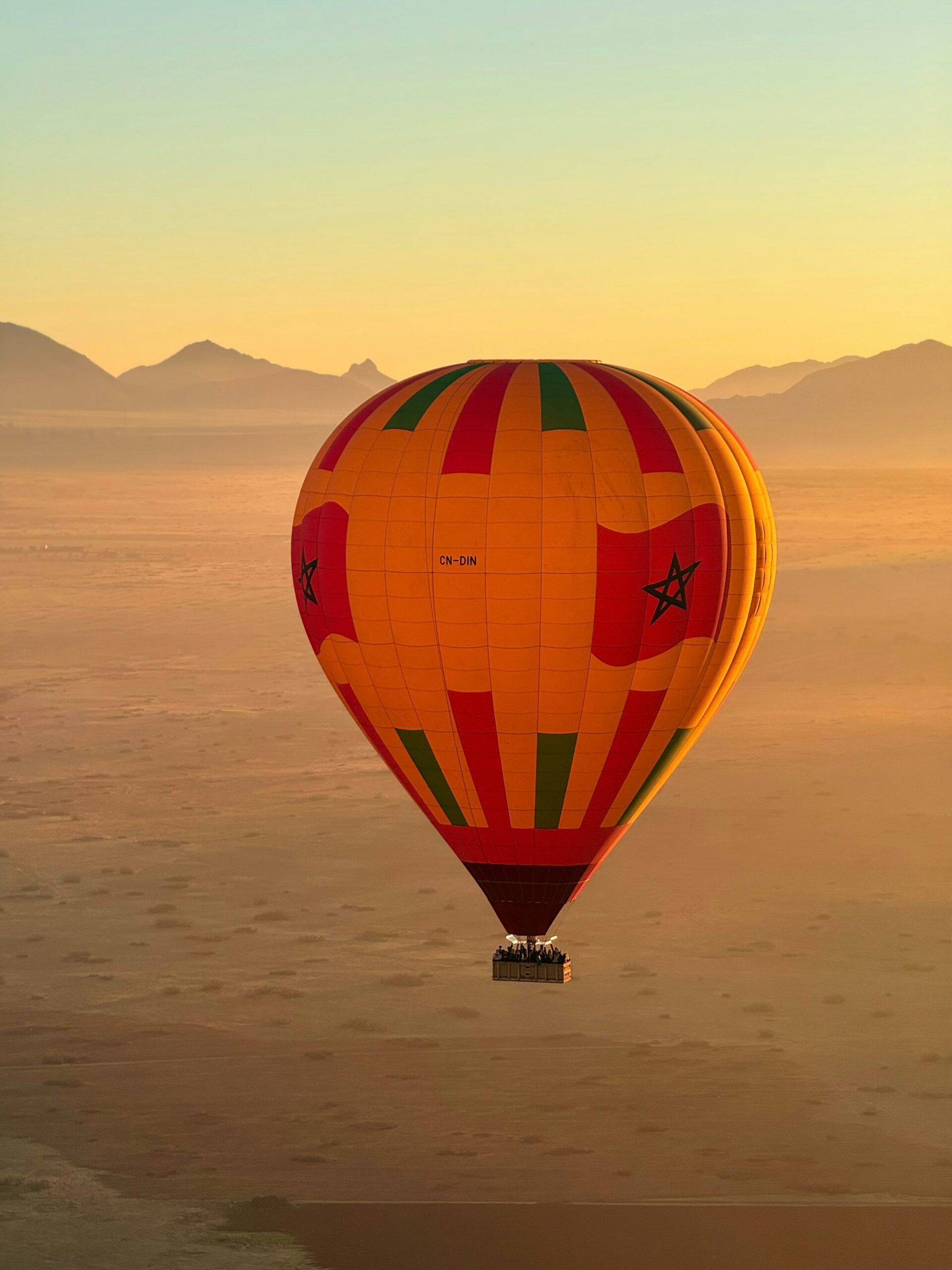
Hot air balloon rides over Erg Chebbi are available from select operators based in Merzouga and represent perhaps the most spectacular way to experience the landscape. Floating silently above the dunes at sunrise, with the shadow of the balloon moving across the sand below, is genuinely awe-inspiring. Book well in advance as capacity is limited.
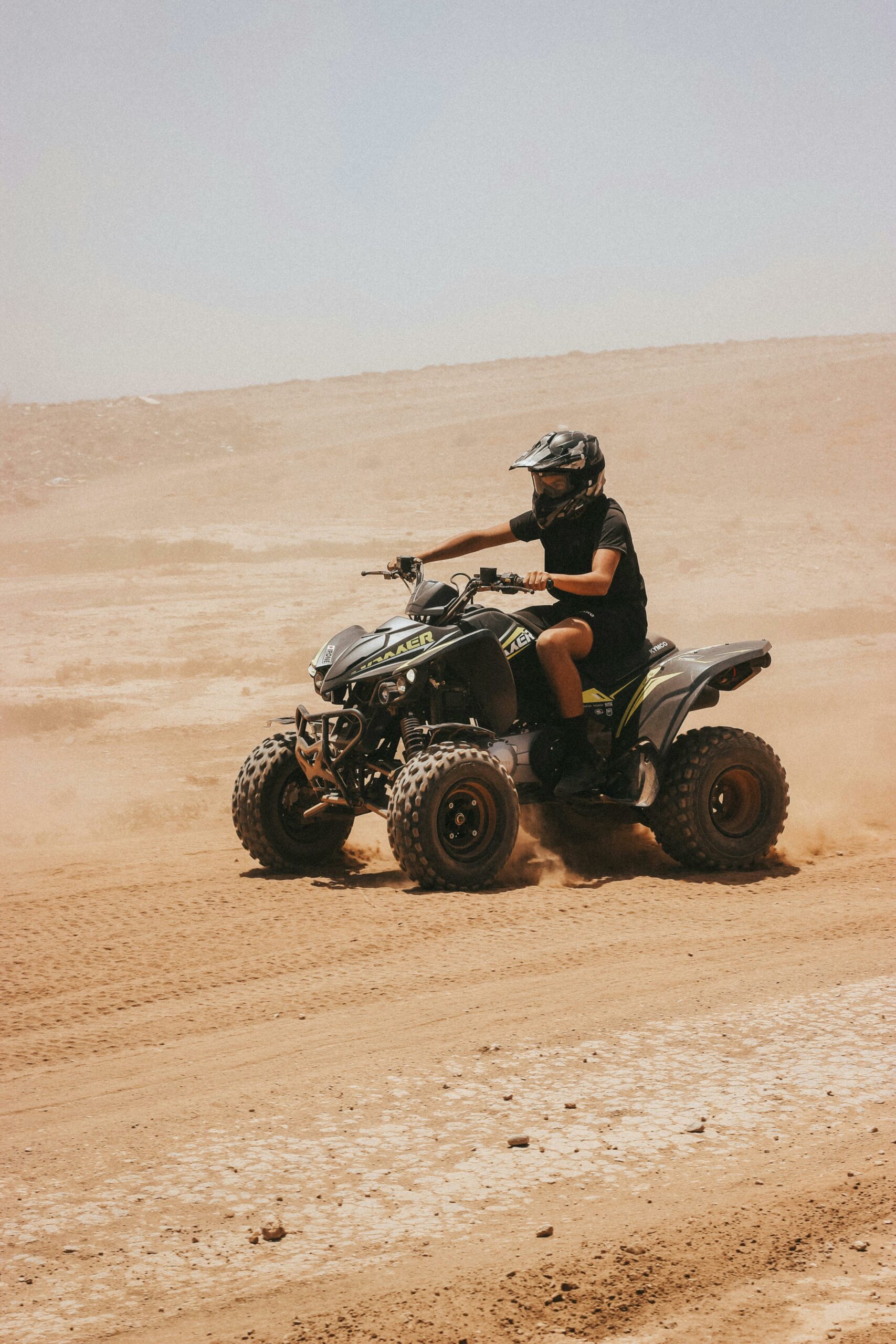
Quad biking and 4×4 excursions are available through most camps for guests who want a more adrenaline-fuelled way to explore the landscape. Half-day and full-day routes take riders through remote valleys, fossilised riverbeds, and nomadic encampments where traditional Berber families still live seasonally.
Photography opportunities are extraordinary at every hour of the day, but the golden hours — the forty-five minutes after sunrise and before sunset — are when the dunes reveal their most dramatic texture and colour. If photography is a priority, plan your camel trek and activities specifically around these windows.
How to Choose the Right Morocco Luxury Desert Camp
With dozens of luxury camps now operating across Morocco’s desert regions, the quality gap between the best and worst can be significant. Here is how to choose wisely.
Start with verified reviews on platforms like TripAdvisor, Google, and Booking.com, but go deeper than the star rating. Read the most recent reviews — written within the last three to six months — and pay attention to specific mentions of cleanliness, food quality, staff attentiveness, and whether the photos match reality. A camp with 4.7 stars and 300 reviews is almost always a safer bet than one with 5 stars and 12 reviews.
Inspect the photos critically. Luxury camp marketing photography is often taken under ideal conditions. Look for guest-uploaded photos in reviews, which are more representative of the actual experience. Pay attention to the bathroom situation — this is where the line between “glamping” and genuine luxury is most sharply drawn.
Ask direct questions before booking. Key questions include: Is the quoted price fully inclusive of dinner, breakfast, and activities, or are these charged separately? Are tents private and en-suite? What is the maximum camp capacity, and how many tents are available? Is there a generator or solar power? What is the transfer arrangement?
Budget tiers broadly break down as follows in 2026:
- Mid-range glamping: €80–€150 per person per night
- Luxury camp: €150–€350 per person per night
- Ultra-luxury / private camp: €350–€800+ per person per night
Sustainability is an increasingly important consideration. The best camps are run by operators who employ local Berber staff, source food regionally, manage waste responsibly, and use solar power rather than diesel generators. Asking a camp directly about their environmental practices before booking is both reasonable and encouraged.
When Is the Best Time to Visit a Morocco Luxury Desert Camp?
The Sahara is a year-round destination, but timing your visit correctly can be the difference between a comfortable, magical experience and a genuinely uncomfortable one.
October through April is widely considered the ideal window. Daytime temperatures in this period typically range from 18°C to 28°C — warm enough to enjoy the dunes comfortably, but cool enough for long camel treks and outdoor dining. Nights in the desert can drop sharply, particularly between December and February, when temperatures after midnight can fall below 5°C. Quality luxury camps provide adequate blankets and heating, but it is worth packing a warm layer regardless.
November and March are arguably the sweet spot within this window — warm days, mild nights, and relatively lighter tourist traffic compared to the peak Christmas and Easter holidays. Stargazing conditions are also particularly outstanding in these months, with low humidity and minimal cloud cover.
May through September brings extreme heat. Daytime temperatures regularly exceed 40°C and can approach 50°C in July and August. This is not a period recommended for most travellers, particularly those with children or health sensitivities. That said, some ultra-luxury camps operate year-round with full air conditioning and specifically market the summer experience as a unique adventure — rates also tend to be lower, which attracts adventurous travellers on a tighter budget.
Festival alignment can add a memorable cultural dimension to your trip. The Erfoud Date Festival in October celebrates the region’s date harvest with music, dance, and market activity. The Merzouga International Music Festival, typically held in spring, brings together Gnawa, Blues, and Tuareg musicians for an extraordinary desert concert series.
Packing essentials by season:
- Autumn/Winter/Spring: Sunscreen, sunglasses, hat, light layers for the day, a warm fleece or down jacket for evening
- Summer: Maximum sun protection, electrolyte supplements, lightweight breathable clothing, and a genuine appetite for heat
How to Get to Your Morocco Luxury Desert Camp — Travel Tips and Logistics
Getting to the desert is half the adventure, and with some advance planning, the journey itself becomes a highlight of the trip.
Flights into Morocco arrive at several international airports. For Merzouga-bound travellers, Marrakech Menara Airport (RAK) and Fes-Saïss Airport (FEZ) are the two most practical entry points. Both are well-served by European and Middle Eastern carriers, with frequent connections from London, Paris, Amsterdam, Madrid, Dubai, and Casablanca.
The road from Marrakech to Merzouga (approximately 550 kilometres) takes nine to ten hours by private car or organised transfer. While long, the route is spectacular — it crosses the High Atlas Mountains via the Tizi n’Tichka pass, descends into the Draa Valley, passes through the rose-growing town of Kelaat M’Gouna, and winds through the ancient kasbahs of the Dades and Todra Gorges before finally revealing the first glimpse of the great dunes. Many travellers break this journey into two days, overnighting in Ouarzazate or Boumalne Dades.
The road from Fes to Merzouga takes five to six hours and is particularly popular with travellers doing a classic Fes–Desert–Marrakech circuit. The route passes through the Middle Atlas mountain town of Midelt and the dramatic Ziz Valley, offering excellent scenery throughout.
Organised tours versus self-drive: Self-driving is entirely feasible in Morocco for confident drivers, as the N9 and N10 highways are well-maintained and clearly signed. An international driving licence is recommended, and a 4×4 vehicle is advisable if you plan to explore beyond paved roads. Organised tours offer the advantage of local knowledge, fixed itineraries, and the comfort of having logistics handled — particularly valuable for first-time Morocco visitors.
Camp transfers: Most luxury camps offer direct transfer arrangements from the nearest town (usually Merzouga or Zagora), either by 4×4 or a combination of vehicle and camel. This should be confirmed and included in your booking quote upfront.
Entry requirements: British, EU, US, Canadian, and Australian passport holders can currently enter Morocco visa-free for stays of up to 90 days. Requirements do change, so always verify current entry conditions via your government’s official travel advisory page before departing. Travel insurance with medical evacuation cover is strongly recommended for desert travel.
A Morocco luxury desert camp is not simply a place to sleep in the Sahara. It is an invitation to slow down, to disconnect from the relentless pace of modern life, and to experience one of the planet’s most ancient and awe-inspiring landscapes in genuine comfort. From the hypnotic rhythm of gnawa drums after dinner to the staggering silence of a Saharan sunrise, the memories you make here will stay with you far longer than the sand that inevitably finds its way into your luggage.
Plan carefully, choose your camp with intention, time your visit wisely, and embrace every moment. The desert has a way of giving back exactly what you bring to it.
Ready to sleep beneath a billion stars? Start researching your Morocco luxury desert camp today — and prepare for the most breathtaking sunrise of your life.
1. Is it safe to stay at a desert camp in Morocco?
Yes, Morocco is generally a safe destination for international travellers, and the desert camp region around Merzouga and Zagora has a well-established tourism infrastructure. Luxury camps employ local Berber staff who have deep knowledge of the terrain and weather conditions. Standard travel precautions apply — keep copies of your documents, stay hydrated, use sun protection, and purchase comprehensive travel insurance before departing. The Foreign Office and State Department both currently rate Morocco as a relatively low-risk destination.
2. What should I pack for a Morocco luxury desert camp?
Even at a luxury camp, the desert environment demands smart packing. Essentials include high-SPF sunscreen and lip balm, UV-protective sunglasses, a wide-brimmed hat, a lightweight scarf (useful for sand and sun protection), comfortable walking shoes or boots for dune trekking, a warm layer for cool evenings, a power bank for charging devices, and any personal medications. Formal or heavy clothing is entirely unnecessary — smart casual works for all occasions at camp.
3. How cold does it get in the Sahara desert at night?
Night temperatures in the Moroccan Sahara can drop significantly, particularly between November and February. It is not uncommon for temperatures to fall below 5°C after midnight during midwinter. Quality luxury camps provide adequate blankets and, in many cases, electric or gas heating within tents. Always pack a warm layer — a down jacket or thick fleece — regardless of the season you visit.
4. Can children stay at a Morocco luxury desert camp?
Absolutely. Many luxury desert camps actively welcome families with children, and the experience is genuinely magical for kids — particularly the camel rides, sandboarding, and stargazing sessions. It is worth confirming with the camp directly that they cater for families, as some ultra-exclusive camps position themselves as adults-only retreats. Ensure children are well protected from the sun, stay hydrated throughout the day, and are appropriately dressed for cold evenings.
5. Do luxury desert camps in Morocco have Wi-Fi and electricity?
Most luxury camps now provide solar-generated electricity, allowing guests to charge devices and use lighting within tents. Wi-Fi is available at some camps — typically those closer to Merzouga village — but connectivity is limited and unreliable in remote locations. Most guests embrace this as an opportunity to genuinely disconnect. If staying connected is essential for professional reasons, confirm Wi-Fi availability directly with the camp before booking.
6. How far in advance should I book a Morocco luxury desert camp?
For travel during peak season — October, November, March, April, and the Christmas and Easter holiday periods — booking three to six months in advance is strongly recommended, particularly for the most reputable luxury camps which have limited capacity by design. For travel in the quieter months of January, February, May, June, and September, bookings can often be made four to eight weeks out. That said, because luxury camp tents are few in number and demand is high year-round, earlier is always better.
Ready to discover Morocco? Let's plan your perfect trip.
Whether it’s a desert adventure from Marrakech, an imperial cities tour, or a custom itinerary — our team responds within 24 hours with a tailored plan and quote.