
The Ultimate Guide to the Traditional Hammam Ritual: Power of Beldi Soap
The world of skincare is often dominated by “miracle” chemicals and fleeting laboratory trends. Yet, in the heart of the Maghreb, a beauty secret has remained unchanged for over a millennium. It is a ritual that transcends simple hygiene, entering the realm of spiritual purification and total biological renewal. At the center of this world is a humble, dark paste known as Savon Beldi.
To understand the traditional hammam ritual and beldi soap, one must look beyond the steam. You are looking at a practice that predates modern medicine, a cultural cornerstone of Morocco, and arguably the most effective exfoliation method known to humanity. This guide is your deep dive into the history, science, and practice of the Moroccan Hammam.
What is a Traditional Hammam Ritual? (The Secret to Moroccan Beauty)
To the uninitiated, a hammam might look like a steam room. To a Moroccan, it is a “silent doctor.” The hammam is a direct descendant of the Roman Thermae. When the Roman Empire’s influence receded from North Africa, the indigenous populations and the arriving Islamic culture took the concept of the public bath and infused it with local traditions and religious requirements for ghusl (full-body purification).
The Architecture of a Traditional Hammam
A true hammam is not just one room; it is a journey through temperature zones:
- The Mashlah (Changing Room): The transition from the chaotic world into the sanctuary.
- The El-Barrani (Cold Room): Where you acclimate before and after the heat.
- The El-Wasti (Warm Room): The social heart where most of the washing occurs.
- The El-Dakhli (Hot Room): The “engine” of the hammam. This room is filled with thick, humid steam produced by a wood-fired furnace (the faran) beneath the floor.
The Social and Spiritual Fabric
In Morocco, the hammam is where community happens. For centuries, it was the one place where people of all social classes sat on the same marble floor. It is a place of transition—brides are brought here before their weddings, and mothers come here to recover after childbirth. When you use beldi soap in your bathroom, you are tapping into this massive reservoir of cultural energy.
The Essential Ingredient: What is Beldi Soap?
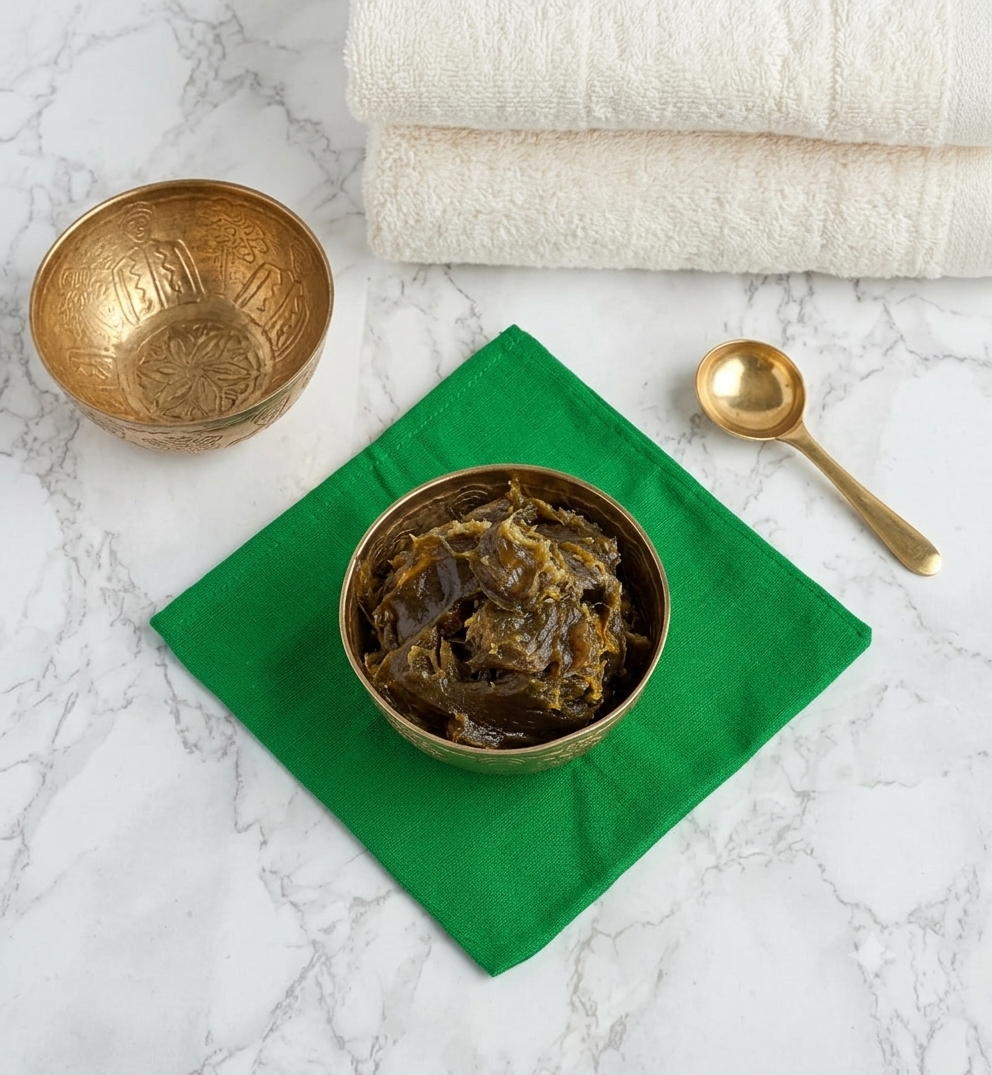
If the traditional hammam ritual is the temple, Beldi soap is the high priest. Known in French as Savon Noir (Black Soap), it is unlike any cleanser you have ever used.
The Composition and Saponification
Traditional Beldi soap is a 100% natural, plant-based product. It is created through the saponification of olive oil using potassium hydroxide (extracted from wood ash in ancient times).
What makes it unique is the inclusion of macerated olives. The olives are crushed into a pulp and left to sit with the oil, resulting in a soap that is incredibly high in:
- Oleic Acid: Deeply nourishing and skin-mimetic.
- Vitamin E (Tocopherol): A potent antioxidant that repairs cellular damage.
- Vitamin A: Helps with skin cell turnover.
Physical Characteristics
Authentic Beldi soap should be a thick, translucent paste. Its color can range from a deep, swampy green to a dark amber or “black,” depending on the type of olives used. It does not foam like a detergent. Instead, it turns into a creamy, slippery film when massaged onto damp skin.
Benefits of Using Beldi Soap in Your Skincare Routine
Why has this soap survived since the 8th century? Because its biological impact during a traditional hammam ritual is immediate, profound, and visible on the skin.
Total Pore Decrustation
Most soaps only clean the surface. Beldi soap has a high pH (usually between 9 and 10), which causes the top layer of dead skin cells (the stratum corneum) to swell and soften. It acts as a chemical “peel” without the harsh acids. It breaks the ionic bonds between dead cells, preparing them for physical removal.
Lymphatic Drainage and Detoxification
When applied in a traditional ritual, the combination of heat and the thick soap encourages the lymphatic system to move. This helps the body flush out metabolic waste. If you suffer from puffiness or water retention, the hammam ritual is a natural diuretic.
Solving “Strawberry Legs” (Keratosis Pilaris)
KP is caused by keratin buildup in the hair follicles. Traditional scrubs often irritate the bumps. Beldi soap, however, softens the keratin plugs, allowing the Kessa glove to lift them out gently. With regular use, skin texture becomes glass-smooth.
The Anti-Aging Powerhouse
The high concentration of Vitamin E in the macerated olives creates a protective shield against environmental pollutants. By removing the “grey” layer of dead skin that accumulates over the week, your skin reflects light better, creating an instant “lit-from-within” glow.
Sahara Desert Villages That Feel Like Another World
The Sahara is Morocco’s most iconic landscape, and rightly so. But beyond the well-trodden route from Ouarzazate to Merzouga, there are desert villages that offer a far more intimate and less commercialized encounter with the world’s greatest sand sea.
Mhamid El Ghizlane is the last town before the Saharan dunes become truly unbroken and the last paved road ends. From here, the great erg of Erg Chigaga — twice as large as Erg Chebbi near Merzouga, and far more remote — stretches to the horizon. Unlike Merzouga, Mhamid hasn’t yet been overrun by luxury desert camps and camel ride operators. There are still just a handful of small, locally-run operations, and the sense of space and silence out in the dunes is absolute.
Tafraout sits in the Anti-Atlas Mountains, in a landscape so strange it feels like another planet. Surrounded by enormous pink granite boulders that glow amber and crimson at sunset, this small town is the heart of the Ameln Valley — dotted with even smaller villages, ancient almond orchards, and prehistoric rock engravings. The local Amazigh population is known for producing some of Morocco’s finest argan oil and traditional silver jewelry.
Ait Khamou, near the Drâa Valley south of Ouarzazate, sits beside one of Morocco’s most beautiful rivers — a long, palm-fringed corridor of green that cuts through the desert. Villages along the Drâa have an otherworldly beauty: mud-brick kasbahs rising from date palm groves, with the yellow desert stretching to the horizon on either side. This is a landscape that has changed little since the great Saharan caravan routes ran through it centuries ago.
Step-by-Step Guide: How to Perform the Hammam Ritual at Home
To get the 3,000-word experience at home, you cannot rush. This is a 45-minute commitment to your body.
Step 1: The Thermal Prep (15 Minutes)
You need high humidity. Turn your shower to its highest heat. Let the bathroom fog up until you can barely see the mirror. Sit inside the bathroom (but not under the water) for at least 10 minutes. Your skin should feel damp and “heavy.” This is vital for opening the pores.
Step 2: The Beldi Application
Step into the warm water for 2 minutes to ensure your skin is fully hydrated. Step away from the stream. Take a walnut-sized amount of Beldi soap and work it into your palms. Massage it into your skin starting from your feet, moving upward toward the heart. The soap will feel like a thick, slippery oil.
Step 3: The Incubation (The Secret Phase)
This is where 90% of people fail. You must wait. Stay in the steamy environment with the soap on your skin for 10 full minutes. If you rinse too early, the skin won’t be soft enough to peel. Use this time to apply a hair mask or simply breathe the eucalyptus vapors.
Step 4: The Clean Rinse
Rinse your body with warm water. Use your hands to rub your skin and ensure all the slipperiness is gone. Your skin should now feel “squeaky” to the touch. If there is soap left on the skin, the Kessa glove will just slide around instead of gripping the dead skin.
Step 5: The Kessa Exfoliation
Now, the transformation happens. Put on your Kessa glove. Starting at your ankles, use long, firm strokes moving upward. Do not use circular motions. Use back-and-forth linear movements. You will see small, greyish rolls of skin beginning to form. These are the impurities being shed. Continue until the “spaghetti” stops forming.
Mastering the Exfoliation: Pairing Beldi Soap with the Kessa Glove
The Kessa glove is not a loofah. It is a specially woven crepe fabric, traditionally made from goat hair (though modern versions use high-grade synthetic fibers) designed to “grab” the loosened skin cells.
The Science of “The Peel”
When you use the Kessa after the Beldi soap, you are performing a professional-grade microdermabrasion.
- Pressure: You want enough pressure to see the skin turn slightly pink (increased blood flow), but never enough to cause pain.
- Direction: Always move toward the heart to assist with venous return.
- Frequency: The Kessa should be used no more than once a week. The Beldi soap itself, however, can be used as a daily moisturizing cleanser without the glove.
Pro Tips for an Authentic Moroccan Spa Experience
To elevate this to a professional level, you need to incorporate the “After-Care” trinity: Rhassoul, Rose Water, and Argan.
The Rhassoul Clay Mask
Once the exfoliation is finished, your skin is at its most absorbent. Apply Rhassoul clay (mined from the Atlas Mountains) to your entire body and hair. This clay is unique because it has a high silica and magnesium content. It sucks out the last of the oils from your pores and replaces them with minerals.
The Rose Water Refresh
Rinse off the clay with cool water. While your skin is still damp, mist your face and body with pure, distilled Rose Water (Sultan Rose). This acts as a natural toner, balancing the pH of your skin after the alkaline soap.
The Argan Oil Seal
The final, non-negotiable step is 100% Pure Argan Oil. Known as “Liquid Gold,” Argan oil contains 80% unsaturated fatty acids. Apply it while the skin is still slightly damp from the rose water to create an emulsion that locks in hydration for up to 24 hours.
Where to Buy Authentic Beldi Soap and Hammam Supplies
Quality matters. Many “Moroccan-style” soaps found in big-box stores contain Sodium Laureth Sulfate (SLS) or synthetic fragrances that defeat the purpose of the ritual.
- Check the Label: There should be no more than 3–4 ingredients.
- The Scent: Look for natural Eucalyptus or Rose infusions.
- The Texture: It should be thick enough that if you turn the jar upside down, the soap stays put.
For the most authentic experience, look for soaps produced by women’s cooperatives in the Essaouira or Agadir regions of Morocco.
The traditional hammam ritual with beldi soap is a testament to the wisdom of the past. In a world of fast beauty, it asks us to slow down, to sit in the steam, and to literally shed our old selves. By the time you finish this ritual, your skin isn’t just clean—it is renewed, breathed, and nourished. It is a weekly ceremony of self-respect that leaves you with a glow that no chemical highlight can replicate.
1. Can I use Beldi soap if I have sensitive skin?
Yes. Because it is free from synthetic detergents and chemicals, it is often better for sensitive skin than commercial body washes. However, skip the Kessa glove or use very light pressure if your skin is prone to redness.
2. Why does my skin feel "squeaky" after the soap?
This is the sign of a truly clean surface. Most commercial soaps leave a “film” of synthetic conditioners. Beldi soap cleanses so deeply that you are feeling your actual skin.
3. Does the Kessa glove hurt?
It shouldn’t! It feels like a very firm massage. If it hurts, you are either pressing too hard or you haven’t softened your skin enough with steam and soap.
4. How do I clean my Kessa glove?
After your ritual, rinse the glove with hot water and a tiny bit of soap. Hang it outside the shower to dry completely. Replace your glove every 3 to 6 months to maintain the texture.
5. Can I do this if I don't have a bathtub?
Absolutely. Most Moroccans use a bucket and a small stool in a walk-in shower area. The key is the steam and the “incubation” time with the soap, not the soaking in water.
6. Is Beldi soap good for acne?
Yes. The Eucalyptus-infused versions are particularly good for back and chest acne due to their natural antiseptic properties.
Experience the Real Thing
Discover the Soul of Moroccan Wellness Ready to experience an authentic hammam in Marrakech or Fes? We curate luxury spa journeys and cultural tours that take you into the heart of Moroccan tradition.