
Volubilis Travel Guide: History, Tips & What to See
Planning a trip to Morocco and interested in ancient history? Volubilis is one of the most fascinating archaeological sites in the country and an excellent addition to a northern Morocco itinerary.
Located near the holy town of Moulay Idriss Zerhoun and not far from Meknes, Volubilis preserves the remains of an ancient city that stood at an important crossroads between North Africa and the Roman world. Today, visitors can walk among monumental arches, columns, old streets, basilicas, and remarkably detailed Roman mosaics while enjoying views across the surrounding agricultural landscape.
This Volubilis Travel Guide explains what to see, how long to spend there, how to get there, the best time to visit, what to bring, and how to combine the archaeological site with Meknes, Moulay Idriss, and Fes.
If you are interested in history, archaeology, architecture, photography, or simply want to experience a different side of Morocco beyond the imperial cities and Sahara, Volubilis is well worth adding to your itinerary.
What Is Volubilis?
Volubilis is an ancient archaeological site in northern Morocco, situated at the foot of the Zerhoun mountain range. The settlement has a long history, with evidence of occupation before the Roman period. It later became an important city of the Roman province of Mauretania Tingitana.
UNESCO describes Volubilis as an exceptionally well-preserved example of a Roman colonial town on the edge of the Roman Empire. The site was inscribed on the UNESCO World Heritage List in 1997.
The archaeological area covers around 42 hectares and contains remains representing different cultural influences, including indigenous North African, Roman, Christian, and early Islamic traditions.
One of the most impressive things about visiting Volubilis is that it does not feel like a conventional museum. You are walking through the remains of an ancient city in an open landscape, with archaeological structures spread across a large area.
A Brief History of Volubilis
Before the Romans
Volubilis existed before Roman control and was connected to the ancient Mauritanian kingdom of North Africa. Its location was particularly valuable because the surrounding region was fertile and well positioned along important routes.
The city developed over centuries and became an important regional center.
Volubilis under Roman rule
The Roman period brought major urban development. Volubilis became an important administrative and commercial center within Mauretania Tingitana, the Roman province covering much of northern Morocco.
The city was developed with features associated with Roman urban planning, including public buildings, residential neighborhoods, paved streets, drainage systems, and monumental architecture.
Some wealthy homes were decorated with elaborate mosaics depicting mythological scenes, animals, geometric patterns, and everyday themes.
After the Roman period
Roman influence eventually declined, but Volubilis was not immediately abandoned. The city continued to be occupied through later periods.
UNESCO notes that Volubilis later briefly became the capital of Idris I, founder of the Idrisid dynasty. Nearby Moulay Idriss Zerhoun remains closely connected to this history.
This combination of Roman and later Moroccan history is what makes the site particularly interesting. Volubilis is not simply a Roman ruin; it represents several layers of North African history.
What to See at Volubilis
The archaeological site is large, so it helps to know which areas deserve your attention.
1. The Triumphal Arch
The Triumphal Arch of Caracalla is one of Volubilis’s most recognizable monuments.
Built during the Roman period, the arch once formed an impressive entrance into the monumental part of the city. Its position also makes it one of the best-known photography spots at the site.
Take some time to look at the remaining architectural details rather than simply taking a quick photograph. The surrounding columns and open landscape help you understand the scale of the ancient city.
2. The Decumanus Maximus
The Decumanus Maximus was one of the city’s principal streets.
Walking along this ancient road gives you a better idea of how Volubilis was organized. Roman cities commonly used planned street systems, and this section helps visitors visualize the relationship between houses, public buildings, and commercial areas.
It is also an excellent place to appreciate the site’s landscape. Depending on the season, the surrounding countryside can be especially green and colorful.
3. Roman Mosaics
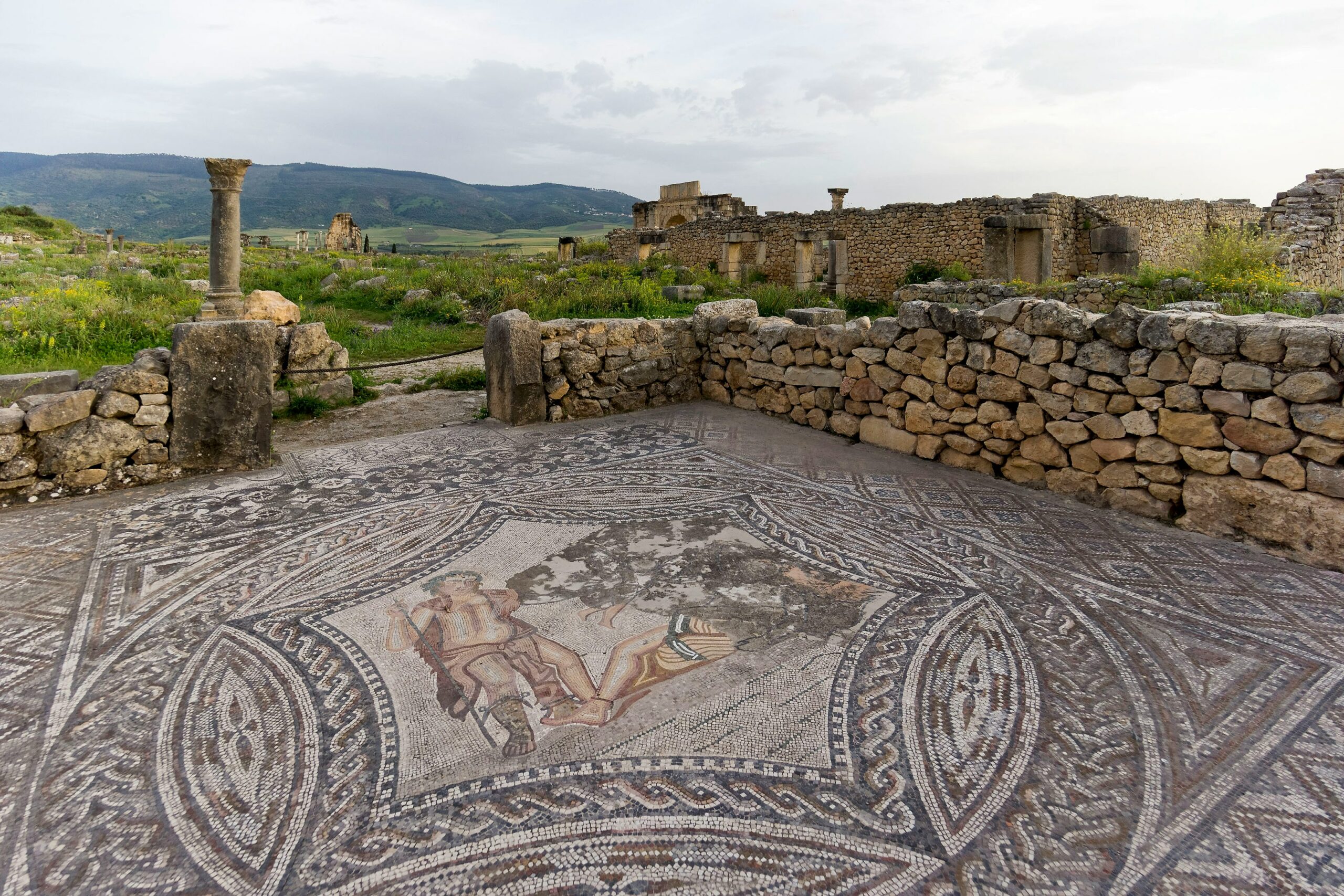
The mosaics are among the main reasons travelers visit Volubilis.
Several wealthy Roman-era houses contain impressive mosaic floors featuring mythological characters, animals, geometric designs, and scenes from ancient stories.
Look closely at the details. Even after centuries, many patterns remain surprisingly recognizable.
The mosaics are also useful for understanding the lifestyle and artistic tastes of wealthy residents of ancient Volubilis.
4. Basilica
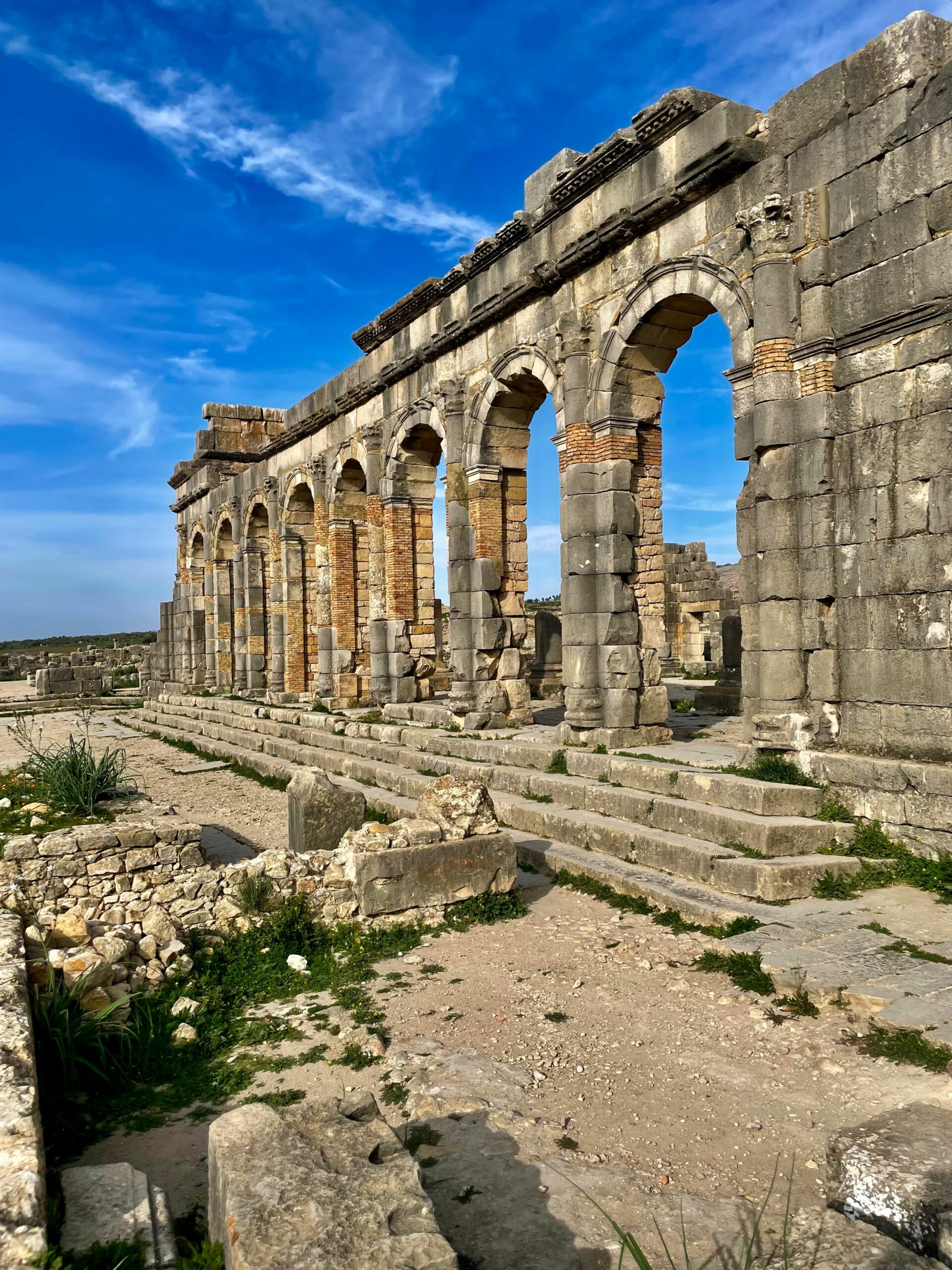
The basilica is one of the largest monumental structures at the site.
Although much of the original building has disappeared, the remaining walls and arches give visitors an idea of its former importance.
It is particularly impressive when viewed together with the nearby Capitoline Temple and other monumental remains.
5. Capitoline Temple
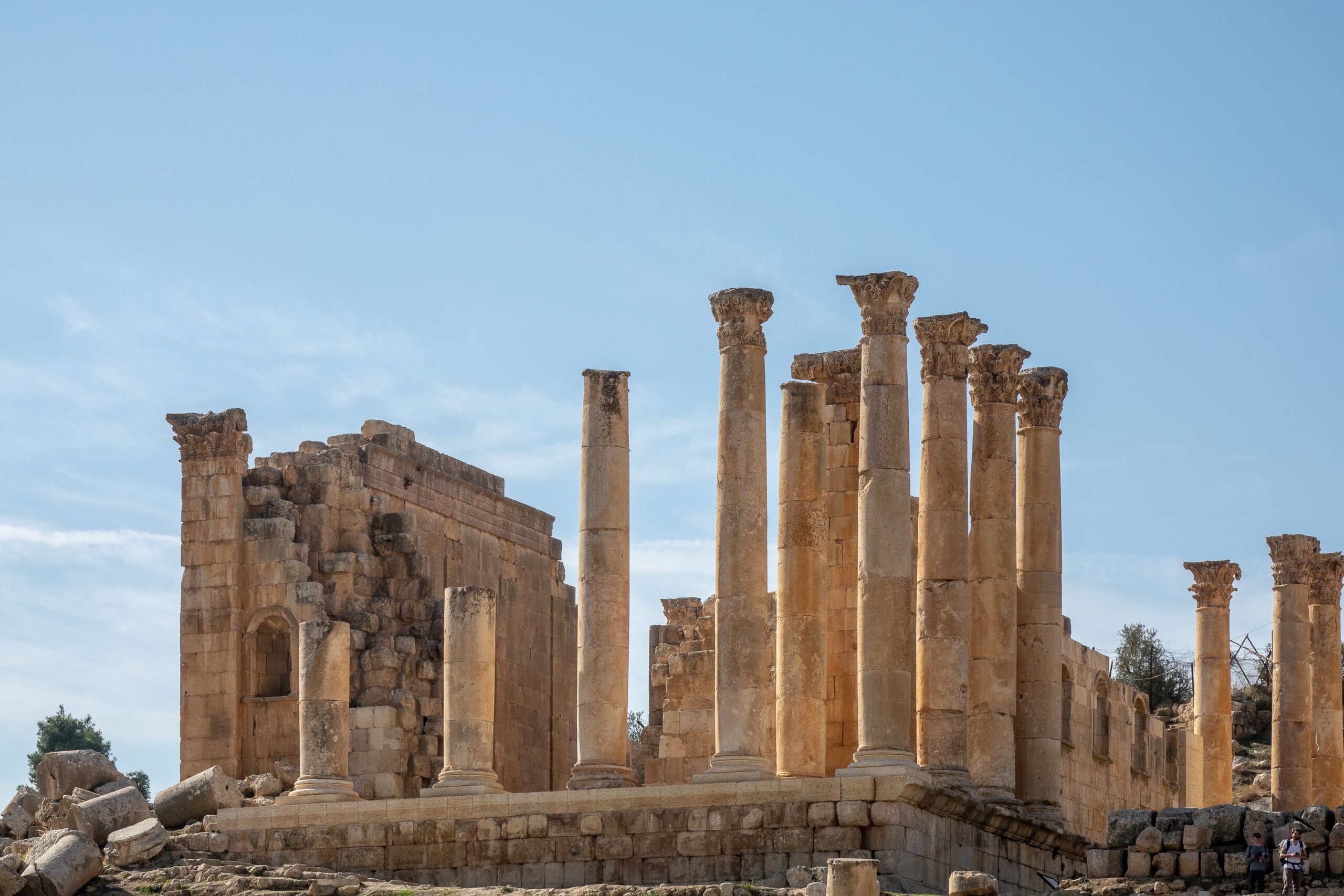
The Capitoline Temple was dedicated to the principal Roman gods Jupiter, Juno, and Minerva.
Its elevated position and remaining columns make it one of the most visually impressive parts of the archaeological area.
If you have limited time, make sure this section is included in your walk.
6. House of Orpheus
The House of Orpheus is one of the notable private residences at Volubilis.
Its mosaics provide an insight into how wealthy families lived and decorated their homes. Several residences across the archaeological site feature mosaic floors, but the House of Orpheus is particularly interesting for visitors interested in Roman domestic architecture.
7. House of the Labors of Hercules
Another memorable stop is the House of the Labors of Hercules, named after the famous mythological scenes represented in its mosaics.
This is a good example of how mythology was incorporated into the decorative design of Roman homes.
How Long Do You Need at Volubilis?
For most travelers, 1.5 to 2.5 hours is a comfortable amount of time to explore Volubilis.
Allow more time if you:
- Enjoy archaeology and ancient history
- Want to photograph the mosaics carefully
- Prefer a slow walk through the ruins
- Plan to hire a local guide
- Want time for viewpoints and the surrounding countryside
If you are visiting as part of a private day trip that also includes Meknes and Moulay Idriss, around two hours at Volubilis usually provides enough time without making the rest of the day feel rushed.
A guide can also make a significant difference. Without context, some ruins may look like isolated stones and walls. With explanations about Roman urban life, architecture, and mythology, the site becomes much easier to understand.
How to Get to Volubilis
Volubilis is located in northern Morocco, close to Moulay Idriss Zerhoun and Meknes, making it relatively easy to incorporate into a wider itinerary.
From Meknes
Meknes is one of the most convenient bases for visiting Volubilis.
A private vehicle or organized excursion allows you to combine the archaeological site with Meknes and, if time permits, Moulay Idriss.
This is one of the most practical combinations for travelers staying in Fes or Meknes.
From Fes
Fes is another excellent starting point.
A common route is:
Fes → Volubilis → Meknes → Fes
Alternatively, travelers continuing toward northern Morocco can visit Volubilis between Chefchaouen and Fes.
For example, Ideal Tour Morocco’s 16 Days Morocco Tour from Casablanca includes Volubilis between Chefchaouen and Meknes before continuing to Fes. 16 Days Morocco Tour from Casablanca
From Chefchaouen
Volubilis works particularly well as a stop between Chefchaouen and Fes.
This route combines three very different experiences:
- The blue mountain atmosphere of Chefchaouen
- Ancient Roman archaeology at Volubilis
- The historic imperial city of Fes
Ideal Tour Morocco also includes this combination in its 15 Days Tour from Casablanca, with a visit to the Roman ruins before continuing to Meknes and Fes. 15 Days Tour from Casablanca
Can You Visit Volubilis and Meknes in One Day?
Yes. In fact, combining Volubilis and Meknes is one of the most practical ways to organize the visit.
Start at Volubilis in the morning when temperatures are generally more comfortable, particularly during the warmer months. After exploring the archaeological site, continue to Meknes for lunch and an afternoon visit.
Depending on your schedule, you can explore attractions such as Bab Mansour, the historic medina, and other monuments associated with Sultan Moulay Ismail.
If you are traveling with a private driver, you can also include Moulay Idriss Zerhoun, located close to Volubilis.
This creates a rewarding historical day covering Roman, Islamic, and Moroccan imperial heritage.
Best Time to Visit Volubilis
The best months for visiting Volubilis are generally spring and autumn, when temperatures are more comfortable for walking outdoors.
Spring
Spring can be particularly attractive because the countryside around the ruins may be green and colorful.
This is also a good period for photography because the combination of ancient stone architecture and surrounding vegetation creates strong contrasts.
Summer
Summer can be hot, especially in the middle of the day.
If you visit during July or August, try to arrive earlier in the morning and carry plenty of water. There is limited shade across the archaeological site, so sun protection is important.
Autumn
September and October can offer pleasant conditions for exploring the ruins. The landscape gradually becomes drier, but the softer light can be excellent for photography.
Winter
Winter can be a good option for travelers who prefer cooler temperatures. However, conditions can change quickly, and rain can make walking around archaeological areas less comfortable.
What to Bring to Volubilis
Volubilis is an outdoor archaeological site, so packing for walking and sun exposure is more important than dressing for a city sightseeing day.
Bring:
- Comfortable walking shoes
- Water
- Sunscreen
- Sunglasses
- A hat
- A lightweight backpack
- A camera or smartphone
- Light layers during cooler months
- Cash for small purchases or services when needed
Avoid relying on shade. Some areas are exposed to the sun for long periods.
Comfortable shoes are especially important because the site contains uneven ground and long walking sections.
Photography Tips for Volubilis
Volubilis is one of Morocco’s best locations for combining architecture, history, and landscape photography.
For the best results:
Visit early or later in the day. Harsh midday sunlight can create strong shadows across the ruins.
Photograph the mosaics from different angles. Looking directly down is useful, but lower angles can sometimes reveal more texture and detail.
Include people for scale. The remaining columns, arches, and walls can be difficult to appreciate in size without a person in the frame.
Look beyond the ruins. The surrounding hills and agricultural landscape are an important part of the visual character of Volubilis.
Is Volubilis Worth Visiting?
Absolutely, especially if you enjoy history and archaeology.
Volubilis offers something different from Morocco’s famous medinas, souks, palaces, and desert landscapes. Instead of experiencing Moroccan history only through medieval and Islamic architecture, you can see evidence of a much older period and understand how North Africa interacted with the wider Mediterranean world.
It is also relatively easy to combine with Meknes, Moulay Idriss, and Fes, which means you do not need to dedicate an entire trip to the archaeological site.
For travelers who want a more complete understanding of Morocco’s history, Volubilis is one of the most worthwhile stops in the north.
Volubilis, Moulay Idriss and Meknes: The Ideal Combination
One of the best ways to experience this area is to combine three destinations in one day.
Volubilis provides the archaeological and Roman history.
Moulay Idriss Zerhoun introduces you to an important Moroccan pilgrimage town built into the surrounding hills.
Meknes adds imperial Moroccan history, monumental gates, the medina, and the legacy of Sultan Moulay Ismail.
The three destinations are close enough to combine efficiently, while each offers a completely different atmosphere.
This makes the region particularly valuable for travelers who enjoy cultural travel rather than simply moving between Morocco’s most famous cities.
Practical Tips for First-Time Visitors
A few simple decisions can make your visit much better.
Start early
Morning visits are usually more comfortable, particularly during hot weather.
Don’t rush the mosaics
The mosaics deserve more than a quick photograph. Take time to examine their designs and imagine how the houses looked when they were occupied.
Consider a guide
A knowledgeable guide can explain the function of different buildings and put the ruins into historical context.
Combine Volubilis with nearby destinations
Unless you have a specific archaeological interest, visiting Volubilis alone may not require a full day. Combining it with Meknes and Moulay Idriss creates a much richer experience.
Check practical information before departure
Opening arrangements, admission fees, and visitor services can change. Check the latest local information before leaving your hotel, particularly if Volubilis is a fixed part of your itinerary.
Planning a Morocco Itinerary Around Volubilis
Volubilis is easiest to include when you are traveling through northern Morocco.
A short cultural route could look like:
Chefchaouen → Volubilis → Meknes → Fes
For a longer Morocco adventure, you can connect northern Morocco with the Sahara and Marrakech.
Ideal Tour Morocco’s longer itineraries demonstrate how Volubilis can fit naturally into a broader Moroccan journey. The 16-day Morocco itinerary from Casablanca combines Chefchaouen, Volubilis, Meknes, Fes, the Middle Atlas, Merzouga, the Dades Valley, Ouarzazate, Marrakech, and Essaouira.
Travelers looking for an even more comprehensive route can also consider the 15-day Morocco tour from Casablanca, which includes Volubilis alongside Chefchaouen, Fes, the Sahara, Ouarzazate, Essaouira, and Marrakech.
For more inspiration and current tour options, you can explore the Morocco tours and adventures available through Ideal Tour Morocco.
Frequently Asked Questions About Volubilis
Is Volubilis worth visiting?
Yes. Volubilis is one of Morocco’s most important archaeological attractions and a UNESCO World Heritage Site. It is especially worthwhile for travelers interested in Roman history, mosaics, architecture, and cultural heritage.
How much time should I spend at Volubilis?
Plan approximately 1.5 to 2.5 hours for a comfortable visit. History enthusiasts and photographers may prefer longer.
Can I visit Volubilis from Fes?
Yes. Volubilis can be visited as a day trip from Fes or as a stop while traveling between Chefchaouen, Meknes, and Fes.
Can I visit Volubilis and Meknes on the same day?
Yes. This is one of the most practical combinations. Start with Volubilis, then continue to Meknes for lunch and sightseeing.
Is Volubilis suitable for families?
Yes, although families should expect walking over uneven ground and exposure to the sun. Comfortable shoes, water, hats, and sunscreen are recommended.
A visit to Volubilis is a chance to step into a much older chapter of Moroccan history. Its Roman streets, mosaics, temples, arches, and surrounding countryside offer a completely different experience from the medinas of Fes and Marrakech or the dunes of the Sahara.
The site is particularly easy to include in a northern Morocco itinerary, especially when combined with Moulay Idriss, Meknes, and Fes.
For first-time visitors, the best approach is simple: arrive early, wear comfortable shoes, bring water and sun protection, allow at least a couple of hours to explore, and take time to understand what you are seeing rather than rushing from monument to monument.
If ancient history is part of what attracts you to Morocco, Volubilis deserves a place on your itinerary.
Ready to discover Morocco? Let's plan your perfect trip.
Whether it’s a desert adventure from Marrakech, an imperial cities tour, or a custom itinerary — our team responds within 24 hours with a tailored plan and quote.