Ramadan in Morocco: Traditions, Daily Life and What Travelers Should Know
Just before sunset during Ramadan in Morocco, the atmosphere begins to change. Market stalls complete their final sales, families carry fresh bread and pastries home, and streets that were busy only minutes earlier become unusually quiet. Then the call to prayer announces the end of the day’s fast, doors close, and people gather around tables prepared with dates, harira, chebakia, and mint tea.
An hour later, the country seems to wake up again. Cafés fill, families visit one another, shops reopen, and city streets become lively well into the evening. Ramadan changes the rhythm of Morocco, but it does not bring life to a stop. Instead, daily routines move around moments of fasting, prayer, family, generosity, and shared meals.
Traveling during this period offers a meaningful view of Moroccan culture. Visitors can experience traditions that are less visible during the rest of the year, but they also need to understand different schedules and social expectations. This guide explains Ramadan in Morocco, how daily life changes, which foods and customs define the month, and what travelers should know before arriving.
What Is Ramadan?
Ramadan is the ninth month of the Islamic lunar calendar and one of the most important periods of the year for Muslims.
During the month, many Muslims fast from dawn until sunset. The fast includes food and drink, but Ramadan is about much more than physical restraint. It is a time associated with worship, reflection, patience, gratitude, charity, and strengthening family and community relationships.
Fasting during Ramadan is one of the Five Pillars of Islam. However, recognized exemptions exist for people in particular circumstances, including those who are ill or unable to fast safely. Individual practice can vary according to health, age, travel, personal circumstances, and religious guidance.
The month lasts 29 or 30 days and ends with Eid al-Fitr, a religious holiday celebrated with prayer, family visits, festive meals, and gifts.
Why Do the Dates of Ramadan Change Every Year?
The Islamic calendar follows the lunar cycle and is shorter than the Gregorian calendar.
As a result, Ramadan begins around 10 or 11 days earlier each Gregorian year. Over time, it moves through every season.
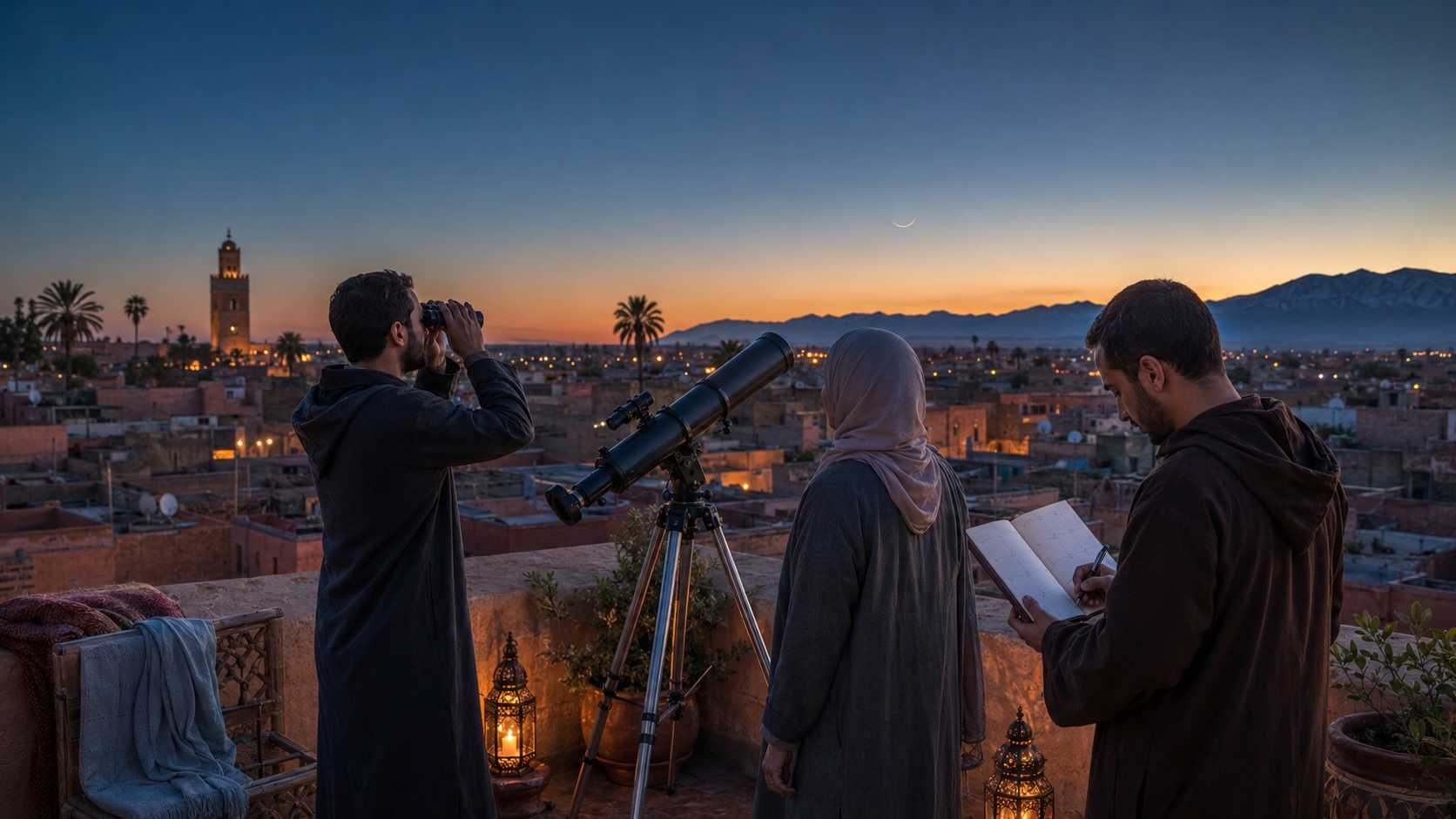
The exact beginning and end depend on the sighting of the new crescent moon and official religious announcements. Travelers should therefore check confirmed dates close to their departure rather than relying only on an estimate published far in advance.
The season makes a noticeable difference.
When Ramadan falls during summer, fasting days are longer and temperatures may be higher. During winter, daylight hours are shorter and evenings arrive earlier.
These seasonal changes influence work schedules, meal times, transportation, and the general pace of daily life.
What Does a Typical Ramadan Day Look Like in Morocco?
Every family has its own routine, but a Ramadan day often revolves around several important moments.
S’hour: The Meal Before Dawn
Before dawn, people who are fasting may wake for a meal known in Morocco as s’hour.
The meal is eaten before the beginning of the daily fast. It can include:
- Bread
- Eggs
- Yogurt or milk
- Dates
- Fruit
- Cheese
- Msemen
- Baghrir
- Tea or water
Some families prepare a complete meal, while others prefer something light.
In a few traditional neighborhoods, a nafar may still walk through the streets before dawn, using a horn or voice to remind residents that it is time for s’hour. The custom is not present everywhere, but it remains part of Ramadan memory in several Moroccan cities.
The Morning Begins More Slowly
Because many people stay awake later and rise before dawn, mornings can feel quieter than usual.
Some shops, cafés, and small businesses open later. Government offices, banks, museums, and attractions may use reduced or adjusted schedules.
Tourist areas continue operating, but the pace can be slower.
Travelers who prefer early sightseeing should confirm opening times in advance. Major attractions may still open in the morning, while smaller businesses might not begin until later.
The Afternoon Becomes Busier
As sunset approaches, markets and bakeries become active.
Families purchase ingredients for the evening meal, known as ftour or iftar. Stalls display dates, pastries, breads, spices, juices, and bowls of ready-made harira.
The final hour before sunset can feel energetic.
People are completing work, collecting food, and trying to reach home. Roads may become congested, and finding a taxi can be more difficult.
This is an important practical detail for travelers. Avoid planning a tight airport transfer or long cross-city journey immediately before ftour when possible.
Sunset Brings a Sudden Pause
At sunset, the call to prayer signals that the fast can be broken.
Streets may become almost empty as families, workers, drivers, and shopkeepers pause to eat.
In some hotels and guesthouses, staff may briefly step away for their meal. Showing patience during this time is a simple way to respect the people working around you.
Evening Life Begins
After ftour and prayer, Morocco becomes lively again.
Families visit relatives, cafés reopen, shops welcome customers, and people walk through the streets. In large cities, activity may continue late into the night.
Travelers sometimes assume that Ramadan makes Morocco completely quiet. In reality, much of the country’s social energy simply moves from the daytime to the evening.
Ftour: The Meal That Breaks the Fast
Ftour is one of the defining traditions of Ramadan in Morocco.
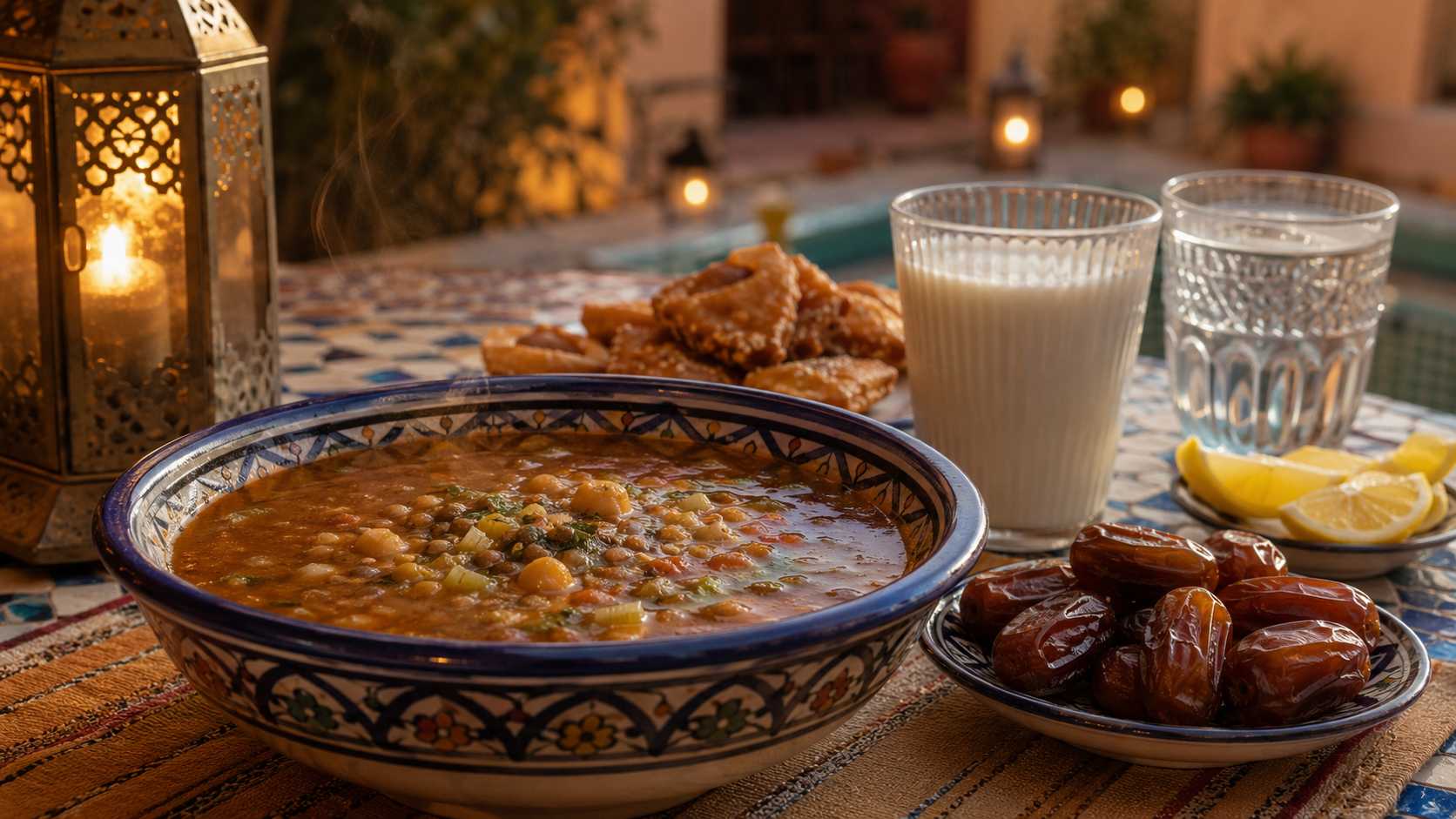
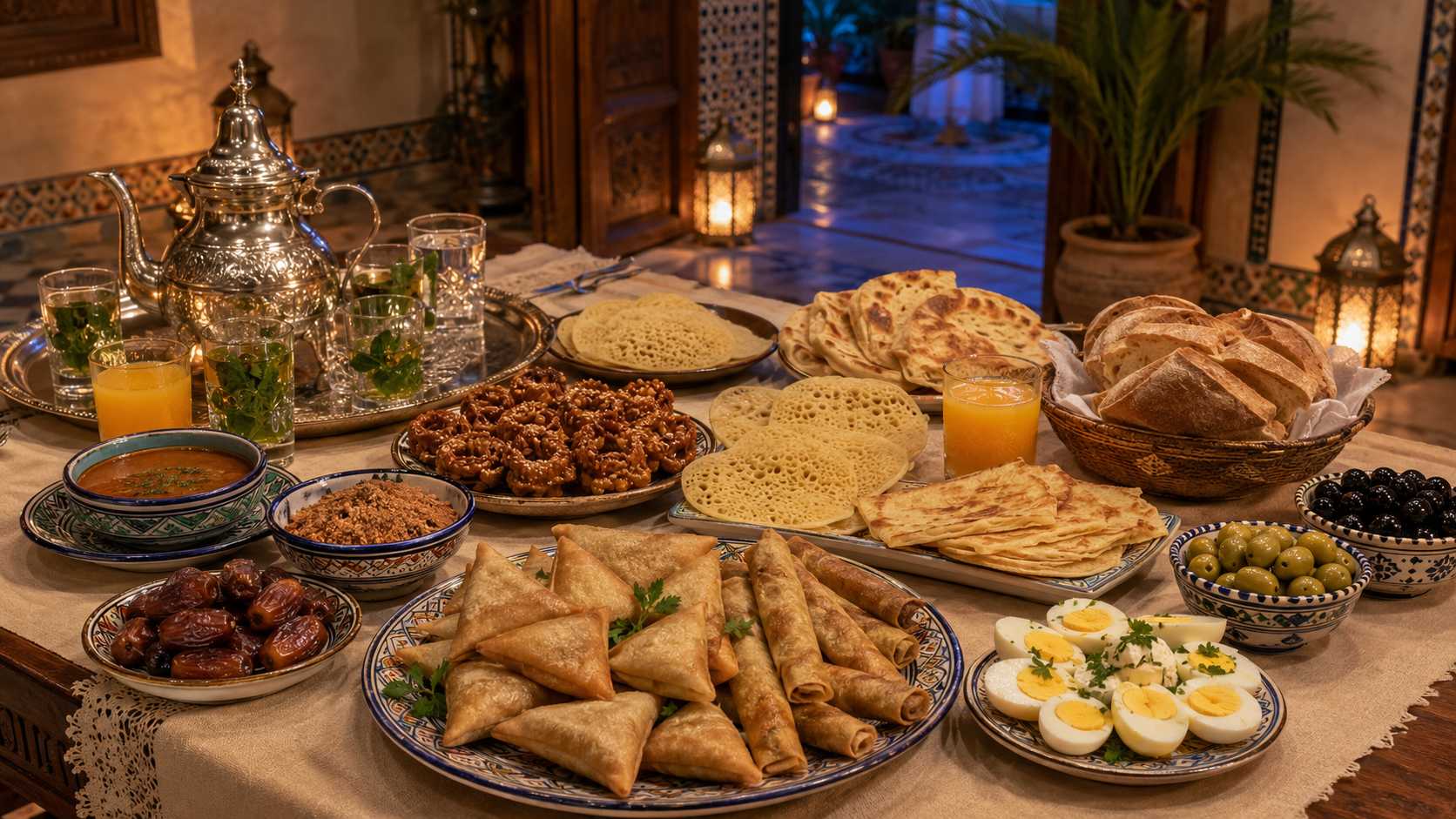
The meal begins at sunset, often with dates and milk or water. Families then enjoy a table filled with sweet and savory foods.
Common ftour dishes include:
- Harira
- Chebakia
- Dates
- Boiled eggs
- Msemen
- Baghrir
- Sellou
- Briouats
- Bread
- Olives
- Fresh juice
- Mint tea
The table can look abundant, but the meal usually unfolds in stages.
People begin with a few items, pause for prayer, and may return later for another meal.
Harira
Harira is a rich Moroccan soup made with ingredients such as tomatoes, lentils, chickpeas, herbs, and spices.
Recipes vary by household. Some versions include meat, while others do not.
During Ramadan, the smell of harira cooking becomes part of the atmosphere inside Moroccan homes. It is warm, comforting, and closely associated with breaking the fast.
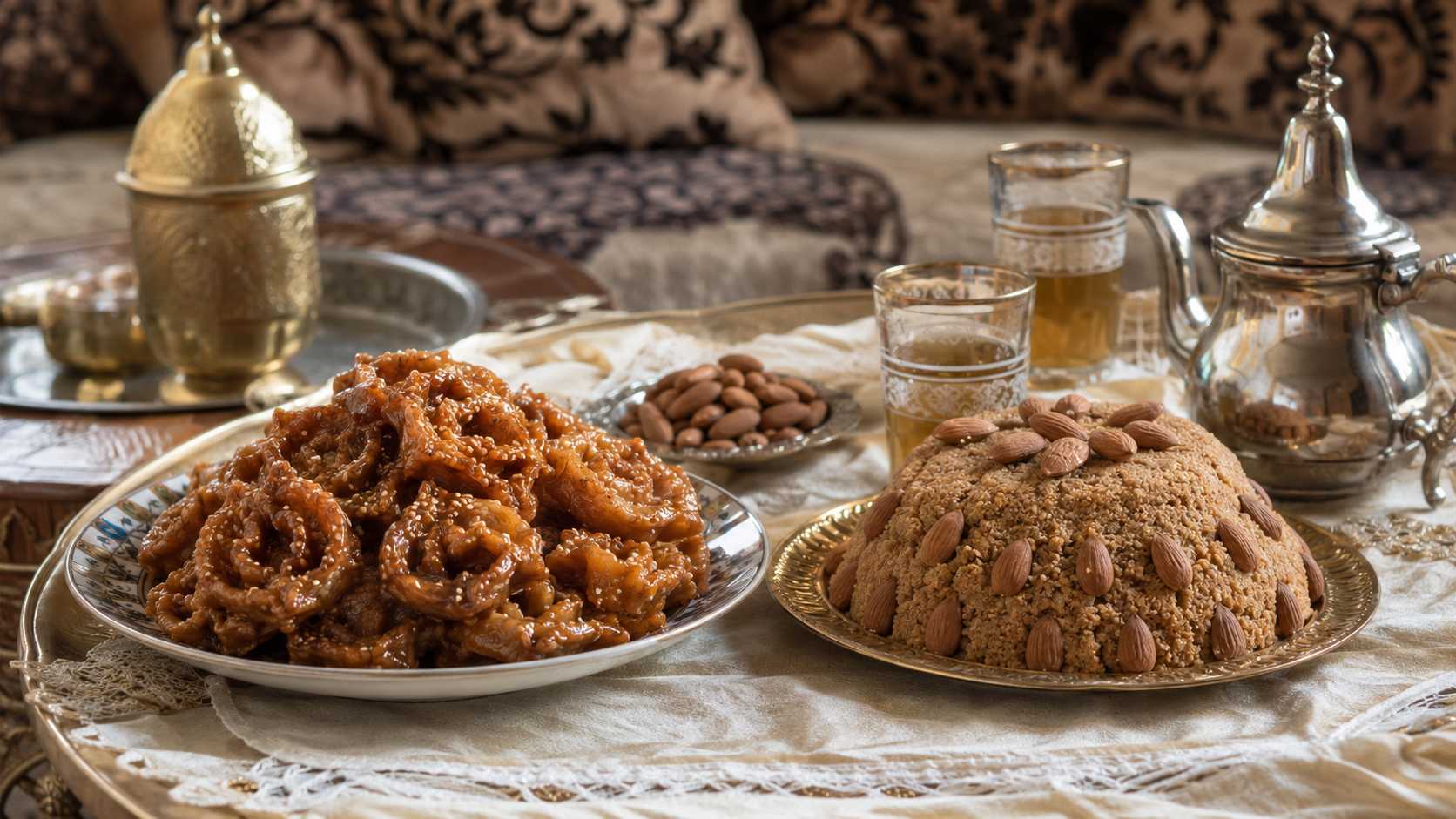
Chebakia
Chebakia is a flower-shaped pastry flavored with ingredients such as sesame, anise, cinnamon, and orange blossom.
After frying, it is coated with honey and sprinkled with sesame seeds.
Its sweetness pairs with the savory flavor of harira, creating one of the most recognizable combinations on a Moroccan Ramadan table.
Sellou
Sellou is a dense mixture commonly prepared with toasted flour, sesame, almonds, spices, and sweetening ingredients.
Families often make a large quantity before Ramadan begins. It is served in small portions and may be shaped decoratively for special occasions.
Msemen and Baghrir
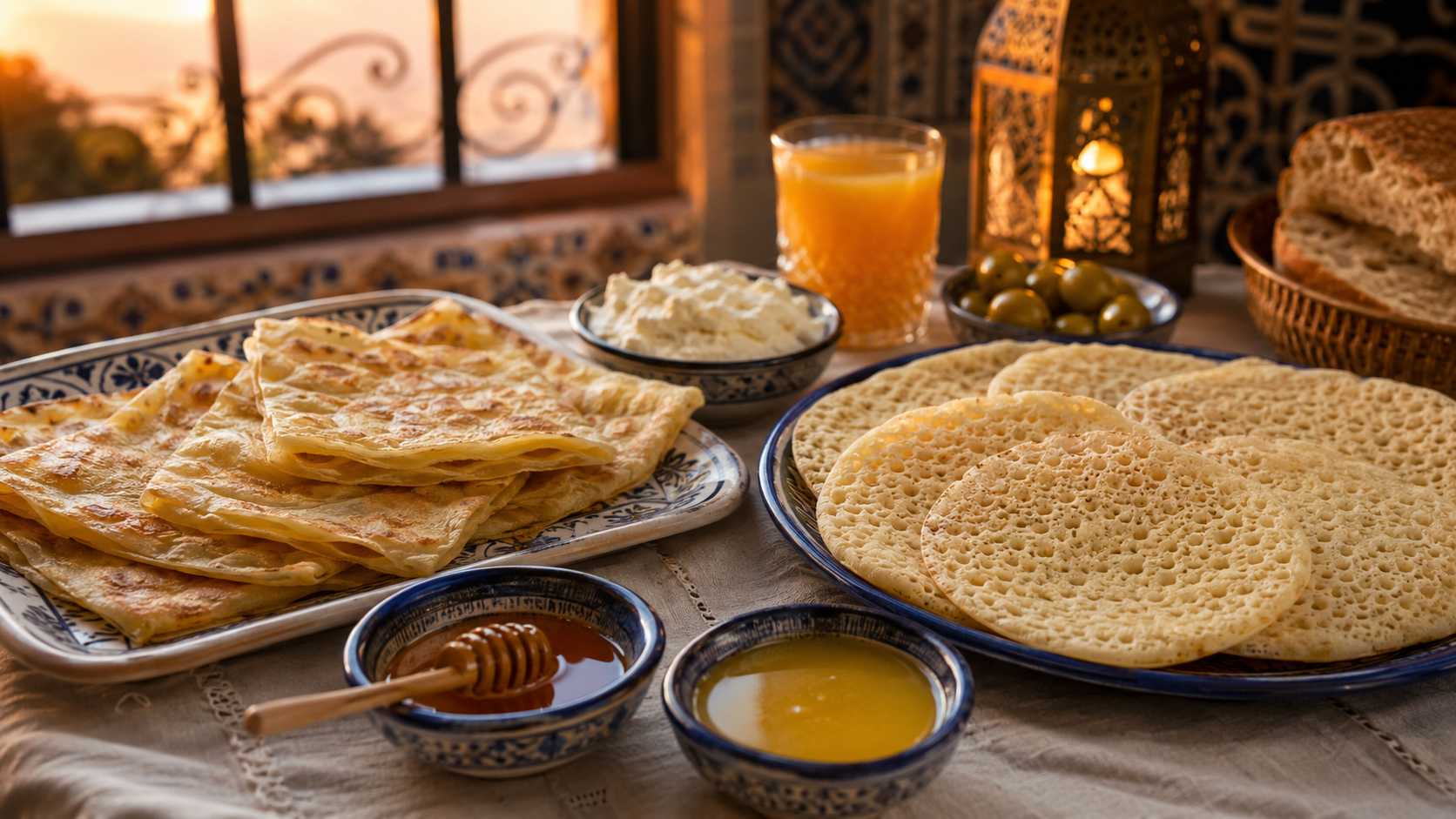
Msemen is a layered Moroccan flatbread, while baghrir is a soft pancake recognized by the many small holes across its surface.
Both can be served with honey, butter, cheese, or other accompaniments.
They are prepared throughout the year but become especially visible during Ramadan.
The Importance of Family During Ramadan
Ramadan places strong emphasis on family connection.
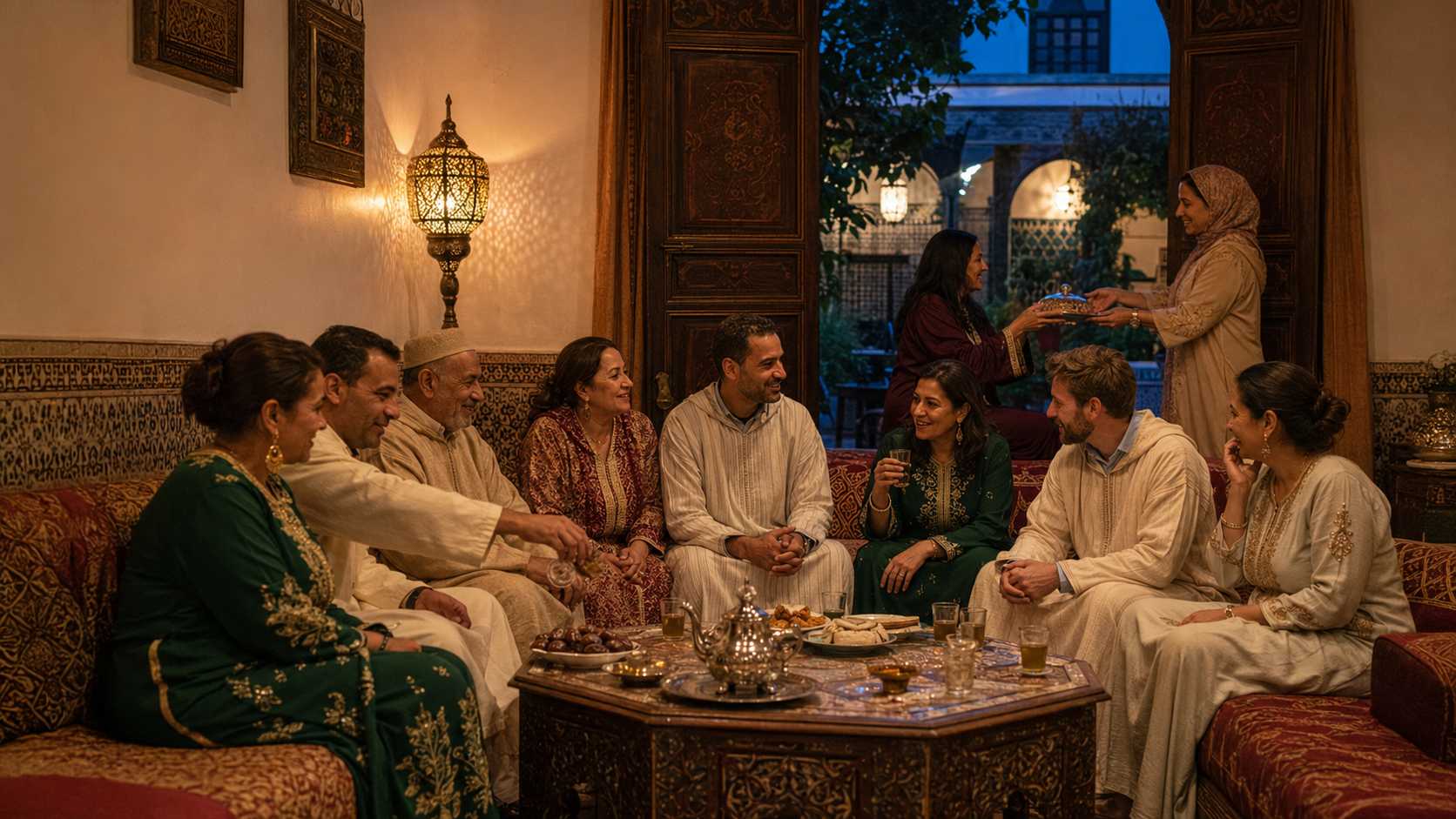
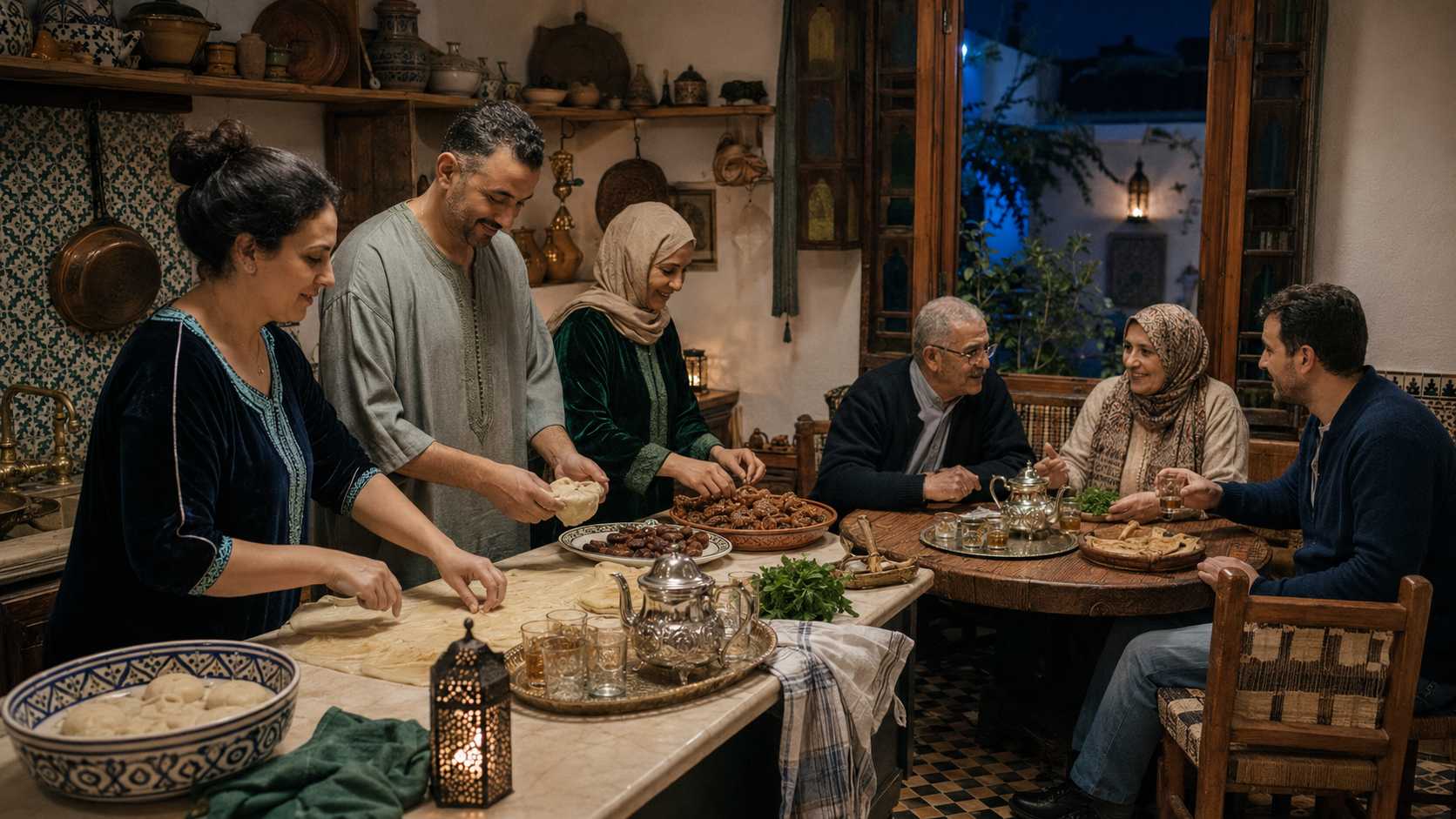
Whenever possible, relatives gather for ftour. Adult children may visit their parents, extended families invite one another, and neighbors exchange food.
The meal is not simply about ending the fast.
It provides a daily moment when people pause their separate routines and sit at the same table.
Families may spend the evening:
- Talking over tea
- Watching special Ramadan television programs
- Visiting relatives
- Attending prayers
- Preparing food for the following day
- Shopping after ftour
- Sharing sweets with neighbors
Visitors staying with a Moroccan family may be invited to join ftour even if they are not fasting.
Accepting such an invitation offers a personal view of the month’s meaning. Arrive on time, follow the host’s lead, and avoid treating the meal only as a photo opportunity.
Charity, Generosity, and Community Life
Giving to others is central to Ramadan.
People may donate money, prepare food for families in need, distribute ftour meals, or support local charitable initiatives. Mosques, community groups, businesses, and private individuals often participate.
The month encourages people to think about those who have less and to practice generosity more deliberately.
Small acts are also important.
Neighbors exchange plates of food. Families invite someone who is alone. Drivers and shopkeepers may share dates or water at sunset. Community members contribute according to their ability.
At the end of Ramadan, eligible Muslim households give Zakat al-Fitr, a specific charitable contribution intended to help people in need participate in the Eid celebration.
Travelers who wish to contribute should choose transparent local organizations or established community initiatives. Respectful giving supports dignity and avoids turning charity into a public performance.
Prayer and Spiritual Life During Ramadan
Ramadan is a deeply spiritual month.
Many Muslims spend more time praying, reading the Quran, reflecting, and attending the mosque.
In addition to the five daily prayers, special evening prayers known as Tarawih take place during Ramadan. After ftour, worshippers gather at mosques, and surrounding streets may become busy before and after the prayer.
The final nights of Ramadan hold particular spiritual importance.
One of them is Laylat al-Qadr, often translated as the Night of Power or Night of Decree. It commemorates the revelation of the Quran and is associated with prayer and reflection.
Travelers should remain respectful around mosques.
Keep entrances clear, avoid loud behavior, and ask permission before photographing people. Most mosques in Morocco are not open to non-Muslim visitors, with a limited number of well-known exceptions.
Ramadan Traditions Unique to Moroccan Daily Life
Although Ramadan is observed across the Muslim world, Morocco gives the month its own flavors and rhythms.
The Sound of the Nafar
The nafar is a traditional figure associated with waking neighborhoods before dawn.
The custom survives more strongly in some medinas and communities than others. Even where it is no longer heard regularly, many Moroccans recognize it as part of the cultural memory of Ramadan.
Special Ramadan Markets
Food markets become especially colorful during the afternoon.
Bakers produce large quantities of bread and pastries, while temporary stalls sell dates, chebakia, briouats, and other ftour essentials.
Visiting a market before sunset gives travelers an excellent view of seasonal food traditions. However, the streets can be crowded, so move patiently and avoid blocking busy vendors.
Ramadan Television
Moroccan television channels traditionally release special series, comedies, and programs for Ramadan.
Families often watch them together after ftour. Popular shows become topics of conversation in homes, cafés, workplaces, and online discussions.
This modern habit demonstrates how Ramadan traditions continue to develop alongside media and contemporary life.
Evening Shopping
Many shops reopen after ftour and remain active later than usual.
As Eid approaches, families shop for clothes, sweets, gifts, and household items. Commercial streets and medinas can become especially lively during the final week of the month.
How Ramadan Affects Travel in Morocco
Morocco remains open to travelers during Ramadan.
Flights, trains, buses, hotels, tours, and attractions continue operating. However, schedules may change.
Restaurants and Cafés
In major tourist destinations, many hotel restaurants and businesses serving visitors remain open during the day.
Smaller local cafés and restaurants may close until late afternoon or evening. Options can be more limited outside heavily visited areas.
Check ahead, particularly during road trips or visits to small towns.
Carrying appropriate snacks and water for use discreetly in suitable places can be practical for travelers who are not fasting. Hotels, riads, private vehicles, and designated dining spaces provide more respectful settings than crowded public streets.
Shops and Attractions
Some businesses open later, close earlier, or pause around ftour.
Museums, monuments, banks, and public offices may use reduced schedules. Opening times found online are not always updated immediately, so confirm them with the attraction, hotel, or local guide.
Tours and Activities
Most tours continue, including desert trips, guided medina visits, and mountain excursions.
Departure times may be adjusted to match the working hours of drivers and guides. A considerate itinerary gives fasting staff enough time to reach or prepare for ftour.
Ask your tour operator how Ramadan affects the schedule before confirming.
Transportation
Public transportation continues to operate, but demand and traffic patterns can change.
The period before sunset is often busy, while streets become quiet during ftour. Later in the evening, roads and city centers may become active again.
Reserve long-distance train and bus tickets early, especially near the end of Ramadan when many people travel to celebrate Eid with family.
Morocco’s Clock During Ramadan
Morocco normally uses GMT+1 for much of the year but commonly adjusts the official clock around Ramadan.
The exact dates of the time change are announced officially. Travelers should confirm the current local time before flights, train journeys, tours, and airport transfers.
Do not rely only on an old itinerary or a device that has not updated automatically.
Should Tourists Fast During Ramadan in Morocco?
Non-Muslim visitors are not expected to fast.
Hotels and tourist restaurants generally continue serving meals, and travelers can eat and drink in private or designated spaces.
The most respectful approach is discretion.
Avoid eating or drinking openly in crowded public places during fasting hours when practical, especially in smaller towns or traditional neighborhoods. This is a gesture of cultural awareness rather than an expectation that visitors follow a religious practice that is not their own.
Travelers should also remember that not every Moroccan they meet will be fasting. Personal circumstances are private, and it is inappropriate to question or judge someone’s religious practice.
What Should Travelers Wear During Ramadan?
Morocco generally encourages respectful clothing throughout the year, and modest dress is particularly considerate during Ramadan.
In cities and tourist destinations, clothing styles vary widely. Visitors do not need to wear traditional Moroccan clothes or cover their heads.
Practical choices include:
- Tops covering the shoulders
- Comfortable trousers or longer skirts
- Lightweight layers
- Clothing appropriate for religious and family settings
At beaches, pools, and resorts, normal swimwear rules usually apply within those spaces. Cover up before returning to streets, shops, or restaurants.
The aim is not to imitate local people. It is to dress in a way that respects the setting.
Helpful Etiquette for Visiting Morocco During Ramadan
A few thoughtful habits can make the experience smoother.
Learn a Ramadan Greeting
“Ramadan Mubarak” is a widely understood greeting meaning “Blessed Ramadan.”
Moroccans may also say “Ramadan Karim.”
Using either expression warmly is appreciated.
Be Patient with Changed Schedules
People may be tired, businesses may open later, and service may pause at sunset.
Allow extra time and avoid reacting impatiently when routines differ from the rest of the year.
Respect the Ftour Moment
Try not to request non-urgent services exactly at sunset.
Drivers, hotel employees, guides, and shopkeepers may need a short break to eat and pray.
Ask Before Taking Photographs
Markets and ftour tables are visually interesting, but they are part of personal and religious life.
Ask permission before photographing individuals, families, food preparation, or worship.
Avoid Making Assumptions
Ramadan experiences differ between individuals and families.
Some people are highly observant, while others practice privately or have reasons not to fast. Be curious without becoming intrusive.
Plan Meals in Advance
Check daytime food options with your hotel or guide.
If you have dietary needs, communicate them early because restaurant availability may be reduced.
Is Ramadan a Good Time to Visit Morocco?
Ramadan can be a rewarding time to travel.
The atmosphere is different from an ordinary month, and visitors gain insight into family life, food traditions, spirituality, and community values.
Advantages may include:
- Unique cultural experiences
- Lively evenings
- Seasonal foods
- Meaningful local interactions
- Quieter streets during certain daytime hours
- A strong sense of community
Possible challenges include:
- Reduced daytime restaurant options
- Shorter opening hours
- Busy roads before sunset
- Late-night activity
- Schedule changes
- Limited services during ftour
Whether the timing suits you depends on your travel style.
Visitors who enjoy cultural observation, flexible schedules, and evening activity may find Ramadan fascinating. Travelers who need predictable daytime dining and fixed operating hours should prepare more carefully.
Experiencing Ftour as a Traveler
Sharing ftour can become one of the most memorable parts of visiting Morocco during Ramadan.
Some riads, hotels, restaurants, cooking schools, and local tour operators offer Ramadan meals. A personal invitation to a family home provides an even more intimate experience when it occurs naturally.
When attending ftour:
- Arrive before sunset
- Ask whether you should bring anything
- Wait for the host to begin
- Try small amounts of different foods
- Compliment the meal sincerely
- Avoid wasting food
- Offer to help if appropriate
- Ask before photographing
- Thank everyone who prepared the table
Do not worry if you are unfamiliar with the order of the meal.
Follow the people around you, and allow the experience to unfold at its own pace.
Eid al-Fitr: The Celebration After Ramadan
Eid al-Fitr marks the end of Ramadan.
The exact date is confirmed according to the lunar calendar. The day begins with a special prayer, and families dress carefully, visit relatives, exchange greetings, and share festive food.
Children may receive gifts or money, and tables are often filled with pastries and tea.
The atmosphere is joyful, but Eid is also a family-centered holiday. Many businesses close, transportation becomes busy, and public schedules change.
Travelers visiting during Eid should arrange meals, tickets, and transfers in advance.
The holiday provides a beautiful conclusion to Ramadan, but it is not simply a public festival. Respect family time and private celebrations.
Responsible Cultural Travel During Ramadan
Traveling responsibly means recognizing that Ramadan is first a religious and personal observance.
Visitors are welcome to appreciate the food, evening atmosphere, and traditions, but these experiences should be approached with respect.
Choose tours and activities that:
- Employ local guides fairly
- Explain customs accurately
- Respect prayer and family time
- Avoid interrupting ftour
- Do not turn worship into entertainment
- Support local businesses and communities
Meaningful travel happens when visitors listen as much as they observe.
Ramadan offers many opportunities for connection, but the strongest memories often come from small moments: sharing dates at sunset, hearing a family describe its traditions, walking through a lively market, or watching a quiet street return to life after ftour.
Why Ramadan in Morocco Is an Unforgettable Experience
Ramadan reveals a side of Morocco shaped by contrast.
Days can feel calm and reflective, while evenings become social and energetic. Markets grow busy before sunset and suddenly empty when the call to prayer begins. Tables fill with food after hours of fasting, yet charity and gratitude remain central themes.
For travelers, the month requires flexibility.
Opening hours change, meals need more planning, and the daily schedule follows a different rhythm. These adjustments are not inconveniences without meaning. They reflect the priorities of a community observing an important religious month.
Approaching Ramadan in Morocco with patience and curiosity transforms the journey.
Visitors begin to understand why harira carries memories, why sunset changes the sound of an entire city, and why a shared ftour can make a traveler feel welcome even far from home.
Ramadan is not only something to watch.
It is an invitation to slow down, respect another rhythm, and discover how spirituality, food, family, and generosity shape daily life across Morocco.
Frequently Asked Questions About Ramadan in Morocco
1. Can Tourists Visit Morocco During Ramadan?
Yes. Morocco remains open to tourists, and hotels, transportation, tours, and major attractions continue operating. Some schedules and services change, so travelers should confirm opening hours and plan daytime meals in advance.
2. Are Non-Muslim Tourists Expected to Fast in Morocco?
No. Non-Muslim visitors are not expected to fast. They can eat and drink in hotels, tourist restaurants, private spaces, and other appropriate settings. Being discreet in crowded public areas during fasting hours is a respectful cultural gesture.
3. Are Restaurants Open During Ramadan in Morocco?
Many hotel restaurants and tourist-oriented businesses remain open during the day, particularly in Marrakech, Fes, Casablanca, Agadir, and other major destinations. Smaller local cafés may remain closed until late afternoon. Availability is more limited in small towns, so checking ahead is recommended.
4. What Time Does the Fast End in Morocco?
The fast ends at sunset, and the exact time changes by date and location. Local prayer timetables, mosques, hotels, and mobile applications provide the daily time. Travelers should remember that sunset in Tangier will not occur at exactly the same moment as sunset in Marrakech or Merzouga.
5. What Do Moroccans Eat for Ftour?
A Moroccan ftour commonly includes dates, harira, chebakia, eggs, breads, pastries, juices, and mint tea. Msemen, baghrir, sellou, and briouats are also popular. Menus vary between families and regions, and the meal may continue in stages throughout the evening.
6. Do Shops and Attractions Close During Ramadan?
Most do not close for the entire month, but many use adjusted hours. Small shops may open later, pause around sunset, and reopen at night. Museums, monuments, banks, and public offices can close earlier, making it important to verify schedules shortly before visiting.
7. Is Public Transportation Available During Ramadan?
Yes. Trains, buses, taxis, and domestic flights continue operating. Demand may increase before Eid, and road traffic can become heavy shortly before ftour. Booking long-distance tickets and airport transfers early can prevent unnecessary problems.
8. What Should Travelers Wear During Ramadan in Morocco?
Visitors should choose respectful clothing suitable for the location. Covering the shoulders and wearing comfortable trousers, longer skirts, or similar modest options works well in public streets, markets, villages, and family settings. Head coverings are not generally required for visitors.
9. How Should Visitors Greet Moroccans During Ramadan?
Travelers can say “Ramadan Mubarak” or “Ramadan Karim.” Both greetings express good wishes for the month and are widely understood. A warm greeting, patience, and respect for changed routines are usually appreciated.
10. Is Eid al-Fitr a Good Time to Travel in Morocco?
Eid can be a joyful and culturally interesting time, but it requires planning. Many businesses close as families celebrate, and trains, buses, and roads may be busy. Reserve transportation and confirm hotel meals or activities in advance.
Ready to discover Morocco? Let's plan your perfect trip.
Whether it’s a desert adventure from Marrakech, an imperial cities tour, or a custom itinerary — our team responds within 24 hours with a tailored plan and quote.